Eumeswil
A novel set in an undated world ruled by a despot.
Summary
Ernst Jünger published this novel in Germany in 1977, at eighty-two; Joachim Neugroschel's English translation followed in 1993. It is set in an undatable world after some catastrophe, in a city-state somewhere in what is now Morocco. Eumeswil is ruled by the Condor, a general who made himself dictator and governs from a guarded citadel, the Casbah, while despising the democrats who conspire against him. The narrator, Manuel Venator, is a historian who works as the Condor's night steward. Each evening at the Casbah's night bar he records in a secret journal the conversations he overhears, sketching the people around the ruler and the psychology of power. By day he builds a hidden refuge in the mountains and studies history through the "luminar", a device that can summon any figure or event of the past.
Venator embodies Jünger's figure of the Anarch, an inwardly free individual who lives within society but not of it. "The Anarch is to the anarchist, what the monarch is to the monarchist": he needs authority, though he does not believe in it. Publishers Weekly found the book erudite but labyrinthine.
Key takeaways 4
- Jünger's Anarch is inwardly free and lives within society without belonging to it.
- The Anarch differs from the anarchist: he does not fight authority but stays detached from it.
- Venator studies the dictator at close range as a historian studies power.
- The novel mixes story, essay and philosophy about history and tyranny.
Who should read it
Readers of philosophical fiction and political thought interested in individual freedom under tyranny.
Who recommended it 1
Similar books 6
Chosen by shared topics, the entries that hold them, and the people who recommended both.

A novel of a Nigerian immigrant in America, and of race, love and home.
Recommended by: Michelle Obama
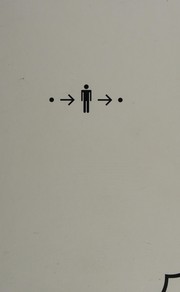
A story told entirely in pictograms and icons, with no words.
Recommended by: Patrick Collison

A Holocaust survivor and refugee who finds himself with three wives.
Recommended by: Patrick Collison
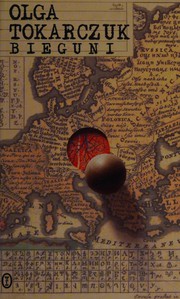
A fragmentary novel of travel, bodies and anatomy across the centuries.
Recommended by: Andrew Wilkinson
Milan publishers drawn into Kabbalah, the Knights Templar and conspiracy theories.
Recommended by: Patrick Collison
A novel that alternates a cyberpunk story with one set at the end of the world.
Recommended by: Matt Mullenweg