Hard-Boiled Wonderland and the End of the World
A novel that alternates a cyberpunk story with one set at the end of the world.
Summary
Haruki Murakami's 1985 novel won the Tanizaki Prize that year. Alfred Birnbaum's English translation appeared in 1991, and an unabridged translation by Jay Rubin, titled End of the World and Hard-Boiled Wonderland, in December 2024. Its chapters alternate between two narratives: the cyberpunk, science-fiction "Hard-Boiled Wonderland" and the surreal fantasy "The End of the World".
In the odd-numbered chapters the narrator is a Calcutec, a human data processor trained to use his subconscious as an encryption key, working for the quasi-governmental System against the criminal Semiotecs of the Factory, who steal data; it is hinted that one man may be behind both. He takes an assignment from a mysterious scientist researching "sound removal" in a laboratory hidden in a version of Tokyo's sewers, and learns that he has only a day and a half before his consciousness leaves the world he knows for good and enters a world built in his own subconscious. To outsiders the change will seem instantaneous, but inside his mind his time there will seem almost infinite. The even-numbered chapters take place in that other world, the End of the World.
Key takeaways 4
- Two alternating stories, one cyberpunk and one dreamlike, turn out to be linked.
- The narrator's subconscious has been used as an encryption key.
- He has a day and a half before his mind moves permanently into an inner world.
- Murakami explores consciousness, memory and identity.
Who should read it
Readers of literary and speculative fiction who enjoy Murakami's blend of the surreal and the everyday.
Who recommended it 1
Similar books 6
Chosen by shared topics, the entries that hold them, and the people who recommended both.
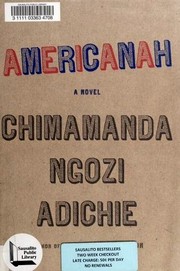
A novel of a Nigerian immigrant in America, and of race, love and home.
Recommended by: Michelle Obama
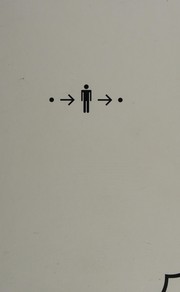
A story told entirely in pictograms and icons, with no words.
Recommended by: Patrick Collison
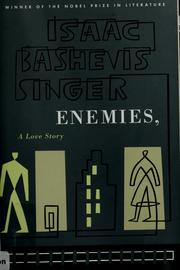
A Holocaust survivor and refugee who finds himself with three wives.
Recommended by: Patrick Collison
A novel set in an undated world ruled by a despot.
Recommended by: Marc Andreessen
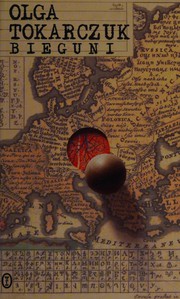
A fragmentary novel of travel, bodies and anatomy across the centuries.
Recommended by: Andrew Wilkinson
Milan publishers drawn into Kabbalah, the Knights Templar and conspiracy theories.
Recommended by: Patrick Collison