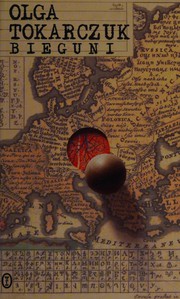
Flights
A fragmentary novel of travel, bodies and anatomy across the centuries.
Summary
Olga Tokarczuk's fragmentary novel was published in Polish in 2007 as Bieguni, "runners", after a sect of Old Believers who held that constant motion is a way to avoid evil. Jennifer Croft's English translation won the Man Booker International Prize in 2018; Tokarczuk was the first Polish author to receive it, and she and Croft shared the £50,000 prize. Set between the seventeenth and twenty-first centuries, the book is a meditation on travel told in 116 pieces, some a single sentence long and others thirty-one pages, all narrated by the same nameless female traveller.
Some vignettes are invented and some rest on fact. A seventeenth-century Dutch anatomist, Philip Verheyen, studies the Achilles tendon by dissecting his own amputated leg. Chopin's sister, Ludwika Jędrzejewicz, carries his heart back to Warsaw in secret. A woman returns to Poland to poison her terminally ill high school sweetheart, and a man slowly loses his mind when his wife and child vanish on holiday and then reappear. The pieces explore what it means to be a body moving through space and time. Critics compared her to W. G. Sebald and Milan Kundera.
Key takeaways 4
- The novel is built from 116 fragments rather than a single plot.
- Travel and constant motion are its subject, from pilgrims to modern tourists.
- Fact and fiction mix, from Chopin's heart to an anatomist who dissects his own leg.
- The body, its preservation and its decay recur throughout.
Who should read it
Readers of literary fiction open to fragmentary, essayistic novels about travel and the body.
Who recommended it 1 · 1 direct
Similar books 6
Chosen by shared topics, the entries that hold them, and the people who recommended both.
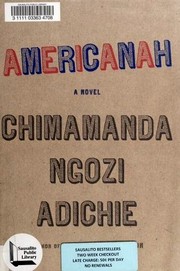
A novel of a Nigerian immigrant in America, and of race, love and home.
Recommended by: Michelle Obama
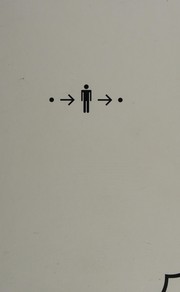
A story told entirely in pictograms and icons, with no words.
Recommended by: Patrick Collison
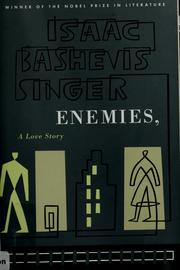
A Holocaust survivor and refugee who finds himself with three wives.
Recommended by: Patrick Collison
A novel set in an undated world ruled by a despot.
Recommended by: Marc Andreessen
Milan publishers drawn into Kabbalah, the Knights Templar and conspiracy theories.
Recommended by: Patrick Collison
A novel that alternates a cyberpunk story with one set at the end of the world.
Recommended by: Matt Mullenweg