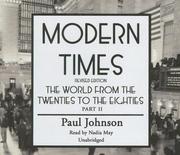
Modern Times: The World from the Twenties to the Nineties
A conservative world history of the twentieth century after the First World War.
Summary
Paul Johnson, a British journalist and historian, gives a world history of the twentieth century from a conservative perspective, from the aftermath of the First World War to the collapse of Communism in Eastern Europe. First published in 1983, it was later revised and extended, which explains the two subtitles, the 1980s and the 1990s. National Review listed it among ten books that changed North America. It runs as chronological essays across about seventy years.
The first half covers the shaping of the Soviet Union after 1917, the fall of democracy in Central Europe to Fascism and National Socialism, and the causes, course and outcome of the Second World War. One chapter, "An Infernal Theocracy, a Celestial Chaos", treats Imperial Japan and China in the Warlord Era. The second half covers the Cold War, the end of colonialism and the idea of the Third World, the rise of Communist China and independent India, Europe's post-war reconstruction and boom, and the rise of the East Asian Tigers.
Key takeaways 4
- Johnson writes twentieth-century world history from a conservative viewpoint.
- He traces the rise of the Soviet Union and of Fascism after the First World War.
- Decolonisation and the Third World form a major theme of the post-war half.
- The narrative closes with the collapse of Communism in Eastern Europe.
Who should read it
Readers who want a single-volume, opinionated history of the twentieth century.
Who recommended it 2 · 1 direct
Similar books 6
Chosen by shared topics, the entries that hold them, and the people who recommended both.
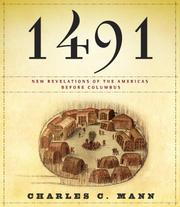
What the Americas were like before Europeans arrived, against the old view.
Recommended by: Mohnish Pabrai
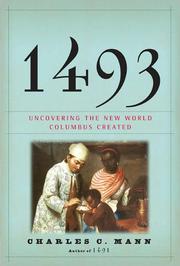
The biological upheaval that followed Columbus's voyages, and the world it made.
Recommended by: Mohnish Pabrai
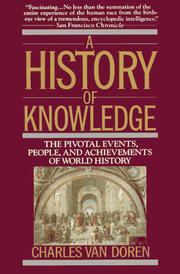
A history of human knowledge, learning and intellectual life.
Recommended by: Mohnish Pabrai
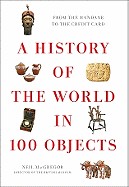
Two million years of human history, told through 100 objects in the British Museum.
Recommended by: Mohnish Pabrai, Stewart Brand
The genetic basis of race and its role in human history, from genome mapping.
Recommended by: Mohnish Pabrai
How commerce, architecture and technology shaped the modern home.
Recommended by: Andrew Wilkinson, Mohnish Pabrai and 1 other