Updates

  1. Person pages list letters, writing, profiles and links as sortable tables with filters, and show each person's companies as links; Fund letters show each letter's description in its own column.
  2. Experts show a checked job title and a short description of each person; 30 more people have photographs.
  3. Every company, fund, university and publication the experts work for has a page listing the people there.
  4. Fund letters show each letter's thesis and filter by it; 225 person pages list the essays, columns and newsletter issues the person wrote.
  5. Person pages list every essay and newsletter issue a person wrote, and their own books as a table in List view.
  6. Recommends shows the five largest kinds of book and the rest under More; browse pictures load sooner.
  7. Podcasts and talks link the original episode, filter by Audio and video or Press, and list each publisher once.
  8. Pages are wider, Recommends has List and Grid, and a filter clicked again turns off.
  9. Book cards sit in a ruled grid with Open Library and Goodreads links and each book's one-line note.
  10. Funds is now Investors; each investor's styles are buttons that filter the table.
  11. Podcasts and talks on a person's page filter by year and publisher and show as a list or a grid of pictures.
  12. Quotes show only people's own words: 472 summaries written by list sites are gone.
  13. Country pages open from Browse again, and every link on the shelf lands on a page.
  14. Subject and person pages show their sections as tabs, and each book appears once on a person's page.
  15. Book cards show the quote, who said it and the source; grids show five cards to a row.
  16. On a phone, a menu holds the sections, search, Updates, Feedback and dark mode.
  17. Feedback takes a screenshot of the page with no browser prompt, opens a screenshot full size when you click it, and clears itself once sent.
  18. Book cards are centred, search names the topic each book sits in, and any text cut short shows whole on hover.
  19. Search groups its results by kind: people, companies, geographies, subjects, topics, books, funds, fund letters and papers.
  20. The Books table lists who recommended each book by name, and the browser tab names the section you are in.
  21. Feedback can take a screenshot of the page, or one you paste or choose, and opens in the corner beside Updates.
  22. Each rail button reopens its section where you left it, and Browse, Table and People show on every book and subject page.
  23. Filters grey out choices that hold nothing instead of hiding them, and Books › People filters by authors or recommenders.
  24. Feedback takes a subject line and up to three screenshots.
  25. Biographies are grouped by the person they are about: 41 new pages, from Abraham Lincoln to Lee Kuan Yew.
  26. Sport splits into 23 sports, and Religion into one topic per faith.
  27. Book lists show as cards: the cover, one recommendation quote and every recommender by name.
  28. Seventeen subjects that had two or three pages under different names now have one page each.
  29. Every page lists its Experts as authors and recommenders, with a link to them on the Experts tab.
  30. Economics, Financial history, Financial panics and Accounting are subjects of their own, with one page per financial crisis.
  31. Book, person and subject pages open inside the app, so the tabs stay in view.
  32. 996 more book covers, and photographs or logos for 227 more people and companies.
  33. Books › Browse shows every subject as cards, and the rail holds Fund letters, Papers, Experts, Books and Funds.
  34. Every topic over 150 books splits into narrower topics, each with a page of its own.

Send feedback

What is it?
Screenshots, up to 3 (optional)
or paste one with Ctrl+V

We use your email only to reply to you.

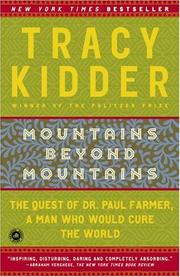
Mountains Beyond Mountains

Mountains Beyond Mountains

Tracy Kidder
2003
332 pages · about 5h 32m to read Open Librarygoodreads

Summary

Kidder follows Paul Farmer, a physician and anthropologist who co-founded Partners In Health and spent his career treating patients in Haiti, Peru, Russia and elsewhere while holding a position at Harvard Medical School. Kidder travelled with Farmer over several years.

Farmer's central argument is that the standard of care available to poor patients should be the same as that available to wealthy ones, and that the public health orthodoxy of cost-effectiveness, which held that treating drug-resistant tuberculosis in poor countries was not economically justified, was a decision to let people die rather than a technical constraint. He demonstrated in Peru that community-based treatment of multi-drug-resistant tuberculosis could work, which changed World Health Organization policy and eventually the price of the drugs.

The operational model Partners In Health built uses community health workers, meaning local people trained and paid to visit patients daily, which addressed the adherence problem that had made treatment appear impossible. Kidder does not present Farmer as easy to emulate. He documents the personal cost, the strain on his family, the twelve-hour walks to visit single patients, and the difficulty other people had working alongside someone who accepted no limits. Farmer's own answer, that the goal is not to be reasonable, is the book's central tension.

Kidder is a sympathetic observer and the book is a portrait rather than an analysis of global health policy. Farmer's position on cost-effectiveness has been argued against by health economists on the grounds that resources spent on expensive treatments come from somewhere. Farmer died in 2022.

Key takeaways 8

  1. The standard of care available to poor patients should be the same as for wealthy ones, which Farmer treated as a moral requirement rather than an aspiration.
  2. Cost-effectiveness arguments in global health are decisions about whose lives to save rather than technical constraints.
  3. Community-based treatment of drug-resistant tuberculosis worked in Peru, which changed World Health Organization policy and eventually drug pricing.
  4. Community health workers who are local, trained and paid to visit patients daily solved the adherence problem that had made treatment appear impossible.
  5. Demonstrating that something works in one place changes what is considered possible everywhere, which is why the Peru project mattered beyond its patients.
  6. Structural violence, meaning the arrangements that determine who gets sick and who gets treated, is the actual subject of medicine in poor countries.
  7. Farmer's approach imposed costs on his family and on colleagues, which Kidder documents rather than omitting.
  8. Health economists argue that resources spent on expensive treatments come from other uses, which is the objection Farmer's position does not fully answer.

Who should read it

Readers interested in how a demonstration project changed global policy, and in what a refusal to accept resource constraints costs the person making it.

Who recommended it 5 · 1 direct

Bill Gatesreported
Daniel Burkareported

Similar books 6

Chosen by shared topics, the entries that hold them, and the people who recommended both.
William H. Foege · 2011

Recommended by: Bill Gates

Theodore H. Schwartz · 2024

A neurosurgeon on how medical decisions and hospital incentives actually work

Recommended by: Bill Gates
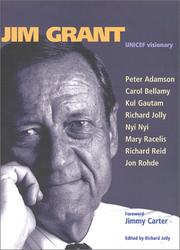
Peter Adamson

Recommended by: Bill Gates

Paul Kalanithi · 2016

A neurosurgeon diagnosed with lung cancer at 36 asks what makes life worth living.

Where it sits in the reference 0

No entry holds this book yet. It reached the reference because someone recommended it.

Topics

Biography and MemoirMedicine and BiologyScientists, Doctors and ThinkersEpidemics and public health