Nicomachean Ethics
What the good life is: the end at which all human action aims.
Summary
The Nicomachean Ethics is Aristotle's best-known work on ethics, the study of the good for human life: the end at which all actions aim. It is divided into ten parts, called books, is closely related to his Eudemian Ethics, and is the main text for interpreting Aristotelian ethics. Its central question, how best to live, had been explored before by Plato, Aristotle's teacher and friend.
Aristotle held that ethics is practical rather than theoretical. It does not only ask what the good consists of; it aims to help people achieve it. In his Metaphysics he describes how Socrates turned philosophy to human questions, where earlier philosophy had dealt only with natural science, and the Ethics continues that turn. The work connects to his Politics, which shares its goal of making people good, there through the creation and upkeep of social institutions. The source read here describes the work's aims and place among Aristotle's writings rather than the arguments of each book.
Key takeaways 4
- Aristotle asks what the highest good of human life is and how to reach it.
- He treats ethics as a practical discipline meant to improve conduct.
- The Ethics continues Socrates's turn from natural science to human questions.
- Ethics and politics share the aim of making people good.
Who should read it
Readers who want the founding text of virtue ethics in Western philosophy.
Who recommended it 3
Similar books 6
Chosen by shared topics, the entries that hold them, and the people who recommended both.
Why poverty, not inequality, is the moral problem.
Recommended by: Patrick Collison, Paul Graham
An almanac of proverbs and maxims urging thrift, industry and courtesy.
Recommended by: Li Lu, Tim Ferriss
Twelve rules for living, each drawn from clinical practice, biology and myth.
“A unique thinker with strong opinions presented as indisputable fact. More surprisingly interesting ideas than almost any book I've ever read. Extremely thoughtful, but occasionally abruptly concludes with an unsupported point. It has a conservative “this is how it is” certainty. It’s a broad collection of thoughtful insights on life, mixed with a lot of Bible interpretation.” — Derek Sivers
Source: Derek Sivers book notes (primary, rated list) · Rating: 9/10
Recommended by: Derek Sivers, Guy Spier, Nat Eliason and 8 others
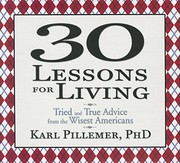
Advice on living, loving and happiness from over 1,000 older Americans.
Recommended by: Morgan Housel
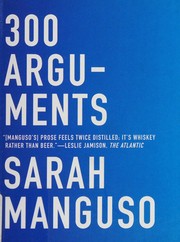
Aphorisms on desire, ambition and failure.
“So, the book that I just finished recently, it's not a full-fledged book, so, it's real short, 300 Arguments by Sarah Manguso.” — Frank Blake
Source: The Tim Ferriss Show Transcripts: Frank Blake (#303)
Recommended by: Frank Blake
A philosophy of time for mortals, and how to make the most of a finite life.
Recommended by: Matt Mullenweg