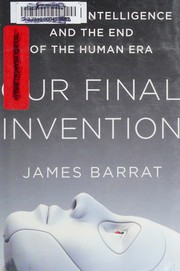
Our Final Invention
The benefits and risks of human-level and superhuman artificial intelligence.
Summary
James Barrat's 2013 book, subtitled Artificial Intelligence and the End of the Human Era, weighs the benefits and risks of human-level and superhuman artificial intelligence, among them the extinction of humanity. AI already chooses the books people buy and the films they see, runs most trades on Wall Street and controls energy, water and transport systems; intelligent systems double in speed and power each year, and in as little as a decade AI could match and then surpass human intelligence.
Corporations and government agencies are spending billions to reach human-level intelligence. Once AI reaches it, scientists argue, it will have survival drives much like ours, and people may have to compete with a rival more cunning, powerful and alien than they can imagine. Barrat explores the dangers of pursuing advanced AI heedlessly through profiles of technologists, industry watchdogs and AI systems, and asks whether humans can coexist with machines far smarter than they are. A second edition in 2023 added a preface in which he says the decade since had left him frightened by self-improving AI released into public use.
Key takeaways 4
- Barrat argues that superhuman AI could threaten human survival.
- An advanced AI may develop survival drives of its own.
- Military, academic and corporate research are racing toward human-level AI.
- Barrat's 2023 preface says the risks had grown in the decade since publication.
Who should read it
Readers who want an early, alarmed account of the risks of advanced artificial intelligence.
Who recommended it 1
Similar books 6
Chosen by shared topics, the entries that hold them, and the people who recommended both.
The rationalists around LessWrong and their fear of artificial intelligence risk.
The struggle to make machine learning systems do what people actually intend.
Recommended by: Sam Altman
An argument that consciousness is not algorithmic and rests on quantum mechanics.
Recommended by: Patrick Collison
Why chasing fixed objectives stifles discovery in science, education and life.
Recommended by: Ev Williams
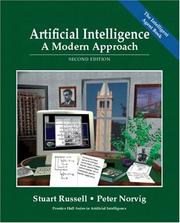
Recommended by: Patrick Collison, Cynthia Johnson, Elon Musk
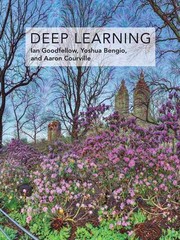
The textbook on deep learning: how machines learn layered concepts from data.
Recommended by: Vinod Khosla, Elon Musk and 2 others