Updates

  1. Person pages list letters, writing, profiles and links as sortable tables with filters, and show each person's companies as links; Fund letters show each letter's description in its own column.
  2. Experts show a checked job title and a short description of each person; 30 more people have photographs.
  3. Every company, fund, university and publication the experts work for has a page listing the people there.
  4. Fund letters show each letter's thesis and filter by it; 225 person pages list the essays, columns and newsletter issues the person wrote.
  5. Person pages list every essay and newsletter issue a person wrote, and their own books as a table in List view.
  6. Recommends shows the five largest kinds of book and the rest under More; browse pictures load sooner.
  7. Podcasts and talks link the original episode, filter by Audio and video or Press, and list each publisher once.
  8. Pages are wider, Recommends has List and Grid, and a filter clicked again turns off.
  9. Book cards sit in a ruled grid with Open Library and Goodreads links and each book's one-line note.
  10. Funds is now Investors; each investor's styles are buttons that filter the table.
  11. Podcasts and talks on a person's page filter by year and publisher and show as a list or a grid of pictures.
  12. Quotes show only people's own words: 472 summaries written by list sites are gone.
  13. Country pages open from Browse again, and every link on the shelf lands on a page.
  14. Subject and person pages show their sections as tabs, and each book appears once on a person's page.
  15. Book cards show the quote, who said it and the source; grids show five cards to a row.
  16. On a phone, a menu holds the sections, search, Updates, Feedback and dark mode.
  17. Feedback takes a screenshot of the page with no browser prompt, opens a screenshot full size when you click it, and clears itself once sent.
  18. Book cards are centred, search names the topic each book sits in, and any text cut short shows whole on hover.
  19. Search groups its results by kind: people, companies, geographies, subjects, topics, books, funds, fund letters and papers.
  20. The Books table lists who recommended each book by name, and the browser tab names the section you are in.
  21. Feedback can take a screenshot of the page, or one you paste or choose, and opens in the corner beside Updates.
  22. Each rail button reopens its section where you left it, and Browse, Table and People show on every book and subject page.
  23. Filters grey out choices that hold nothing instead of hiding them, and Books › People filters by authors or recommenders.
  24. Feedback takes a subject line and up to three screenshots.
  25. Biographies are grouped by the person they are about: 41 new pages, from Abraham Lincoln to Lee Kuan Yew.
  26. Sport splits into 23 sports, and Religion into one topic per faith.
  27. Book lists show as cards: the cover, one recommendation quote and every recommender by name.
  28. Seventeen subjects that had two or three pages under different names now have one page each.
  29. Every page lists its Experts as authors and recommenders, with a link to them on the Experts tab.
  30. Economics, Financial history, Financial panics and Accounting are subjects of their own, with one page per financial crisis.
  31. Book, person and subject pages open inside the app, so the tabs stay in view.
  32. 996 more book covers, and photographs or logos for 227 more people and companies.
  33. Books › Browse shows every subject as cards, and the rail holds Fund letters, Papers, Experts, Books and Funds.
  34. Every topic over 150 books splits into narrower topics, each with a page of its own.

Send feedback

What is it?
Screenshots, up to 3 (optional)
or paste one with Ctrl+V

We use your email only to reply to you.

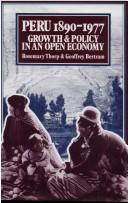
Peru 1890-1977: Growth and Policy in an Open

Peru 1890-1977: Growth and Policy in an Open Economy

Rosemary Thorp, Geoffrey Bertram
1978
T2 475 pages · about 7h 55m to read Open Librarygoodreads

The classic export-led growth study; why commodity booms did not compound.

Summary

Rosemary Thorp and Geoffrey Bertram wrote this study of the Peruvian economy across nearly a century, and it became a standard work in Latin American economic history. Their subject is why an economy with successive export booms failed to convert them into sustained development.

Their analytical concept is returned value: the share of export earnings that remains in the domestic economy as wages, taxes, locally purchased inputs and reinvested profit, rather than accruing abroad to foreign owners or being spent on imports. They trace this across Peru's export cycles in guano, sugar, cotton, oil, copper and fishmeal, and show that the share retained domestically varied enormously by commodity and by ownership structure. Locally owned export sectors generated linkages that foreign-owned enclaves did not, and the political economy determined which arrangements prevailed.

The book combines detailed quantitative reconstruction with political analysis of the Peruvian elite's choices. Its argument was influential in the structuralist and dependency debates, though the authors are more empirical than most participants in those arguments. It ends in 1977, before the debt crisis, the hyperinflation of the 1980s, the Fujimori period and the mining boom of the 2000s. The returned value framework remains directly applicable to any resource economy and to the current arguments about local content requirements.

Key takeaways 7

  1. The share of export earnings retained in the domestic economy, rather than the size of the export boom, determines its development effect.
  2. Locally owned export sectors generate domestic linkages that foreign-owned enclaves do not.
  3. Peru's successive export booms produced growth without cumulative development because retained value stayed low.
  4. Ownership structure in the export sector is a political outcome rather than a technical necessity of the industry.
  5. Elite consumption of imported goods dissipated export earnings that could have funded domestic investment.
  6. The authors argue that policy could have raised returned value substantially and that the Peruvian elite had no interest in doing so.
  7. Export diversification across commodities did not help, because each new boom repeated the same ownership and spending pattern.

Who should read it

Analysts of resource economies who want the returned-value framework and a century-long test of it in one country.

Similar books 6

Chosen by shared topics, the entries that hold them, and the people who recommended both.
Hernando de Soto · 1989

A study of Lima's informal economy and the legal costs that keep the poor outside it.
Gerardo della Paolera, Alan M. Taylor · 2003

Essays on why a rich, well-endowed Argentina stagnated for so long.
Javier Martínez, Alvaro Díaz · 1996

How the productive structure and business class were remade after 1973.
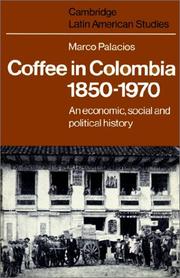
Marco Palacios · 1980

Economic history of the crop, the growers' federation and the export institutions built around it.
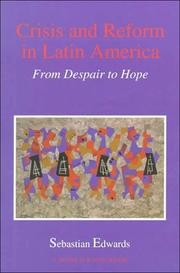
Sebastian Edwards · 1995

Latin America's reforms from the 1980s debt crisis to the mid-1990s, assessed.
R. Albert Berry · 1983

Dated but the only serious English work on Colombian manufacturing.

Where it sits in the reference 2

Geographies
Economics

Topics

EconomicsGeneral HistoryAsia, Africa, Latin America and the Middle East