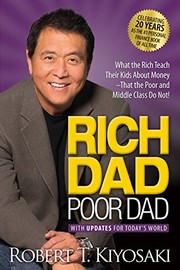
Rich Dad, Poor Dad
Two fathers contrasted to argue that schools fail to teach how money works.
Summary
Kiyosaki contrasts two father figures, his highly educated biological father who remained financially insecure, and a friend's father who had little formal education and became wealthy, and uses the contrast to argue that schools teach people to work for money rather than to make money work for them.
The central lesson is a redefinition of assets and liabilities. Kiyosaki defines an asset as anything that puts money into your pocket and a liability as anything that takes money out, which leads to his claim that a personal residence is a liability. He argues that the middle class buys liabilities believing them to be assets, and that the wealthy buy income-producing assets first and let those assets fund lifestyle spending.
He also argues for financial literacy in accounting, investing, markets and law; for developing business ownership rather than professional employment, using his cashflow quadrant of employee, self-employed, business owner and investor; for using corporations for tax and liability advantages; and for treating your primary occupation as a source of skills rather than of income.
The book has substantial problems. The rich dad figure has never been identified and Kiyosaki has given inconsistent answers about whether he existed. The specific investment advice, particularly around leveraged real estate and tax structures, is presented without risk discussion and reflects a specific market period. Kiyosaki's own subsequent record includes a company bankruptcy and heavy promotion of expensive seminars. The definition of assets is useful as a mental discipline and unhelpful as accounting. Read it for the framing of buying income-producing assets before consumption, not for method.
Key takeaways 8
- An asset is anything that puts money into your pocket and a liability is anything that takes money out, regardless of how accountants classify it.
- Most people buy liabilities believing them to be assets, and a personal residence funded by a mortgage is Kiyosaki's central example.
- Income should be used to acquire income-producing assets first, with lifestyle spending funded from what those assets produce.
- Formal education teaches people to be employees and teaches nothing about accounting, investing, taxation or business ownership.
- Working to learn a skill matters more early in a career than working for the highest available salary.
- Employees pay tax first and spend what remains, while business owners spend first and pay tax on what remains, which is the structural advantage Kiyosaki emphasises.
- Fear of losing money and the desire for security keep people in employment even when they know the arithmetic works against them.
- The book's central biographical claim about a rich dad has never been substantiated and the author's own business record undercuts the advice.
Who should read it
Readers who need the basic reframing from earning income to acquiring income-producing assets, treating the specific tactics and the author's record with scepticism.
About Robert Kiyosaki
Author and financial-education entrepreneur behind the Rich Dad series of books, seminars and games.
Rich Dad Poor Dad draws one distinction - between assets that produce income and liabilities that consume it - and argues for accumulating the first before raising personal spending, which is how a very large number of retail investors first learned to read their own balance sheet. The book belongs in a reference for its reach rather than its rigour; its specific property and tax advice is promotional and widely disputed.
Who recommended it 10 · 3 direct
“Not a great book, but communicates a very valuable mindset. I’m reading it to my son who wants to learn how to make money. Its simplistic and repeated message aims to get you out of the employee mindset, and to only spend your money on income-generating assets.”
Similar books 6
Chosen by shared topics, the entries that hold them, and the people who recommended both.
How buying income-producing assets can make a person financially independent early.
Recommended by: Mohnish Pabrai
Twenty short essays on why behaviour matters more than knowledge with money.
“Example: Morgan Housel has sold 1M+ copies of "The Psychology of Money" with them (though he probably didn't need much help 😝 - if you haven't read this book yet, it's a MUST)” — Ana Fabrega
Source: Fab Fridays 96: Book Deal! - by Ana Lorena - Fab Fridays
Recommended by: Ana Fabrega, Andrew Wilkinson, Derek Sivers and 11 others
A six-week programme to automate banking, credit, saving and investing.
“An amazing book about consumer finance and a healthy approach to managing your money. If you are age 18-35, this is a must-read! My notes are scarce, so get the book. Even if over 35, you might find some good tips on lowering your fees on various services, and a good reminder of good savings practices.” — Derek Sivers
Source: Derek Sivers book notes (primary, rated list) · Rating: 7/10
Recommended by: Derek Sivers, Mohnish Pabrai, Nat Eliason and 3 others
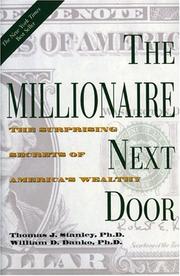
Survey research showing most American millionaires live modestly and save hard.
Recommended by: Jim Collins, Mohnish Pabrai and 3 others
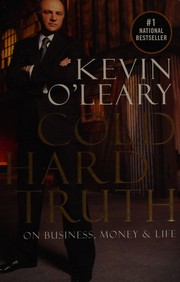
An investor's life story and his rules for business and personal money.
Recommended by: Mohnish Pabrai
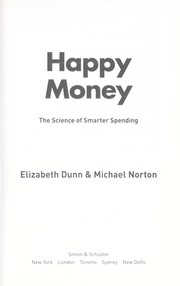
Research on how to spend money in ways that make people happier.
Recommended by: Mohnish Pabrai, Tim Ferriss