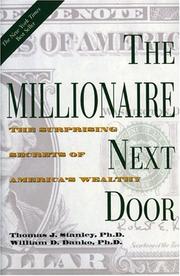
The Millionaire Next Door
Survey research showing most American millionaires live modestly and save hard.
Thomas Stanley and William Danko's 1996 research-based portrait of actual American millionaires found them living in ordinary neighborhoods, driving used cars, and running unglamorous businesses. The book's lasting value is empirical: it provides data against the cultural image of wealth as consumption, and it directly informs how the FIRE movement thinks about lifestyle design.
Summary
Stanley and Danko surveyed and interviewed American households with net worth above one million dollars and report what they found, which contradicts the popular picture of wealth. Their central finding is that most millionaires accumulated wealth through consistent saving and modest consumption over decades rather than through high income, inheritance or investment skill.
The specific findings include that most live in modest houses in ordinary neighbourhoods rather than in affluent ones; that they buy used cars and hold them for years; that a substantial majority are self-employed or own small businesses, frequently in unglamorous industries; that they spend far less than their incomes permit and track their spending in detail; and that the households with high incomes and high consumption, which they call under accumulators of wealth, have low net worth despite appearances.
Their expected net worth formula, age multiplied by pre-tax income divided by ten, provides a benchmark for whether a household is accumulating at an appropriate rate. They also cover what they call economic outpatient care, meaning financial support given to adult children, which they report reduces those children's own accumulation and productivity, and the differences in how sons and daughters were treated.
The research is survey-based with self-selected respondents and the sample is skewed toward first-generation wealth. The million dollar threshold was worth substantially more when the book was published in 1996. The findings describe accumulation among business owners of a particular generation and transfer imperfectly to salaried professionals now facing different housing and education costs. The core observation, that consumption rather than income determines accumulation, holds.
Key takeaways 8
- Most millionaires accumulated wealth through consistent saving and modest consumption rather than through high income or investment skill.
- High income and high net worth are different things, and households with large incomes and matching consumption have low net worth.
- A substantial majority of the millionaires surveyed were self-employed or owned small businesses in unglamorous industries.
- Most live in modest houses in ordinary neighbourhoods, which is what allowed the accumulation in the first place.
- Detailed tracking of spending was near-universal among accumulators and near-absent among high earners with low net worth.
- Financial support given to adult children reduces those children's own accumulation and productivity.
- Expected net worth can be estimated as age multiplied by pre-tax income divided by ten, which provides a benchmark for accumulation rate.
- The sample is self-selected and skewed toward first-generation business owners of a particular generation, which limits how far the findings transfer.
Who should read it
Readers who conflate income with wealth and want survey evidence on what actually distinguishes households that accumulate.
Who recommended it 5 · 2 direct
Similar books 6
Chosen by shared topics, the entries that hold them, and the people who recommended both.
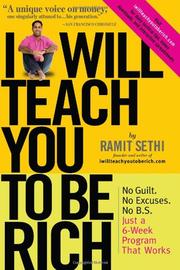
A six-week programme to automate banking, credit, saving and investing.
“An amazing book about consumer finance and a healthy approach to managing your money. If you are age 18-35, this is a must-read! My notes are scarce, so get the book. Even if over 35, you might find some good tips on lowering your fees on various services, and a good reminder of good savings practices.” — Derek Sivers
Source: Derek Sivers book notes (primary, rated list) · Rating: 7/10
Recommended by: Derek Sivers, Mohnish Pabrai, Nat Eliason and 3 others
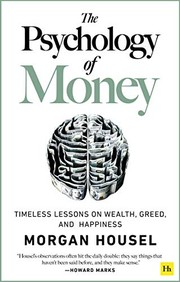
Twenty short essays on why behaviour matters more than knowledge with money.
“Example: Morgan Housel has sold 1M+ copies of "The Psychology of Money" with them (though he probably didn't need much help 😝 - if you haven't read this book yet, it's a MUST)” — Ana Fabrega
Source: Fab Fridays 96: Book Deal! - by Ana Lorena - Fab Fridays
Recommended by: Ana Fabrega, Andrew Wilkinson, Derek Sivers and 11 others
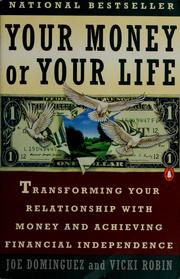
A nine-step programme that counts spending in hours of life energy.
Recommended by: Ali Abdaal, Graham Stephan and 1 other
A narrow, plain plan for saving and investing, from letters to a daughter.
Recommended by: Mr. Money Mustache
Lessons on success and wealth from African American millionaires.
Recommended by: Warren Buffett
How costs, turnover and fund structure decide what mutual fund investors earn.
“The founder of the Vanguard Group and father of the index-fund industry methodically sorts fact from fiction. Following his logical arguments can benefit you even if you never invest in a mutual fund, since Bogle touches on just about every crucial aspect of investing, including taxes, trading costs, diversification, performance measurement and the power of patience.” — Jason Zweig
Source: Best Books for Investors: A Short Shelf — jasonzweig.com
Recommended by: Jason Zweig, Michael Mauboussin and 4 others