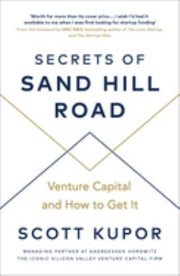
Secrets of Sand Hill Road
How venture capital works, from fund economics to term sheets, for founders.
An a16z partner explaining fund economics to founders.
Summary
Kupor, managing partner at Andreessen Horowitz, explains how venture capital works from both sides, aimed at founders who need to understand what they are agreeing to. It is the most practically detailed book on the mechanics.
The first part explains venture firms as businesses: how funds are structured as limited partnerships, who the limited partners are and what their constraints require, how the two and twenty fee structure works, what a fund's ten-year life implies for the pressure on portfolio companies, why the power law forces investors to seek outliers rather than reliable returns, and how carried interest and distribution waterfalls actually operate.
The second part covers the term sheet clause by clause. Kupor explains liquidation preferences including participating and non-participating structures with the arithmetic, anti-dilution provisions and the difference between broad-based weighted average and full ratchet, protective provisions, board composition, pro rata rights, option pool shuffles and how the pool's placement affects the effective valuation, drag-along rights, and the distinction between economic terms and control terms. He argues that founders overweight valuation and underweight control and preference terms, which determine outcomes in every scenario except the best one.
The third part covers the mechanics of exits, acquisition structures and going public, including direct listings. The perspective is a general partner's, so the advice is shaped by what a venture firm considers reasonable. It is specific to United States practice at a particular period, and terms have shifted since publication. The clause-level explanations with worked arithmetic are the reason to read it.
Key takeaways 8
- Venture funds are limited partnerships with a ten-year life, which imposes exit pressure on portfolio companies regardless of what the business needs.
- The power law forces venture investors to seek outcomes that could return the whole fund, which means a reliably profitable company is not what they are buying.
- Founders overweight valuation and underweight liquidation preference and control terms, which determine outcomes in every scenario except the largest exit.
- A participating preference pays the investor their money back and then their share of the remainder, which changes founder proceeds substantially at moderate exit values.
- Anti-dilution provisions determine what happens in a down round, and full ratchet transfers far more from founders than weighted average does.
- The option pool is usually created before the investment, which means it dilutes existing holders and lowers the effective pre-money valuation.
- Protective provisions give investors a veto over specific actions regardless of their board or ownership position, which is where control actually sits.
- Board composition matters more than ownership percentage for most decisions a company faces before an exit.
Who should read it
Founders raising venture capital who need to understand term sheets clause by clause, and anyone learning how venture funds operate as businesses.
Who recommended it 6
Similar books 6
Chosen by shared topics, the entries that hold them, and the people who recommended both.
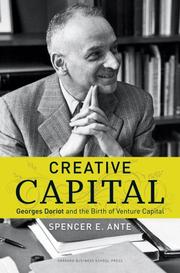
Georges Doriot, who showed that investing in small, risky firms could pay.
“For a biography of Georges Doriot, see Spencer E. Ante, Creative Capital: Georges Doriot and the Birth of Venture Capital (Boston, MA: Harvard Business Press, 2008)” — Michael Mauboussin
Source: Public to Private Equity in the United States: A Long-Term Look, page 63
Recommended by: Michael Mauboussin, Patrick Collison
Why neoliberal capitalism is failing, and the Dynamic Capitalism taking its place.
Recommended by: Brad Feld
How startups raise money from corporate venture arms, from 100-plus interviews.
Recommended by: Cynthia Johnson
Recommended by: Mohnish Pabrai
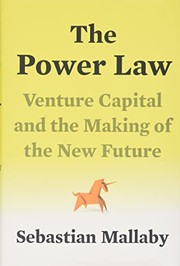
Venture capital from Arthur Rock to SoftBank, and why a few big bets pay for all.
Recommended by: Andrew Wilkinson, Anthony Pompliano and 4 others
Where it sits in the reference 2
Topics 2
As an Amazon Associate I earn from qualifying purchases.