
Stalingrad
The battle of Stalingrad, as soldiers on both sides and trapped civilians lived it.
Summary
Antony Beevor's narrative history of the battle for Stalingrad first appeared from Viking in 1998. It opens with Operation Barbarossa, the German attack on the Soviet Union in June 1941, and the advance east. Most of the book covers the battle itself, from the opening German assault to Operation Uranus and the Soviet victory, and it closes with the German surrender in February 1943 and the first moves of the Soviet push towards Germany.
The battle became the place where Hitler's and Stalin's will to win the war in the east was concentrated. Beevor describes what soldiers of both armies went through as they fought hand to hand, room by room, through every building, and what the city's civilians suffered while trapped there. He records war crimes by both sides; among his sources are NKVD reports and the anti-Nazi German officer Helmuth Groscurth. The Red Army's victory, and the failure of Barbarossa, was the first check on Hitler's plans to take territory in Europe, and his decline began there. In 1999 it won the Wolfson History Prize, the Hawthornden Prize for Literature and the first Samuel Johnson Prize.
Key takeaways 5
- Stalingrad became the focus of Hitler's and Stalin's will to win on the eastern front.
- Hand-to-hand fighting through the city's buildings devastated both armies, and its civilians suffered with them.
- Operation Uranus led to the Soviet victory and the German surrender in February 1943.
- Beevor documents war crimes by both sides, drawing on NKVD reports and German witnesses.
- The defeat was the first check on Hitler's territorial ambitions in Europe.
Who should read it
Readers of military history who want the battle told through the soldiers and civilians who lived it.
Who recommended it 1 · 1 direct
Similar books 6
Chosen by shared topics, the entries that hold them, and the people who recommended both.

The year that could have stalled the Allies, and how the war turned.
Recommended by: Keith Rabois

A biography of General Douglas MacArthur.
Recommended by: Jim Collins, Mohnish Pabrai, Elon Musk

The Nazi and Stalinist mass murders in the lands between, told as one history.
Recommended by: Eric Weinstein, Peter Thiel

The sinking of the Lusitania, told from both the hunter and the hunted.
Recommended by: Chris Dixon, Sahil Bloom
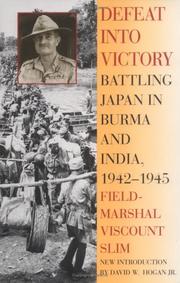
The commander of Britain's 14th Army on retaking Burma from Japan.
Recommended by: Mohnish Pabrai
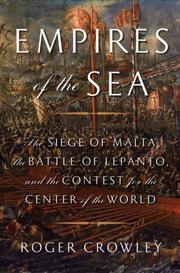
The Ottoman-Christian war for the Mediterranean, from Rhodes onward.
Recommended by: Paul Graham