Start at the End
A design framework from behavioural science: begin with the behaviour to change.
Summary
Matt Wallaert, a behavioural scientist and technology executive who has led product design at organisations from the start-up Clover Health to Microsoft, argues that the purpose of every product and service is to change behaviour. He proposes a framework for design grounded in behavioural science that starts with the outcome, the behaviour a company wants to see, rather than with the process or the product.
Under this approach, the most effective companies work out what people want to do and why they are not already doing it, and then build products and services to close that gap. Wallaert illustrates the method with cases ranging from Uber's ride-sharing service to Flamin' Hot Cheetos, and argues that it can improve both how people work and how they live.
Key takeaways 4
- Every product exists to change some behaviour, and design should begin by naming that behaviour.
- A company should find out what people want to do and why they are not already doing it.
- Starting from the intended outcome keeps teams from building features nobody uses.
- Uber and Flamin' Hot Cheetos both succeeded by making a wanted behaviour easier.
Who should read it
Product managers, designers and founders who want a behavioural-science method for deciding what to build.
Who recommended it 1
Similar books 6
Chosen by shared topics, the entries that hold them, and the people who recommended both.

People have no fixed sense of value, so context and anchors set the prices they pay.
“For a good popular treatment of this topic, see William Poundstone, Priceless: The Myth of Fair Value (and How to Take Advantage of It) (New York: Hill and Wang” — Michael Mauboussin
Source: Blaming the Rat: Incentives, Motivation, and How They Interact, page 14
Recommended by: Michael Mauboussin, Mohnish Pabrai and 1 other
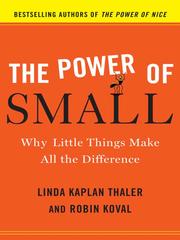
Why small actions and gestures matter in life and career.
Recommended by: Tom Peters
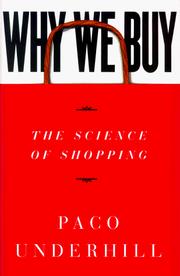
What watching shoppers in stores shows about how visits turn into sales.
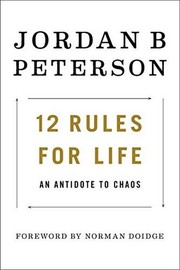
Twelve rules for living, each drawn from clinical practice, biology and myth.
“A unique thinker with strong opinions presented as indisputable fact. More surprisingly interesting ideas than almost any book I've ever read. Extremely thoughtful, but occasionally abruptly concludes with an unsupported point. It has a conservative “this is how it is” certainty. It’s a broad collection of thoughtful insights on life, mixed with a lot of Bible interpretation.” — Derek Sivers
Source: Derek Sivers book notes (primary, rated list) · Rating: 9/10
Recommended by: Derek Sivers, Guy Spier, Nat Eliason and 8 others

Seventeen common beliefs that hold people back, and the truths that replace them.
Recommended by: Mohnish Pabrai
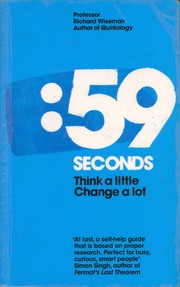
Self-help tips that come straight from scientific research.
Recommended by: Jeff Atwood