Steal Like an Artist: 10 Things Nobody Told You About Being Creative
Ten short lessons on creative work: nothing is original, so copy well.
Summary
Kleon presents ten short chapters on creative work, built on the argument that nothing is original and that all creative work builds on what came before, so the useful question is what to steal and from whom rather than how to be original.
His practical positions include studying your influences deliberately and tracing their influences in turn; imitating many sources rather than one, since copying one produces a copy and copying many produces something new; starting before you feel ready because you learn the work by doing it; making the thing you want to see, since that is the only reliable guide to what to make; keeping side projects and hobbies because the useful material comes from what appears to be procrastination; and separating the computer, which is good for editing, from analogue tools, which he argues are better for generating.
He also argues for geographic and social independence, for being nice online, for sharing work openly rather than protecting it, for keeping a day job and its structure, and for the value of constraints in producing work at all.
The book is very short, heavily illustrated and designed to be read in an hour. It contains no research and Kleon states positions rather than arguing them. Much of it restates advice that other writers have given at greater length, including Lewis Hyde on the gift and Jonathan Lethem on plagiarism. Its value is compression and usability. It is the shortest available statement of the position that creative work proceeds by combination rather than by invention, and its instructions are specific enough to act on immediately.
Key takeaways 8
- Nothing is original, so the useful question is what to take and from whom rather than how to be original.
- Copying one source produces imitation while copying many produces something new, which makes the number of influences the operative variable.
- You should study your influences and then study their influences, because the second layer is where the material nobody else is using sits.
- Starting before you feel ready is necessary because the work is how you learn to do it.
- Make the thing you want to see, since your own dissatisfaction is the only reliable guide to what is missing.
- Side projects and apparent procrastination generate the material that the main work later uses.
- Sharing work openly attracts the people you need, and protecting it means nobody knows what you do.
- Constraints produce work while unlimited freedom produces paralysis, so limits should be adopted deliberately.
Who should read it
Anyone starting creative work who wants a very short push and a set of specific instructions rather than a theory.
Who recommended it 6 · 2 direct
“Short, inspiring insights into creativity and the creative life: the day job, the mindset, etc. Also read his other book “Show Your Work”.”
Similar books 6
Chosen by shared topics, the entries that hold them, and the people who recommended both.
How creative people can share their process to get found by an audience.
“Short inspiring book about sharing your work online. Really healthy perspective. Makes me want to do it much more.” — Derek Sivers
Source: Derek Sivers book notes (primary, rated list) · Rating: 7/10
Recommended by: Ali Abdaal, Derek Sivers, Chase Jarvis and 1 other
Applying product design methods to the way you organise your own work.
Recommended by: David Perell, Nat Eliason
Using an "energy mind" to reach creativity without years of meditation.
Recommended by: Ev Williams
Advice on staying creative and productive when the world seems out of control.
Recommended by: Ryan Holiday
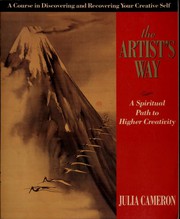
A course in the creative process and in living an artist's life.
“This makes me actually flash back to our last conversation, because we have some proof for this in a different form, which is Morning Pages from The Artist's Way, Julia Cameron.” — Tim Ferriss
Recommended by: Tim Ferriss, Brian Koppelman
How doodling, a simple visual language, helps anyone think better.
Recommended by: Tony Hsieh