Sustainable Energy
Whether Britain could live on renewables, worked out in numbers per person.
Summary
David MacKay asks whether a country like Britain, well endowed with wind, wave and tidal resources, could live on its own renewables, and argues that the debate needs numbers, not adjectives. He expresses every quantity per person in kilowatt-hours per day. Driving an average car 50 km a day uses 40 kWh/d; one long-haul return flight a year averages 30 kWh/d; covering the windiest 10% of Britain with wind farms yields 20 kWh/d. A phone charger uses 0.01 kWh/d, the energy of one second of driving, so "every little helps" achieves little.
Part I, Numbers, not adjectives, builds a red stack of consumption (cars, planes, heating, light, gadgets, food, imported stuff, public services) against a green stack of renewable production (wind, solar, hydro, wave, tide, geothermal). Part II, Making a difference, covers transport, heating, nuclear power, imported renewables, storage, five energy plans for Britain and costs. Technical chapters and data follow. The whole book can be downloaded free from its website.
Key takeaways 5
- Energy claims should be compared in one per-person unit, kilowatt-hours per day.
- Small gestures such as unplugging chargers save almost nothing beside driving, flying and heating.
- Britain's renewables are large in total but small beside its consumption once both are counted per person.
- The energy cost of imported manufactured goods adds at least 40 kWh/d per person to Britain's footprint.
- Part II's five energy plans for Britain combine better transport and smarter heating with new supply.
Who should read it
Policy makers, engineers, investors in energy and anyone who wants to check energy claims against honest arithmetic.
Who recommended it 1 · 1 direct
Similar books 6
Chosen by shared topics, the entries that hold them, and the people who recommended both.
How energy is transformed to power the biosphere and human society.
Recommended by: Bill Gates
A short primer on energy: its forms, units and role in nature and economies.
Recommended by: Nat Eliason, Bill Gates, Mark Zuckerberg
Common claims about energy tested against the record of past energy transitions.
Recommended by: Bill Gates
The physical basics of modern life: energy, food, materials and globalisation.
Recommended by: Bill Gates
How industry could use far less steel, cement, plastic, paper and aluminium.
Recommended by: Bill Gates
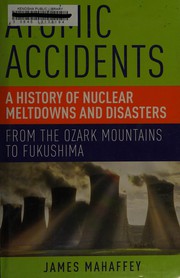
Nuclear accidents, what went wrong in each, and what each taught about the atom.