Updates

  1. Person pages list letters, writing, profiles and links as sortable tables with filters, and show each person's companies as links; Fund letters show each letter's description in its own column.
  2. Experts show a checked job title and a short description of each person; 30 more people have photographs.
  3. Every company, fund, university and publication the experts work for has a page listing the people there.
  4. Fund letters show each letter's thesis and filter by it; 225 person pages list the essays, columns and newsletter issues the person wrote.
  5. Person pages list every essay and newsletter issue a person wrote, and their own books as a table in List view.
  6. Recommends shows the five largest kinds of book and the rest under More; browse pictures load sooner.
  7. Podcasts and talks link the original episode, filter by Audio and video or Press, and list each publisher once.
  8. Pages are wider, Recommends has List and Grid, and a filter clicked again turns off.
  9. Book cards sit in a ruled grid with Open Library and Goodreads links and each book's one-line note.
  10. Funds is now Investors; each investor's styles are buttons that filter the table.
  11. Podcasts and talks on a person's page filter by year and publisher and show as a list or a grid of pictures.
  12. Quotes show only people's own words: 472 summaries written by list sites are gone.
  13. Country pages open from Browse again, and every link on the shelf lands on a page.
  14. Subject and person pages show their sections as tabs, and each book appears once on a person's page.
  15. Book cards show the quote, who said it and the source; grids show five cards to a row.
  16. On a phone, a menu holds the sections, search, Updates, Feedback and dark mode.
  17. Feedback takes a screenshot of the page with no browser prompt, opens a screenshot full size when you click it, and clears itself once sent.
  18. Book cards are centred, search names the topic each book sits in, and any text cut short shows whole on hover.
  19. Search groups its results by kind: people, companies, geographies, subjects, topics, books, funds, fund letters and papers.
  20. The Books table lists who recommended each book by name, and the browser tab names the section you are in.
  21. Feedback can take a screenshot of the page, or one you paste or choose, and opens in the corner beside Updates.
  22. Each rail button reopens its section where you left it, and Browse, Table and People show on every book and subject page.
  23. Filters grey out choices that hold nothing instead of hiding them, and Books › People filters by authors or recommenders.
  24. Feedback takes a subject line and up to three screenshots.
  25. Biographies are grouped by the person they are about: 41 new pages, from Abraham Lincoln to Lee Kuan Yew.
  26. Sport splits into 23 sports, and Religion into one topic per faith.
  27. Book lists show as cards: the cover, one recommendation quote and every recommender by name.
  28. Seventeen subjects that had two or three pages under different names now have one page each.
  29. Every page lists its Experts as authors and recommenders, with a link to them on the Experts tab.
  30. Economics, Financial history, Financial panics and Accounting are subjects of their own, with one page per financial crisis.
  31. Book, person and subject pages open inside the app, so the tabs stay in view.
  32. 996 more book covers, and photographs or logos for 227 more people and companies.
  33. Books › Browse shows every subject as cards, and the rail holds Fund letters, Papers, Experts, Books and Funds.
  34. Every topic over 150 books splits into narrower topics, each with a page of its own.

Send feedback

What is it?
Screenshots, up to 3 (optional)
or paste one with Ctrl+V

We use your email only to reply to you.

T. Rowe Price: The Man, The Company, and The

T. Rowe Price: The Man, The Company, and The Investment Philosophy

Cornelius C. Bond
2019
T3 272 pages · about 4h 32m to read Open Librarygoodreads

Biography of the man who named and institutionalised growth investing.

Summary

Cornelius Bond worked at T. Rowe Price and Associates and wrote this biography of the firm's founder using company records and Price's own writings, including his investment notes and client letters.

The investment philosophy is the substance. Price developed what he called the growth stock theory in the 1930s, arguing that a company passes through a life cycle of growth, maturity and decline, that the greatest returns come from holding companies during their growth phase, and that an investor should identify those companies and hold them for years. He specified what to look for: superior research and development, lack of cutthroat competition, relative immunity from regulation, low total labour costs with well-paid employees, and a return on invested capital above average with sustained earnings growth through economic cycles. He applied this most famously to holdings including Merck, Black and Decker and 3M.

The firm history covers the founding of the advisory business in 1937, the decision to charge fees on assets rather than to take commissions, which was unusual at the time and aligned the adviser with the client, the launch of the Growth Stock Fund in 1950 and the New Horizons Fund in 1960, and the transition of the firm after Price sold his interest. Bond also covers Price's later shift in the 1960s and 1970s toward believing that inflation would dominate and that natural resources would outperform, which he acted on in his personal account. The book is written by an insider and is admiring, and its investment content is the reason to read it.

Key takeaways 7

  1. Price argued that companies pass through growth, maturity and decline, and that the largest returns come from holding through the growth phase.
  2. His criteria included superior research, limited competition, low regulatory exposure and returns on capital sustained through economic cycles.
  3. Charging fees on assets rather than taking commissions aligned the adviser's interest with the client's, which was unusual when Price adopted it.
  4. Growth investing as Price practised it required holding positions for many years and tolerating high valuations on the way.
  5. Price shifted in his later years to expecting inflation to dominate returns, and positioned his personal account in natural resources accordingly.
  6. The New Horizons Fund applied the same method to smaller emerging companies, which required accepting greater volatility.
  7. Price argued that an investor should study a company's industry position rather than its share price history.

Who should read it

Investors interested in the origins of growth investing and in a fund management business built on a single stated philosophy.

Similar books 6

Chosen by shared topics, the entries that hold them, and the people who recommended both.
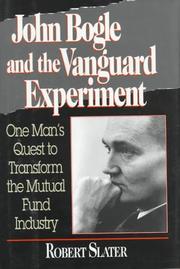
Robert Slater · 1996

The only biography; stops two decades before indexing won.

John Train · 1980

The methods of nine great investors, including Buffett, Graham, Fisher and Templeton.

“all these people really were helpful in forming and getting me involved in investing” — Joel Greenblatt

Source: Masters in Business transcript: Joel Greenblatt (2018)

Recommended by: Joel Greenblatt, Mohnish Pabrai and 1 other

Roy R. Neuberger · 1997

Memoir of a hedged-equity pioneer's seven decades on Wall Street

“I sometimes reread older books like 'So Far, So Good - the First 94 Years,' written by Roy Neuberger in 1997. It always fascinates me how things are basically the same on Wall Street. Sound…” — Francois Rochon

Source: Rochon on rereading Neuberger and finding Wall Street unchanged

Recommended by: Francois Rochon, Jim Rogers

Rob Copeland · 2023

An investigation of Bridgewater that contradicts the firm's public image.

Recommended by: Andrew Wilkinson

Where it sits in the reference 2

Investment styles
Industries

Topics

Biography and MemoirCompany HistoriesInvestingInvestors, Traders and GamblersMutual fund and bond managers