The Age of Em: Work, Love and Life when Robots Rule the Earth
An economist's forecast of a world of emulated human brains running as software.
Summary
Robin Hanson, an economist, forecasts a world in which researchers have not built artificial general intelligence but have learned to scan human brains and run them as software. These whole brain emulations, or ems, are copies with the same connections as the original brain, recognisably human, and once they can be made cheaply, perhaps within a century, they displace humans in most jobs. Hanson calls his main scenario a baseline built by applying standard academic science to that one premise.
In that scenario ems live mostly in a few hot, dense cities and work largely in virtual reality. Cheap copying drives em wages to near subsistence. A typical em runs about a thousand times faster than a human, and most are short-lived copies made for a single task. The economy might double every month, so the era could last a year or two of objective time yet feel like millennia to ems, while biological humans retire on their investments in the em economy. Hanson covers em mind speeds, body sizes, career paths, energy and cooling, ageing, security, inequality, religion, law, war, friendship and love. Reviewers in The Guardian, The Wall Street Journal and the Financial Times praised the detail; the FT found its treatment of rights and morality too brief.
Key takeaways 5
- Hanson applies standard economics, physics and computer science to a single premise: cheap brain emulation.
- Copying workers at low cost would push em wages towards subsistence.
- An economy that doubles monthly would compress centuries of change into a year or two.
- Ems running a thousand times faster than humans would experience time very differently from their makers.
- Hanson argues that future values may differ from ours as much as ours differ from those of foragers.
Who should read it
Readers interested in economics applied to technology forecasting and in what a radically changed labour market would look like.
Who recommended it 1 · 1 direct
Similar books 6
Chosen by shared topics, the entries that hold them, and the people who recommended both.
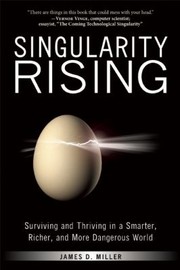
How a future of abundant human and machine intelligence may change the world.
Recommended by: Patrick Collison
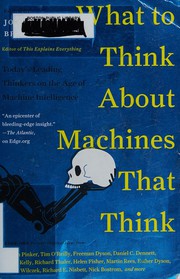
Nearly two hundred thinkers on artificial intelligence.
Recommended by: Patrick Collison
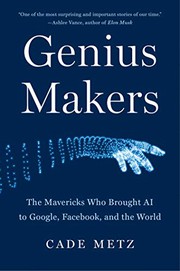
How Hinton, LeCun and Bengio kept neural networks alive until deep learning took off.
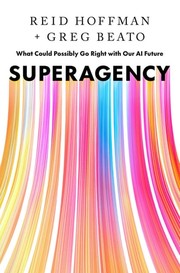
The case for deploying artificial intelligence broadly and quickly.
Recommended by: Brad Feld