Updates

  1. Person pages list letters, writing, profiles and links as sortable tables with filters, and show each person's companies as links; Fund letters show each letter's description in its own column.
  2. Experts show a checked job title and a short description of each person; 30 more people have photographs.
  3. Every company, fund, university and publication the experts work for has a page listing the people there.
  4. Fund letters show each letter's thesis and filter by it; 225 person pages list the essays, columns and newsletter issues the person wrote.
  5. Person pages list every essay and newsletter issue a person wrote, and their own books as a table in List view.
  6. Recommends shows the five largest kinds of book and the rest under More; browse pictures load sooner.
  7. Podcasts and talks link the original episode, filter by Audio and video or Press, and list each publisher once.
  8. Pages are wider, Recommends has List and Grid, and a filter clicked again turns off.
  9. Book cards sit in a ruled grid with Open Library and Goodreads links and each book's one-line note.
  10. Funds is now Investors; each investor's styles are buttons that filter the table.
  11. Podcasts and talks on a person's page filter by year and publisher and show as a list or a grid of pictures.
  12. Quotes show only people's own words: 472 summaries written by list sites are gone.
  13. Country pages open from Browse again, and every link on the shelf lands on a page.
  14. Subject and person pages show their sections as tabs, and each book appears once on a person's page.
  15. Book cards show the quote, who said it and the source; grids show five cards to a row.
  16. On a phone, a menu holds the sections, search, Updates, Feedback and dark mode.
  17. Feedback takes a screenshot of the page with no browser prompt, opens a screenshot full size when you click it, and clears itself once sent.
  18. Book cards are centred, search names the topic each book sits in, and any text cut short shows whole on hover.
  19. Search groups its results by kind: people, companies, geographies, subjects, topics, books, funds, fund letters and papers.
  20. The Books table lists who recommended each book by name, and the browser tab names the section you are in.
  21. Feedback can take a screenshot of the page, or one you paste or choose, and opens in the corner beside Updates.
  22. Each rail button reopens its section where you left it, and Browse, Table and People show on every book and subject page.
  23. Filters grey out choices that hold nothing instead of hiding them, and Books › People filters by authors or recommenders.
  24. Feedback takes a subject line and up to three screenshots.
  25. Biographies are grouped by the person they are about: 41 new pages, from Abraham Lincoln to Lee Kuan Yew.
  26. Sport splits into 23 sports, and Religion into one topic per faith.
  27. Book lists show as cards: the cover, one recommendation quote and every recommender by name.
  28. Seventeen subjects that had two or three pages under different names now have one page each.
  29. Every page lists its Experts as authors and recommenders, with a link to them on the Experts tab.
  30. Economics, Financial history, Financial panics and Accounting are subjects of their own, with one page per financial crisis.
  31. Book, person and subject pages open inside the app, so the tabs stay in view.
  32. 996 more book covers, and photographs or logos for 227 more people and companies.
  33. Books › Browse shows every subject as cards, and the rail holds Fund letters, Papers, Experts, Books and Funds.
  34. Every topic over 150 books splits into narrower topics, each with a page of its own.

Send feedback

What is it?
Screenshots, up to 3 (optional)
or paste one with Ctrl+V

We use your email only to reply to you.

The Antisocial Network

The Antisocial Network

Ben Mezrich
2021
T3 288 pages · about 4h 48m to read Open Librarygoodreads

GameStop and Citadel Securities' order flow; dramatised.

Summary

Mezrich wrote a narrative account of the January 2021 GameStop episode, in which retail traders coordinating on the Reddit forum WallStreetBets drove the share price of a heavily shorted retailer up by orders of magnitude, causing losses at hedge funds including Melvin Capital and prompting Robinhood to restrict buying.

The narrative follows several participants: Keith Gill, who had posted a valuation case for the stock for over a year; individual traders who took positions; Gabe Plotkin at Melvin Capital; and the executives at Robinhood during the days when the clearing house demanded additional collateral.

The mechanics that matter are covered. The stock carried short interest exceeding its float, which meant covering required buying shares that did not exist in available supply. Retail buying of call options forced market makers to buy the underlying stock to hedge, which amplified the move, a dynamic known as a gamma squeeze. Robinhood's restriction on buying followed a collateral demand from the National Securities Clearing Corporation driven by the volatility of the positions its customers held, which the company communicated badly and which was widely interpreted as collusion.

Mezrich uses his standard method of reconstructed scenes and invented dialogue, and the book was optioned for film before publication. It should not be relied on for specific claims about what individuals said or thought.

The analysis is thin. It does not seriously examine payment for order flow, the settlement cycle that produced the collateral demand, or the question of whether the episode changed anything structurally. Readers wanting that should look at the regulatory reports and at market structure analysis.

Key takeaways 7

  1. GameStop's short interest exceeded its available float, so covering required buying shares that did not exist in supply.
  2. Retail purchases of call options forced market makers to buy the underlying stock as a hedge, which amplified the price move.
  3. Robinhood restricted buying because its clearing house demanded additional collateral, not because of a request from hedge funds.
  4. The two-day settlement cycle in place at the time was what generated the collateral requirement.
  5. Coordination on a public forum produced buying pressure that behaved like an organised campaign without any organisation.
  6. A short position in a small-float security carries a risk that has no upper bound and no reliable exit.
  7. The account uses reconstructed dialogue and should not be treated as a source for what participants actually said.

Who should read it

Readers wanting the narrative of the GameStop episode, who should go to regulatory reports for the market structure analysis.

About Ben Mezrich

American author of dramatised nonfiction about card counting, Facebook's founding, the Winklevoss bitcoin position and the GameStop squeeze.

The books reconstruct financial episodes scene by scene from participant interviews, which is why several became films and why they reach readers who never open a market history. Read them as accounts told from one side, with dialogue and detail reconstructed rather than documented.

Similar books 6

Chosen by shared topics, the entries that hold them, and the people who recommended both.
Barry Johnson · 2010

Execution algorithms and direct market access, from the desk.
Scott Patterson · 2012

How electronic trading and off-exchange venues took over.

Michael Lewis · 2014

How a trader uncovered high-frequency front-running and built the IEX exchange.

Recommended by: Mohnish Pabrai, Nat Eliason
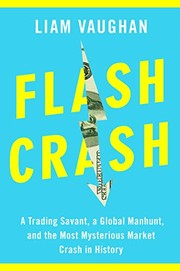
Liam Vaughan · 2020

A trader in his parents' London house, and his link to the 2010 flash crash.
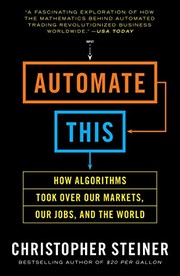
Christopher Steiner · 2012

Popular account of algorithms taking over trading and other trades.

Where it sits in the reference 3

Journalists
Biographies
Business models

Topics

Finance and MarketsTechnology and ComputingCrypto and financial technology