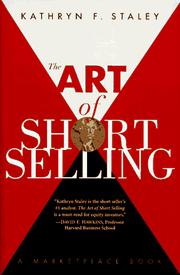
The Art of Short Selling
How to find companies whose reported results hide their true condition.
The standard how-to on finding and sizing short candidates.
Summary
Staley, an analyst who worked in short-oriented research, wrote a practical guide to identifying companies whose reported results misrepresent their condition.
The analytical content is the strongest part. She catalogues the accounting signals that precede trouble: receivables growing faster than sales, which indicates revenue recognised before collection or channel stuffing; inventory growing faster than sales, indicating unsold product or obsolescence not written down; capitalisation of costs that should be expensed, particularly software development and customer acquisition; changes in depreciation schedules or in revenue recognition policy that raise reported earnings; growth by acquisition that obscures organic performance; and the persistent gap between reported earnings and operating cash flow.
She also identifies non-accounting signals: auditor changes, chief financial officer departures, insider selling, related-party transactions, aggressive promotional behaviour by management, and business models that depend on continued access to capital.
The case studies work through specific companies of the late 1980s and early 1990s where these signals appeared before the collapse, and Staley walks through what an analyst could have seen in the filings.
The practical sections address what makes short selling difficult: borrowing availability, the unbounded loss, position sizing, the tendency for a correct thesis to take years to be recognised, and the psychological difficulty of holding a position when the price moves against you and the company attacks you publicly.
The book is from 1997 and the specific cases are dated. Accounting standards have changed, and some of the signals she describes are now routinely screened for. The method of reading filings for inconsistency between reported earnings and cash generation has not changed and remains the core of the discipline.
Key takeaways 7
- Receivables growing faster than sales indicates revenue recognised before collection, which is the most common early signal of trouble.
- A persistent gap between reported earnings and operating cash flow is the single most reliable indicator that accounting choices are producing the profit.
- Capitalising costs that should be expensed moves current spending into future periods and inflates present earnings.
- Growth by acquisition obscures organic performance and provides repeated opportunities to reset reported figures.
- Auditor changes and chief financial officer departures precede accounting problems often enough to justify treating them as signals.
- A correct short thesis can take years to be recognised, during which the position moves against the seller.
- Businesses that depend on continuous access to capital fail when that access closes, regardless of whether the accounting was accurate.
Who should read it
Analysts and investors who want a practical method for reading financial statements against the company's own narrative, whether or not they intend to sell short.
Who recommended it 1 · 1 direct
“and Kathryn F. Staley, The Art of Short Selling (New York: John Wiley & Sons, 1997)”
Similar books 6
Chosen by shared topics, the entries that hold them, and the people who recommended both.
Stock prices follow a random walk, so a low-cost index fund beats stock picking.
“Even earlier, in 1973, in his classic A Random Walk Down Wall Street, Burton G. Malkiel had called for such a fund, although, alas, when we started it, I had yet to read his book.” — John C. Bogle
Source: CONVERGENCE!, page 1
Recommended by: Jason Zweig, John C. Bogle and 5 others
Buy a few outstanding growth companies, research them by scuttlebutt, and hold.
“In his book « Common stocks and Uncommon Profits », the legendary investor Philip Fisher devoted a complete chapter on “when to buy”.” — Francois Rochon
Source: Giverny Capital Annual Letter to Partners 2003, page 3
Recommended by: Arnold Van Den Berg, Bill Stewart and 12 others
Data showing that low-expectation stocks beat popular ones over the long run.
“all these people really were helpful in forming and getting me involved in investing” — Joel Greenblatt
Source: Masters in Business transcript: Joel Greenblatt (2018)
Recommended by: Joel Greenblatt, Michael Mauboussin and 2 others
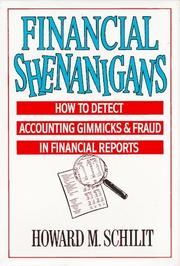
The tricks companies use to inflate earnings, cash flow and key metrics, by case.
“Some of my favorites include Howard M. Schilit and Jeremy Perler, Financial Shenanigans: How to Detect Accounting Gimmicks & Fraud in Financial Reports, 3rd Edition (New York: McGraw Hill, 2010)” — Michael Mauboussin
Source: Thirty Years: Reflections on the Ten Attributes of Great Investors, page 18
Recommended by: Michael Mauboussin, Mohnish Pabrai and 1 other
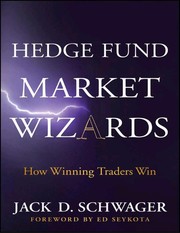
Interviews with fifteen hedge fund managers with strong long-term records.
“Being a big fan of Jack Schwager’s Wizard series of investment books, I eagerly read his newest book, Hedge Fund Market Wizards, and was not disappointed.” — Bill Nygren
Source: Bill Nygren Market Commentary | 2Q12
Recommended by: Bill Nygren, Michael Mauboussin
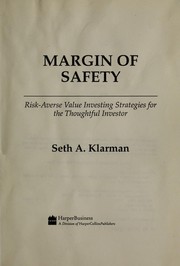
Avoid permanent loss: buy well below value and aim for absolute returns.
“Seth Klarman, the founder, chief executive, and portfolio manager of the very successful value investing firm The Baupost Group, shares a similar sentiment in his book Margin of Safety:22 It is not clear why investors suddenly came to accept EBITDA as a measure of corporate cash flow.” — Michael Mauboussin
Source: What Does an EV/EBITDA Multiple Mean?, page 4
Recommended by: Arnold Van Den Berg, Frank Martin, Guy Spier and 7 others
Where it sits in the reference 2
Topics 1
As an Amazon Associate I earn from qualifying purchases.