Updates

  1. Person pages list letters, writing, profiles and links as sortable tables with filters, and show each person's companies as links; Fund letters show each letter's description in its own column.
  2. Experts show a checked job title and a short description of each person; 30 more people have photographs.
  3. Every company, fund, university and publication the experts work for has a page listing the people there.
  4. Fund letters show each letter's thesis and filter by it; 225 person pages list the essays, columns and newsletter issues the person wrote.
  5. Person pages list every essay and newsletter issue a person wrote, and their own books as a table in List view.
  6. Recommends shows the five largest kinds of book and the rest under More; browse pictures load sooner.
  7. Podcasts and talks link the original episode, filter by Audio and video or Press, and list each publisher once.
  8. Pages are wider, Recommends has List and Grid, and a filter clicked again turns off.
  9. Book cards sit in a ruled grid with Open Library and Goodreads links and each book's one-line note.
  10. Funds is now Investors; each investor's styles are buttons that filter the table.
  11. Podcasts and talks on a person's page filter by year and publisher and show as a list or a grid of pictures.
  12. Quotes show only people's own words: 472 summaries written by list sites are gone.
  13. Country pages open from Browse again, and every link on the shelf lands on a page.
  14. Subject and person pages show their sections as tabs, and each book appears once on a person's page.
  15. Book cards show the quote, who said it and the source; grids show five cards to a row.
  16. On a phone, a menu holds the sections, search, Updates, Feedback and dark mode.
  17. Feedback takes a screenshot of the page with no browser prompt, opens a screenshot full size when you click it, and clears itself once sent.
  18. Book cards are centred, search names the topic each book sits in, and any text cut short shows whole on hover.
  19. Search groups its results by kind: people, companies, geographies, subjects, topics, books, funds, fund letters and papers.
  20. The Books table lists who recommended each book by name, and the browser tab names the section you are in.
  21. Feedback can take a screenshot of the page, or one you paste or choose, and opens in the corner beside Updates.
  22. Each rail button reopens its section where you left it, and Browse, Table and People show on every book and subject page.
  23. Filters grey out choices that hold nothing instead of hiding them, and Books › People filters by authors or recommenders.
  24. Feedback takes a subject line and up to three screenshots.
  25. Biographies are grouped by the person they are about: 41 new pages, from Abraham Lincoln to Lee Kuan Yew.
  26. Sport splits into 23 sports, and Religion into one topic per faith.
  27. Book lists show as cards: the cover, one recommendation quote and every recommender by name.
  28. Seventeen subjects that had two or three pages under different names now have one page each.
  29. Every page lists its Experts as authors and recommenders, with a link to them on the Experts tab.
  30. Economics, Financial history, Financial panics and Accounting are subjects of their own, with one page per financial crisis.
  31. Book, person and subject pages open inside the app, so the tabs stay in view.
  32. 996 more book covers, and photographs or logos for 227 more people and companies.
  33. Books › Browse shows every subject as cards, and the rail holds Fund letters, Papers, Experts, Books and Funds.
  34. Every topic over 150 books splits into narrower topics, each with a page of its own.

Send feedback

What is it?
Screenshots, up to 3 (optional)
or paste one with Ctrl+V

We use your email only to reply to you.

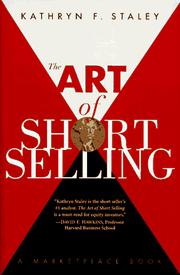
The Art of Short Selling

The Art of Short Selling

Kathryn F. Staley
1997
T2 296 pages · about 4h 56m to read Open Librarygoodreads

The standard how-to on finding and sizing short candidates.

Summary

Staley, an analyst who worked in short-oriented research, wrote a practical guide to identifying companies whose reported results misrepresent their condition.

The analytical content is the strongest part. She catalogues the accounting signals that precede trouble: receivables growing faster than sales, which indicates revenue recognised before collection or channel stuffing; inventory growing faster than sales, indicating unsold product or obsolescence not written down; capitalisation of costs that should be expensed, particularly software development and customer acquisition; changes in depreciation schedules or in revenue recognition policy that raise reported earnings; growth by acquisition that obscures organic performance; and the persistent gap between reported earnings and operating cash flow.

She also identifies non-accounting signals: auditor changes, chief financial officer departures, insider selling, related-party transactions, aggressive promotional behaviour by management, and business models that depend on continued access to capital.

The case studies work through specific companies of the late 1980s and early 1990s where these signals appeared before the collapse, and Staley walks through what an analyst could have seen in the filings.

The practical sections address what makes short selling difficult: borrowing availability, the unbounded loss, position sizing, the tendency for a correct thesis to take years to be recognised, and the psychological difficulty of holding a position when the price moves against you and the company attacks you publicly.

The book is from 1997 and the specific cases are dated. Accounting standards have changed, and some of the signals she describes are now routinely screened for. The method of reading filings for inconsistency between reported earnings and cash generation has not changed and remains the core of the discipline.

Key takeaways 7

  1. Receivables growing faster than sales indicates revenue recognised before collection, which is the most common early signal of trouble.
  2. A persistent gap between reported earnings and operating cash flow is the single most reliable indicator that accounting choices are producing the profit.
  3. Capitalising costs that should be expensed moves current spending into future periods and inflates present earnings.
  4. Growth by acquisition obscures organic performance and provides repeated opportunities to reset reported figures.
  5. Auditor changes and chief financial officer departures precede accounting problems often enough to justify treating them as signals.
  6. A correct short thesis can take years to be recognised, during which the position moves against the seller.
  7. Businesses that depend on continuous access to capital fail when that access closes, regardless of whether the accounting was accurate.

Who should read it

Analysts and investors who want a practical method for reading financial statements against the company's own narrative, whether or not they intend to sell short.

Similar books 6

Chosen by shared topics, the entries that hold them, and the people who recommended both.
Thomas P. Au · 2004

Updates Graham and Dodd's valuation method for modern financial statements

Recommended by: Mohnish Pabrai
Philip L. Carret, Philip Carret · 1995

A fund manager of sixty years on investing, business and a long life.

Recommended by: Mohnish Pabrai
Burton G. Malkiel · 1973

Stock prices follow a random walk, so a low-cost index fund beats stock picking.

Recommended by: Nat Eliason, Mohnish Pabrai
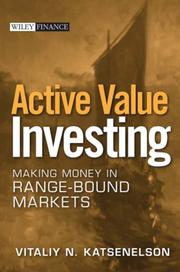
Vitaliy N. Katsenelson · 2007

Katsenelson on buying and selling inside range-bound markets.
Where it sits in the reference 2

Investment styles
Investment styles

Topics

Investing