Updates

  1. Person pages list letters, writing, profiles and links as sortable tables with filters, and show each person's companies as links; Fund letters show each letter's description in its own column.
  2. Experts show a checked job title and a short description of each person; 30 more people have photographs.
  3. Every company, fund, university and publication the experts work for has a page listing the people there.
  4. Fund letters show each letter's thesis and filter by it; 225 person pages list the essays, columns and newsletter issues the person wrote.
  5. Person pages list every essay and newsletter issue a person wrote, and their own books as a table in List view.
  6. Recommends shows the five largest kinds of book and the rest under More; browse pictures load sooner.
  7. Podcasts and talks link the original episode, filter by Audio and video or Press, and list each publisher once.
  8. Pages are wider, Recommends has List and Grid, and a filter clicked again turns off.
  9. Book cards sit in a ruled grid with Open Library and Goodreads links and each book's one-line note.
  10. Funds is now Investors; each investor's styles are buttons that filter the table.
  11. Podcasts and talks on a person's page filter by year and publisher and show as a list or a grid of pictures.
  12. Quotes show only people's own words: 472 summaries written by list sites are gone.
  13. Country pages open from Browse again, and every link on the shelf lands on a page.
  14. Subject and person pages show their sections as tabs, and each book appears once on a person's page.
  15. Book cards show the quote, who said it and the source; grids show five cards to a row.
  16. On a phone, a menu holds the sections, search, Updates, Feedback and dark mode.
  17. Feedback takes a screenshot of the page with no browser prompt, opens a screenshot full size when you click it, and clears itself once sent.
  18. Book cards are centred, search names the topic each book sits in, and any text cut short shows whole on hover.
  19. Search groups its results by kind: people, companies, geographies, subjects, topics, books, funds, fund letters and papers.
  20. The Books table lists who recommended each book by name, and the browser tab names the section you are in.
  21. Feedback can take a screenshot of the page, or one you paste or choose, and opens in the corner beside Updates.
  22. Each rail button reopens its section where you left it, and Browse, Table and People show on every book and subject page.
  23. Filters grey out choices that hold nothing instead of hiding them, and Books › People filters by authors or recommenders.
  24. Feedback takes a subject line and up to three screenshots.
  25. Biographies are grouped by the person they are about: 41 new pages, from Abraham Lincoln to Lee Kuan Yew.
  26. Sport splits into 23 sports, and Religion into one topic per faith.
  27. Book lists show as cards: the cover, one recommendation quote and every recommender by name.
  28. Seventeen subjects that had two or three pages under different names now have one page each.
  29. Every page lists its Experts as authors and recommenders, with a link to them on the Experts tab.
  30. Economics, Financial history, Financial panics and Accounting are subjects of their own, with one page per financial crisis.
  31. Book, person and subject pages open inside the app, so the tabs stay in view.
  32. 996 more book covers, and photographs or logos for 227 more people and companies.
  33. Books › Browse shows every subject as cards, and the rail holds Fund letters, Papers, Experts, Books and Funds.
  34. Every topic over 150 books splits into narrower topics, each with a page of its own.

Send feedback

What is it?
Screenshots, up to 3 (optional)
or paste one with Ctrl+V

We use your email only to reply to you.

The Bank That Lived a Little

The Bank That Lived a Little

Philip Augar
2018
T3 464 pages · about 7h 44m to read Open Librarygoodreads

Barclays' thirty-year attempt to become a global investment bank.

Summary

Augar, a former investment banker who has written several books on the City of London, wrote a history of Barclays from the late 1980s to 2017, focusing on the recurring internal conflict over whether the bank should be a retail institution or a global investment bank.

The narrative is structured around that argument, which recurred under successive chief executives. Barclays de Zoete Wedd was assembled after the 1986 deregulation and performed poorly. Martin Taylor attempted to withdraw from investment banking in the 1990s and was forced out. Bob Diamond built Barclays Capital as a debt-focused business that avoided equities and advisory, grew it substantially, and bought Lehman's American operations out of bankruptcy in 2008, which transformed the bank's scale and profit mix. Diamond became chief executive and was then removed in 2012 after the LIBOR settlement, with pressure from the Bank of England.

Augar covers the 2008 capital raising from Qatari and Abu Dhabi investors, which allowed Barclays to avoid a British government rescue and which later produced criminal charges over undisclosed fees, and the subsequent attempts under Antony Jenkins and Jes Staley to resolve the same strategic question.

The argument Augar makes is that the conflict was never resolved because both positions had real support, and that the bank's culture and risk appetite followed from whoever held control at the time.

The book has extensive access to participants, which gives it detail and also gives the participants' framing. It is written for readers familiar with the City. Augar is more interested in the internal politics than in the underlying economics of investment banking, so readers wanting analysis of whether the strategy could have worked will find less than they want.

Key takeaways 7

  1. Barclays never resolved whether it should be a retail bank or a global investment bank, and the conflict recurred under every chief executive.
  2. Barclays Capital grew by concentrating on debt markets and avoiding equities and advisory, which was a deliberate choice not to compete everywhere.
  3. Buying Lehman's American business out of bankruptcy transformed the bank's scale and its profit composition in a single transaction.
  4. Raising capital from Gulf investors in 2008 avoided a British government rescue and later produced criminal proceedings over undisclosed fees.
  5. The Bank of England forced a chief executive's removal without any formal power to do so, which demonstrated where authority actually sat.
  6. An investment banking culture inside a retail bank produces conflicts over capital, risk appetite and pay that governance cannot settle.
  7. Strategic direction at a large bank followed from which internal faction held the chief executive position rather than from analysis.

Who should read it

Investors and operators in banking who want a detailed account of how strategic conflict inside a universal bank plays out over decades.

About Philip Augar

Former investment banker at Schroders and NatWest Markets who writes on the British investment banking industry.

The Death of Gentlemanly Capitalism explains why British merchant banks sold themselves to American and European buyers after Big Bang, and what their owners misjudged about the capital intensity of the business they were in. The Greed Merchants and The Bank That Lived a Little examine fee structures and client conflicts inside integrated investment banks, the second through Barclays' decision to buy Lehman's American operations.

Schroders, NatWest, NatWest Markets

Similar books 6

Chosen by shared topics, the entries that hold them, and the people who recommended both.
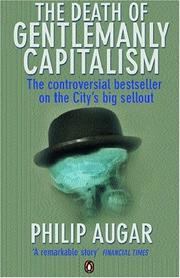
Philip Augar · 2000

How Big Bang handed the City's investment banks to foreign owners.
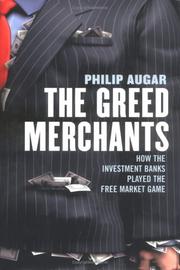
Philip Augar · 2005

How the integrated investment bank extracts its economics from clients.

David Kynaston · 1994

The four-volume history of the world's oldest continuous financial centre.

Mauro F. Guillen, Adrian Tschoegl · 2008

How Banco Santander grew from a Spanish regional bank into a global one.

Stephen Aris · 1994

Commissioned history, written long before the run.

Where it sits in the reference 3

Journalists
Geographies
Financial history

Topics

Company HistoriesFinance and Markets