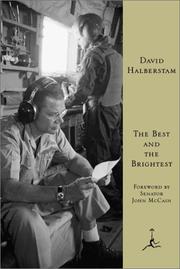
The Best and the Brightest
Why the United States became mired in Vietnam, and the policy makers who led it.
Summary
David Halberstam, a journalist, asks why the United States became mired in Vietnam and why it lost. Published in 1972, the book focuses on the foreign policy made by the academics and intellectuals of John F. Kennedy's administration, the leaders from industry and universities whom Halberstam describes as insisting on brilliant policies that defied common sense, often against the advice of career State Department officials.
Halberstam traces decisions in the Kennedy and Johnson administrations, chiefly from 1960 to 1965. Among the factors he examines: Democrats feared being blamed for losing Vietnam as they had been blamed for losing China; the McCarthy era had removed the government's experts on the region; early studies called for close to a million troops, which Congress and the public would never accept; the military was unprepared for guerrilla war; war games showed North Vietnam could replace its losses with 200,000 men reaching draft age each year; Johnson feared the war would endanger his Great Society; and planners expected limited bombing to force talks. Once a few thousand Americans were committed, sending hundreds of thousands became politically easier. The publisher calls it the defining single-volume history of the war's making.
Key takeaways 4
- Brilliant advisers can lead a government into disaster when they ignore experience on the ground.
- Domestic politics, including fear of losing another country to communism, drove the escalation.
- The purge of Asia experts in the McCarthy era left policymakers ill-informed.
- Small commitments made larger ones politically easier.
Who should read it
Readers of American political history and anyone studying how expert groups make bad decisions.
Who recommended it 2 · 1 direct
“Heading the column was a quotation from David Halberstam's account of the U.S. involvement in Vietnam, The Best and The Brightest: If there was ever anything that bound men ... together, it was the belief that sheer intelligence and rationality could answer and solve everything.”
Similar books 6
Chosen by shared topics, the entries that hold them, and the people who recommended both.
A history of the United States as a great human adventure.
Recommended by: Mohnish Pabrai
The rise of the conservative movement in the sixties around Barry Goldwater.
Recommended by: Patrick Collison
Theodore Roosevelt's last decade, from leaving the presidency to his death.
Recommended by: Mohnish Pabrai
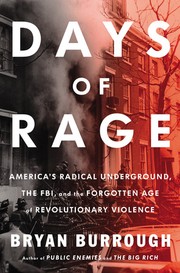
The radical underground groups that bombed police stations and courthouses.
Recommended by: Marc Andreessen
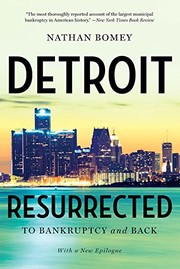
Detroit's Chapter 9 bankruptcy, the largest by a US city, from inside the case.
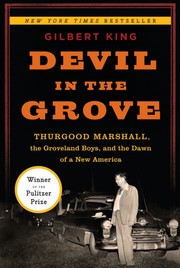
The Groveland case in Jim Crow Florida, when four Black men were accused of rape.
“My weekend reading was Devil in the Grove: Thurgood Marshall, the Groveland Boys, and the Dawn of a New America.” — Brad Feld
Recommended by: Brad Feld, Jim Collins