
Updates

  1. Person pages list letters, writing, profiles and links as sortable tables with filters, and show each person's companies as links; Fund letters show each letter's description in its own column.
  2. Experts show a checked job title and a short description of each person; 30 more people have photographs.
  3. Every company, fund, university and publication the experts work for has a page listing the people there.
  4. Fund letters show each letter's thesis and filter by it; 225 person pages list the essays, columns and newsletter issues the person wrote.
  5. Person pages list every essay and newsletter issue a person wrote, and their own books as a table in List view.
  6. Recommends shows the five largest kinds of book and the rest under More; browse pictures load sooner.
  7. Podcasts and talks link the original episode, filter by Audio and video or Press, and list each publisher once.
  8. Pages are wider, Recommends has List and Grid, and a filter clicked again turns off.
  9. Book cards sit in a ruled grid with Open Library and Goodreads links and each book's one-line note.
  10. Funds is now Investors; each investor's styles are buttons that filter the table.
  11. Podcasts and talks on a person's page filter by year and publisher and show as a list or a grid of pictures.
  12. Quotes show only people's own words: 472 summaries written by list sites are gone.
  13. Country pages open from Browse again, and every link on the shelf lands on a page.
  14. Subject and person pages show their sections as tabs, and each book appears once on a person's page.
  15. Book cards show the quote, who said it and the source; grids show five cards to a row.
  16. On a phone, a menu holds the sections, search, Updates, Feedback and dark mode.
  17. Feedback takes a screenshot of the page with no browser prompt, opens a screenshot full size when you click it, and clears itself once sent.
  18. Book cards are centred, search names the topic each book sits in, and any text cut short shows whole on hover.
  19. Search groups its results by kind: people, companies, geographies, subjects, topics, books, funds, fund letters and papers.
  20. The Books table lists who recommended each book by name, and the browser tab names the section you are in.
  21. Feedback can take a screenshot of the page, or one you paste or choose, and opens in the corner beside Updates.
  22. Each rail button reopens its section where you left it, and Browse, Table and People show on every book and subject page.
  23. Filters grey out choices that hold nothing instead of hiding them, and Books › People filters by authors or recommenders.
  24. Feedback takes a subject line and up to three screenshots.
  25. Biographies are grouped by the person they are about: 41 new pages, from Abraham Lincoln to Lee Kuan Yew.
  26. Sport splits into 23 sports, and Religion into one topic per faith.
  27. Book lists show as cards: the cover, one recommendation quote and every recommender by name.
  28. Seventeen subjects that had two or three pages under different names now have one page each.
  29. Every page lists its Experts as authors and recommenders, with a link to them on the Experts tab.
  30. Economics, Financial history, Financial panics and Accounting are subjects of their own, with one page per financial crisis.
  31. Book, person and subject pages open inside the app, so the tabs stay in view.
  32. 996 more book covers, and photographs or logos for 227 more people and companies.
  33. Books › Browse shows every subject as cards, and the rail holds Fund letters, Papers, Experts, Books and Funds.
  34. Every topic over 150 books splits into narrower topics, each with a page of its own.

Send feedback

What is it?
Screenshots, up to 3 (optional)
or paste one with Ctrl+V

We use your email only to reply to you.

The Company I Keep: My Life in Beauty

The Company I Keep: My Life in Beauty

Leonard A. Lauder
2020
T3 432 pages · about 7h 12m to read Open Librarygoodreads

Insider memoir by her son, who scaled the company she founded.

Summary

Leonard Lauder joined his mother's cosmetics company in 1958, ran it as chief executive from 1982 to 1999, and wrote this memoir of building Estee Lauder from a small business into a global group.

The business content covers specific decisions. He describes the gift with purchase promotion, which Estee Lauder used before competitors and which built trial and repeat purchase; the decision to sell only through prestige department stores rather than through drugstores, which constrained volume and protected pricing; the creation of separate brands including Clinique in 1968, positioned as allergy-tested and dermatologist-developed with an entirely different presentation, and later Aramis, Origins and the acquisitions of MAC, Bobbi Brown and Aveda; and the international expansion, which he pursued market by market with the same channel discipline.

His general argument is that a beauty company sells through the counter, meaning that the sales staff and the physical presentation in the store are the product's actual delivery mechanism, and that a brand's positioning is protected by refusing distribution rather than by advertising. He is candid about failures and about the difficulty of family business succession. The book is a memoir and does not analyse the industry's economics systematically, but the specific decisions are described with enough detail to be useful.

Key takeaways 7

  1. Gift with purchase built trial and repeat purchase, and Estee Lauder used it before its competitors did.
  2. Restricting distribution to prestige department stores protected pricing at the cost of volume.
  3. Creating a separate brand with a different presentation reached a customer the existing brand could not, and Clinique proved the method.
  4. The sales counter and its staff are the actual delivery mechanism for a prestige beauty product, which makes retail relationships the core asset.
  5. Acquiring brands with distinct identities worked better than extending the existing brand into new positions.
  6. Lauder argues that a brand is protected by what it refuses to do rather than by what it advertises.
  7. Family business succession requires separating ownership from management roles explicitly, and the book is candid about the difficulty.

Who should read it

Operators in consumer brands and prestige retail who want specific channel and brand architecture decisions described by someone who made them.

Similar books 6

Chosen by shared topics, the entries that hold them, and the people who recommended both.
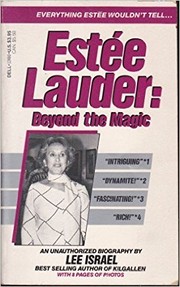
Lee Israel · 1985

Unauthorised; Lauder rushed out her own memoir to pre-empt it.

Geoffrey Jones · 2010

Harvard business historian; sets her brand-building against the whole industry.
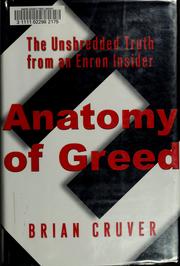
Brian Cruver · 2002

An Enron employee's account of the fake partnerships and trades behind its collapse.
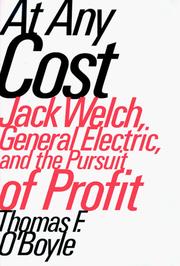
Thomas F. O'Boyle · 1998

The contemporaneous dissent, twenty years ahead of the consensus.
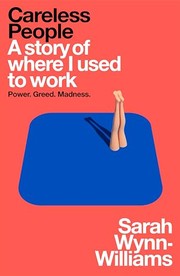
Sarah Wynn-Williams · 2025

A former Facebook policy director's memoir of the company from 2011 to 2017.
Where it sits in the reference 2

Companies
Biographies

Topics

Biography and MemoirCompany HistoriesExecutives and Corporate Insiders