Updates

  1. Person pages list letters, writing, profiles and links as sortable tables with filters, and show each person's companies as links; Fund letters show each letter's description in its own column.
  2. Experts show a checked job title and a short description of each person; 30 more people have photographs.
  3. Every company, fund, university and publication the experts work for has a page listing the people there.
  4. Fund letters show each letter's thesis and filter by it; 225 person pages list the essays, columns and newsletter issues the person wrote.
  5. Person pages list every essay and newsletter issue a person wrote, and their own books as a table in List view.
  6. Recommends shows the five largest kinds of book and the rest under More; browse pictures load sooner.
  7. Podcasts and talks link the original episode, filter by Audio and video or Press, and list each publisher once.
  8. Pages are wider, Recommends has List and Grid, and a filter clicked again turns off.
  9. Book cards sit in a ruled grid with Open Library and Goodreads links and each book's one-line note.
  10. Funds is now Investors; each investor's styles are buttons that filter the table.
  11. Podcasts and talks on a person's page filter by year and publisher and show as a list or a grid of pictures.
  12. Quotes show only people's own words: 472 summaries written by list sites are gone.
  13. Country pages open from Browse again, and every link on the shelf lands on a page.
  14. Subject and person pages show their sections as tabs, and each book appears once on a person's page.
  15. Book cards show the quote, who said it and the source; grids show five cards to a row.
  16. On a phone, a menu holds the sections, search, Updates, Feedback and dark mode.
  17. Feedback takes a screenshot of the page with no browser prompt, opens a screenshot full size when you click it, and clears itself once sent.
  18. Book cards are centred, search names the topic each book sits in, and any text cut short shows whole on hover.
  19. Search groups its results by kind: people, companies, geographies, subjects, topics, books, funds, fund letters and papers.
  20. The Books table lists who recommended each book by name, and the browser tab names the section you are in.
  21. Feedback can take a screenshot of the page, or one you paste or choose, and opens in the corner beside Updates.
  22. Each rail button reopens its section where you left it, and Browse, Table and People show on every book and subject page.
  23. Filters grey out choices that hold nothing instead of hiding them, and Books › People filters by authors or recommenders.
  24. Feedback takes a subject line and up to three screenshots.
  25. Biographies are grouped by the person they are about: 41 new pages, from Abraham Lincoln to Lee Kuan Yew.
  26. Sport splits into 23 sports, and Religion into one topic per faith.
  27. Book lists show as cards: the cover, one recommendation quote and every recommender by name.
  28. Seventeen subjects that had two or three pages under different names now have one page each.
  29. Every page lists its Experts as authors and recommenders, with a link to them on the Experts tab.
  30. Economics, Financial history, Financial panics and Accounting are subjects of their own, with one page per financial crisis.
  31. Book, person and subject pages open inside the app, so the tabs stay in view.
  32. 996 more book covers, and photographs or logos for 227 more people and companies.
  33. Books › Browse shows every subject as cards, and the rail holds Fund letters, Papers, Experts, Books and Funds.
  34. Every topic over 150 books splits into narrower topics, each with a page of its own.

Send feedback

What is it?
Screenshots, up to 3 (optional)
or paste one with Ctrl+V

We use your email only to reply to you.

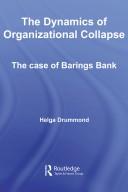
The Dynamics of Organizational Collapse: The

The Dynamics of Organizational Collapse: The Case of Barings Bank

Helga Drummond
2008
T4 160 pages · about 2h 40m to read Open Librarygoodreads

Academic case study.

Summary

Helga Drummond, an organisational theorist, uses the Barings collapse as a case study in escalation of commitment, the process by which decision-makers continue investing in a failing course of action because they have already invested in it.

Her analysis applies to both Leeson and the bank. Leeson's initial concealment of a small loss committed him to further concealment, and each subsequent loss made abandoning the position more costly than doubling it. Barings' management, having committed to the Asian trading expansion and having received reported profits from it, had reasons to avoid examining the operation closely. Drummond argues that the standard explanation, which attributes the failure to inadequate controls, describes a symptom: controls existed on paper and were not enforced because enforcing them would have raised questions management preferred not to answer.

She draws on the organisational behaviour literature on escalation, on sensemaking and on the social construction of risk, and she uses documentary sources including the Bank of England report and the Singapore inquiry. The book is academic and written for organisational theorists rather than for practitioners. Its contribution is treating the collapse as a decision process rather than as a control failure, which changes what a reader should look for in their own organisation.

Key takeaways 7

  1. Escalation of commitment explains why concealing a small loss makes concealing a larger one the rational next step.
  2. Controls that exist on paper are not enforced when enforcement would raise questions management prefers not to answer.
  3. Reported profits from an operation give management a reason not to examine how they were produced.
  4. Drummond argues that attributing the collapse to inadequate controls describes a symptom rather than a cause.
  5. Ambiguity about who was responsible for supervising the Singapore operation was convenient for everyone involved.
  6. Organisations construct accounts of risk that make their existing commitments appear reasonable.
  7. Decision-makers deep in a failing course of action assess further investment against the sunk position rather than against alternatives.

Who should read it

Risk and governance professionals who want the Barings failure analysed as a decision process rather than as a control breakdown.

Similar books 6

Chosen by shared topics, the entries that hold them, and the people who recommended both.
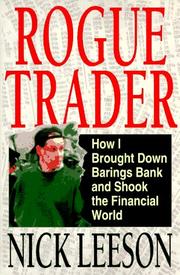
Nick Leeson, Edward Whitley · 1996

How one trader's hidden losses in Singapore brought down Barings Bank.

Kurt Eichenwald · 2005

Enron's collapse told scene by scene from depositions, emails and interviews.

Recommended by: Mohnish Pabrai
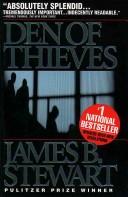
James B. Stewart · 1991

The 1980s insider-trading cases of Boesky, Levine, Siegel and Milken.

Recommended by: Mohnish Pabrai
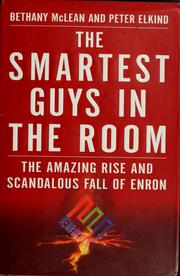
Bethany McLean, Peter Elkind · 2003

How Enron used mark-to-market accounting and hidden deals until its 2001 bankruptcy.

John Gapper, Nicholas Denton · 1996

How one trader's losses destroyed Barings, Britain's oldest merchant bank, in 1995.

Where it sits in the reference 2

Companies
Financial history

Topics

Company HistoriesFinancial History