Updates

  1. Person pages list letters, writing, profiles and links as sortable tables with filters, and show each person's companies as links; Fund letters show each letter's description in its own column.
  2. Experts show a checked job title and a short description of each person; 30 more people have photographs.
  3. Every company, fund, university and publication the experts work for has a page listing the people there.
  4. Fund letters show each letter's thesis and filter by it; 225 person pages list the essays, columns and newsletter issues the person wrote.
  5. Person pages list every essay and newsletter issue a person wrote, and their own books as a table in List view.
  6. Recommends shows the five largest kinds of book and the rest under More; browse pictures load sooner.
  7. Podcasts and talks link the original episode, filter by Audio and video or Press, and list each publisher once.
  8. Pages are wider, Recommends has List and Grid, and a filter clicked again turns off.
  9. Book cards sit in a ruled grid with Open Library and Goodreads links and each book's one-line note.
  10. Funds is now Investors; each investor's styles are buttons that filter the table.
  11. Podcasts and talks on a person's page filter by year and publisher and show as a list or a grid of pictures.
  12. Quotes show only people's own words: 472 summaries written by list sites are gone.
  13. Country pages open from Browse again, and every link on the shelf lands on a page.
  14. Subject and person pages show their sections as tabs, and each book appears once on a person's page.
  15. Book cards show the quote, who said it and the source; grids show five cards to a row.
  16. On a phone, a menu holds the sections, search, Updates, Feedback and dark mode.
  17. Feedback takes a screenshot of the page with no browser prompt, opens a screenshot full size when you click it, and clears itself once sent.
  18. Book cards are centred, search names the topic each book sits in, and any text cut short shows whole on hover.
  19. Search groups its results by kind: people, companies, geographies, subjects, topics, books, funds, fund letters and papers.
  20. The Books table lists who recommended each book by name, and the browser tab names the section you are in.
  21. Feedback can take a screenshot of the page, or one you paste or choose, and opens in the corner beside Updates.
  22. Each rail button reopens its section where you left it, and Browse, Table and People show on every book and subject page.
  23. Filters grey out choices that hold nothing instead of hiding them, and Books › People filters by authors or recommenders.
  24. Feedback takes a subject line and up to three screenshots.
  25. Biographies are grouped by the person they are about: 41 new pages, from Abraham Lincoln to Lee Kuan Yew.
  26. Sport splits into 23 sports, and Religion into one topic per faith.
  27. Book lists show as cards: the cover, one recommendation quote and every recommender by name.
  28. Seventeen subjects that had two or three pages under different names now have one page each.
  29. Every page lists its Experts as authors and recommenders, with a link to them on the Experts tab.
  30. Economics, Financial history, Financial panics and Accounting are subjects of their own, with one page per financial crisis.
  31. Book, person and subject pages open inside the app, so the tabs stay in view.
  32. 996 more book covers, and photographs or logos for 227 more people and companies.
  33. Books › Browse shows every subject as cards, and the rail holds Fund letters, Papers, Experts, Books and Funds.
  34. Every topic over 150 books splits into narrower topics, each with a page of its own.

Send feedback

What is it?
Screenshots, up to 3 (optional)
or paste one with Ctrl+V

We use your email only to reply to you.

Credit Suisse Group: Banks in the Second Wor

Credit Suisse Group: Banks in the Second World War

Joseph Jung
2002
T4 240 pages · about 4h to read Open Librarygoodreads

Commissioned historical study of the wartime record.

Summary

The reference has not verified this book in detail; the summary states only what the title, author and subject establish.

Jung, a historian who served as Credit Suisse's institutional historian, wrote this study of Swiss banks during the Second World War. The reference has not verified the book's contents.

The subject was the object of intense international attention in the 1990s, when the Volcker Committee investigated dormant accounts belonging to Holocaust victims and the Bergier Commission, appointed by the Swiss government, examined Switzerland's wartime economic relations more broadly. Those inquiries produced findings that Swiss banks had accepted gold looted by the German Reichsbank, including gold taken from occupied central banks and from individuals; that dormant accounts belonging to victims had not been returned to heirs and that banks had in some cases obstructed claims by demanding death certificates that could not exist; and that Swiss financial services had assisted German trade during the war.

The Swiss banks settled a class action in the United States in 1998 for one and a quarter billion dollars.

A study written by a bank's own institutional historian occupies a particular position: it has access to internal records that outsiders do not, and it is produced by someone employed by the institution being examined. Readers should weigh both. The Bergier Commission's published reports are the independent source on the wider question, and the Volcker Committee's report is the source on the dormant accounts.

Readers should verify this volume's specific findings and its treatment of the contested questions.

Key takeaways 6

  1. Swiss banks accepted gold looted by the German Reichsbank, including gold taken from occupied central banks and from individuals.
  2. Dormant accounts belonging to Holocaust victims were not returned to heirs, and banks obstructed claims by demanding unobtainable documentation.
  3. Swiss neutrality included financial services that assisted German trade during the war.
  4. The independent Bergier Commission and the Volcker Committee produced the authoritative findings on these questions in the 1990s.
  5. Swiss banks settled a class action in the United States in 1998 for one and a quarter billion dollars.
  6. A history written by an institution's own historian has archival access and an evident interest, and both affect how it should be read.

Who should read it

Readers researching Swiss banking during the war, who should treat the independent commission reports as the primary authority.

Similar books 6

Chosen by shared topics, the entries that hold them, and the people who recommended both.

Kurt Eichenwald · 2005

Enron's collapse told scene by scene from depositions, emails and interviews.

Recommended by: Mohnish Pabrai
James B. Stewart · 1991

The 1980s insider-trading cases of Boesky, Levine, Siegel and Milken.

Recommended by: Mohnish Pabrai

Helga Drummond · 2008

Barings' collapse as a case of escalating commitment to a failing course.
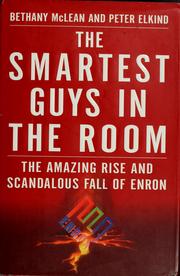
Bethany McLean, Peter Elkind · 2003

How Enron used mark-to-market accounting and hidden deals until its 2001 bankruptcy.

Stephen Fay · 1982

The Hunt brothers' attempt to corner silver and its collapse in March 1980.

Where it sits in the reference 2

Companies
Financial history

Topics

Company HistoriesFinancial History