Updates

  1. Person pages list letters, writing, profiles and links as sortable tables with filters, and show each person's companies as links; Fund letters show each letter's description in its own column.
  2. Experts show a checked job title and a short description of each person; 30 more people have photographs.
  3. Every company, fund, university and publication the experts work for has a page listing the people there.
  4. Fund letters show each letter's thesis and filter by it; 225 person pages list the essays, columns and newsletter issues the person wrote.
  5. Person pages list every essay and newsletter issue a person wrote, and their own books as a table in List view.
  6. Recommends shows the five largest kinds of book and the rest under More; browse pictures load sooner.
  7. Podcasts and talks link the original episode, filter by Audio and video or Press, and list each publisher once.
  8. Pages are wider, Recommends has List and Grid, and a filter clicked again turns off.
  9. Book cards sit in a ruled grid with Open Library and Goodreads links and each book's one-line note.
  10. Funds is now Investors; each investor's styles are buttons that filter the table.
  11. Podcasts and talks on a person's page filter by year and publisher and show as a list or a grid of pictures.
  12. Quotes show only people's own words: 472 summaries written by list sites are gone.
  13. Country pages open from Browse again, and every link on the shelf lands on a page.
  14. Subject and person pages show their sections as tabs, and each book appears once on a person's page.
  15. Book cards show the quote, who said it and the source; grids show five cards to a row.
  16. On a phone, a menu holds the sections, search, Updates, Feedback and dark mode.
  17. Feedback takes a screenshot of the page with no browser prompt, opens a screenshot full size when you click it, and clears itself once sent.
  18. Book cards are centred, search names the topic each book sits in, and any text cut short shows whole on hover.
  19. Search groups its results by kind: people, companies, geographies, subjects, topics, books, funds, fund letters and papers.
  20. The Books table lists who recommended each book by name, and the browser tab names the section you are in.
  21. Feedback can take a screenshot of the page, or one you paste or choose, and opens in the corner beside Updates.
  22. Each rail button reopens its section where you left it, and Browse, Table and People show on every book and subject page.
  23. Filters grey out choices that hold nothing instead of hiding them, and Books › People filters by authors or recommenders.
  24. Feedback takes a subject line and up to three screenshots.
  25. Biographies are grouped by the person they are about: 41 new pages, from Abraham Lincoln to Lee Kuan Yew.
  26. Sport splits into 23 sports, and Religion into one topic per faith.
  27. Book lists show as cards: the cover, one recommendation quote and every recommender by name.
  28. Seventeen subjects that had two or three pages under different names now have one page each.
  29. Every page lists its Experts as authors and recommenders, with a link to them on the Experts tab.
  30. Economics, Financial history, Financial panics and Accounting are subjects of their own, with one page per financial crisis.
  31. Book, person and subject pages open inside the app, so the tabs stay in view.
  32. 996 more book covers, and photographs or logos for 227 more people and companies.
  33. Books › Browse shows every subject as cards, and the rail holds Fund letters, Papers, Experts, Books and Funds.
  34. Every topic over 150 books splits into narrower topics, each with a page of its own.

Send feedback

What is it?
Screenshots, up to 3 (optional)
or paste one with Ctrl+V

We use your email only to reply to you.

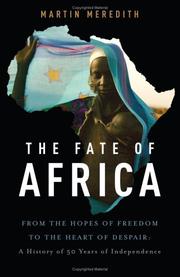
The Fate of Africa

The Fate of Africa

Martin Meredith
2004
T2 752 pages · about 12h 32m to read Open Librarygoodreads

The land seizures and the destruction of commercial agriculture, in continental context.

Summary

Martin Meredith wrote a narrative history of Africa from independence in the late 1950s and 1960s to the present, covering the continent country by country and period by period.

The structure follows the arc from independence optimism through one-party states and military coups, the Cold War proxy conflicts and the support Western and Soviet powers gave to whichever regimes served them, the economic decline of the 1970s and 1980s and the structural adjustment programmes, the wars in the Congo, Angola, Sudan, Somalia and Sierra Leone, the Rwandan genocide, apartheid and its end, and the partial recovery and democratisation of the 1990s and 2000s.

Meredith's argument is that the pattern of failure was driven principally by what leaders did with the states they inherited: the concentration of power, the use of the state for personal and ethnic enrichment, and the destruction of the institutions that might have constrained them. He gives less weight than some historians to colonial legacies, to the structure of the international economy and to Cold War intervention, though he covers all three. The book is long, readable and heavily criticised by African historians for treating the continent as a catalogue of failure and for concentrating on leaders rather than on societies. It is the most widely read single-volume history and should be read with awareness of its perspective.

Key takeaways 7

  1. Meredith attributes post-independence failure principally to what leaders did with inherited states rather than to colonial legacy or external intervention.
  2. Independence transferred centralised colonial state structures to successors who used them without the constraints colonial administrations had faced.
  3. Cold War powers supported regimes according to alignment rather than conduct, which removed external pressure for accountability.
  4. Resource wealth funded conflict and personal enrichment more consistently than it funded development.
  5. Ethnic mobilisation was used by leaders to build constituencies rather than being a spontaneous source of conflict.
  6. Structural adjustment programmes were imposed on states that lacked the administrative capacity to implement them.
  7. African historians criticise the book for treating the continent as a catalogue of failure and for concentrating on leaders rather than societies.

Who should read it

Readers wanting a single-volume narrative history of post-independence Africa, read with awareness of its leader-focused perspective.

Similar books 6

Chosen by shared topics, the entries that hold them, and the people who recommended both.
Richard Saunders, Tinashe Nyamunda · 2016

The Marange diamond fields; how an extractive rent was captured militarily.
David Coltart · 2016

Zimbabwe's history from Rhodesia's 1965 break to Mugabe, by a lawyer and MP.
Douglas Rogers · 2019

The 2017 coup reported from inside, including its business backers.

Ian Scoones · 2010

Ten years of field data on what actually happened to seized farmland.
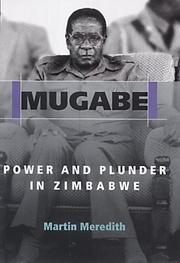
Martin Meredith · 2008

How Mugabe's Zimbabwe used land seizures and money-printing to hold power.

Where it sits in the reference 2

Geographies
Geographies

Topics

General HistoryPolitics and GovernmentAsia, Africa, Latin America and the Middle East