Updates

  1. Person pages list letters, writing, profiles and links as sortable tables with filters, and show each person's companies as links; Fund letters show each letter's description in its own column.
  2. Experts show a checked job title and a short description of each person; 30 more people have photographs.
  3. Every company, fund, university and publication the experts work for has a page listing the people there.
  4. Fund letters show each letter's thesis and filter by it; 225 person pages list the essays, columns and newsletter issues the person wrote.
  5. Person pages list every essay and newsletter issue a person wrote, and their own books as a table in List view.
  6. Recommends shows the five largest kinds of book and the rest under More; browse pictures load sooner.
  7. Podcasts and talks link the original episode, filter by Audio and video or Press, and list each publisher once.
  8. Pages are wider, Recommends has List and Grid, and a filter clicked again turns off.
  9. Book cards sit in a ruled grid with Open Library and Goodreads links and each book's one-line note.
  10. Funds is now Investors; each investor's styles are buttons that filter the table.
  11. Podcasts and talks on a person's page filter by year and publisher and show as a list or a grid of pictures.
  12. Quotes show only people's own words: 472 summaries written by list sites are gone.
  13. Country pages open from Browse again, and every link on the shelf lands on a page.
  14. Subject and person pages show their sections as tabs, and each book appears once on a person's page.
  15. Book cards show the quote, who said it and the source; grids show five cards to a row.
  16. On a phone, a menu holds the sections, search, Updates, Feedback and dark mode.
  17. Feedback takes a screenshot of the page with no browser prompt, opens a screenshot full size when you click it, and clears itself once sent.
  18. Book cards are centred, search names the topic each book sits in, and any text cut short shows whole on hover.
  19. Search groups its results by kind: people, companies, geographies, subjects, topics, books, funds, fund letters and papers.
  20. The Books table lists who recommended each book by name, and the browser tab names the section you are in.
  21. Feedback can take a screenshot of the page, or one you paste or choose, and opens in the corner beside Updates.
  22. Each rail button reopens its section where you left it, and Browse, Table and People show on every book and subject page.
  23. Filters grey out choices that hold nothing instead of hiding them, and Books › People filters by authors or recommenders.
  24. Feedback takes a subject line and up to three screenshots.
  25. Biographies are grouped by the person they are about: 41 new pages, from Abraham Lincoln to Lee Kuan Yew.
  26. Sport splits into 23 sports, and Religion into one topic per faith.
  27. Book lists show as cards: the cover, one recommendation quote and every recommender by name.
  28. Seventeen subjects that had two or three pages under different names now have one page each.
  29. Every page lists its Experts as authors and recommenders, with a link to them on the Experts tab.
  30. Economics, Financial history, Financial panics and Accounting are subjects of their own, with one page per financial crisis.
  31. Book, person and subject pages open inside the app, so the tabs stay in view.
  32. 996 more book covers, and photographs or logos for 227 more people and companies.
  33. Books › Browse shows every subject as cards, and the rail holds Fund letters, Papers, Experts, Books and Funds.
  34. Every topic over 150 books splits into narrower topics, each with a page of its own.

Send feedback

What is it?
Screenshots, up to 3 (optional)
or paste one with Ctrl+V

We use your email only to reply to you.

The Great Illusion

The Great Illusion

Norman Angell
1909
T2 336 pages · about 5h 36m to read Open Librarygoodreads

The pre-1914 argument that economic interdependence makes war unprofitable

Summary

Angell argued in 1909 that military conquest had become economically self-defeating for advanced industrial nations, because their prosperity depended on trade, credit and financial interdependence rather than on territory. A victor could not seize wealth from a defeated country without destroying the commercial system that produced it, and the disruption of credit would harm the victor as much as the vanquished.

His evidence was the structure of international finance and trade at the time: the integration of capital markets, the dependence of industrial economies on imported inputs and export markets, and the observation that small states such as Switzerland, Belgium and the Netherlands were prosperous without military power while large empires bore enormous defence costs without proportionate benefit. He argued that the confusion arose from treating nations as if they were individuals who could be enriched by taking property.

He was careful to say that war remained possible because leaders and populations held mistaken beliefs, and he was frequently misread as predicting that war would not occur. The 1914 war is generally treated as refuting him, and Angell spent decades arguing that it confirmed his thesis, since the war was economically ruinous for the victors.

The book is worth reading now because the same argument recurs in every debate about economic interdependence preventing conflict, most recently regarding China and Taiwan, and because Angell's actual claim, that war is unprofitable but not therefore improbable, is more careful than either its supporters or its critics usually allow.

Key takeaways 7

  1. Military conquest cannot transfer wealth between advanced industrial economies, because the wealth consists of commercial relationships that conquest destroys.
  2. Prosperity in an interdependent economy depends on trade and credit rather than on territory, which severs the historical link between military power and national wealth.
  3. Small states without military power were as prosperous per capita as large empires, which shows that defence expenditure does not produce economic return.
  4. A victor's credit and trading system is damaged by the disruption of the defeated economy, so the costs of war fall on the winner as well.
  5. The belief that nations profit from conquest arises from treating a nation as though it were an individual who can be enriched by seizing property.
  6. War remains possible despite being unprofitable, because decisions are made by leaders and populations acting on mistaken beliefs about the benefits.
  7. Demonstrating that a course of action is economically irrational does not prevent it, which is the argument's own limitation and Angell said so.

Who should read it

Investors and strategists assessing arguments that economic interdependence prevents conflict, in the original and more careful statement of the case.

Who recommended it 1

Similar books 6

Chosen by shared topics, the entries that hold them, and the people who recommended both.
Jean-Jacques Servan-Schreiber · 1968

1968 warning that American corporations would come to dominate Europe

Recommended by: Patrick Collison, Peter Thiel
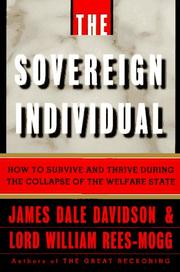
James Dale Davidson, William Rees-Mogg · 1997

1997 forecast of digital money weakening the nation state

Joseph E. Stiglitz · 2002

An attack on the IMF's one-size-fits-all policies in the crises of the 1990s.

Recommended by: Patrick Collison

Rana Foroohar · 2022

The case for localisation after the pandemic supply shocks.

Peter Zeihan · 2022

Why the US-guarded trading order is ending, and what that means for supply chains.

Recommended by: Andrew Wilkinson
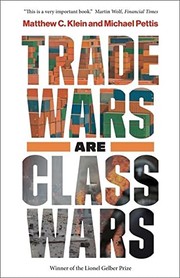
Matthew C. Klein, Michael Pettis · 2020

Trade imbalances come from how income is shared within countries.

Where it sits in the reference 3

Business themes
Secular themes
Economics

Topics

EconomicsWar and Strategy