Updates

  1. Person pages list letters, writing, profiles and links as sortable tables with filters, and show each person's companies as links; Fund letters show each letter's description in its own column.
  2. Experts show a checked job title and a short description of each person; 30 more people have photographs.
  3. Every company, fund, university and publication the experts work for has a page listing the people there.
  4. Fund letters show each letter's thesis and filter by it; 225 person pages list the essays, columns and newsletter issues the person wrote.
  5. Person pages list every essay and newsletter issue a person wrote, and their own books as a table in List view.
  6. Recommends shows the five largest kinds of book and the rest under More; browse pictures load sooner.
  7. Podcasts and talks link the original episode, filter by Audio and video or Press, and list each publisher once.
  8. Pages are wider, Recommends has List and Grid, and a filter clicked again turns off.
  9. Book cards sit in a ruled grid with Open Library and Goodreads links and each book's one-line note.
  10. Funds is now Investors; each investor's styles are buttons that filter the table.
  11. Podcasts and talks on a person's page filter by year and publisher and show as a list or a grid of pictures.
  12. Quotes show only people's own words: 472 summaries written by list sites are gone.
  13. Country pages open from Browse again, and every link on the shelf lands on a page.
  14. Subject and person pages show their sections as tabs, and each book appears once on a person's page.
  15. Book cards show the quote, who said it and the source; grids show five cards to a row.
  16. On a phone, a menu holds the sections, search, Updates, Feedback and dark mode.
  17. Feedback takes a screenshot of the page with no browser prompt, opens a screenshot full size when you click it, and clears itself once sent.
  18. Book cards are centred, search names the topic each book sits in, and any text cut short shows whole on hover.
  19. Search groups its results by kind: people, companies, geographies, subjects, topics, books, funds, fund letters and papers.
  20. The Books table lists who recommended each book by name, and the browser tab names the section you are in.
  21. Feedback can take a screenshot of the page, or one you paste or choose, and opens in the corner beside Updates.
  22. Each rail button reopens its section where you left it, and Browse, Table and People show on every book and subject page.
  23. Filters grey out choices that hold nothing instead of hiding them, and Books › People filters by authors or recommenders.
  24. Feedback takes a subject line and up to three screenshots.
  25. Biographies are grouped by the person they are about: 41 new pages, from Abraham Lincoln to Lee Kuan Yew.
  26. Sport splits into 23 sports, and Religion into one topic per faith.
  27. Book lists show as cards: the cover, one recommendation quote and every recommender by name.
  28. Seventeen subjects that had two or three pages under different names now have one page each.
  29. Every page lists its Experts as authors and recommenders, with a link to them on the Experts tab.
  30. Economics, Financial history, Financial panics and Accounting are subjects of their own, with one page per financial crisis.
  31. Book, person and subject pages open inside the app, so the tabs stay in view.
  32. 996 more book covers, and photographs or logos for 227 more people and companies.
  33. Books › Browse shows every subject as cards, and the rail holds Fund letters, Papers, Experts, Books and Funds.
  34. Every topic over 150 books splits into narrower topics, each with a page of its own.

Send feedback

What is it?
Screenshots, up to 3 (optional)
or paste one with Ctrl+V

We use your email only to reply to you.

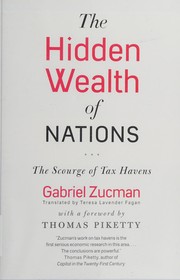
The Hidden Wealth of Nations

The Hidden Wealth of Nations

Gabriel Zucman
2015
T2 165 pages · about 2h 45m to read Open Librarygoodreads

The measurement of offshore wealth, much of it booked in Switzerland.

Summary

Zucman, an economist, wrote a short book estimating how much household financial wealth is held offshore and setting out what could be done about it.

The methodological contribution is the estimation technique. Zucman uses a discrepancy in international investment statistics: if every country's reported foreign assets and liabilities were accurate, global assets would equal global liabilities. They do not. The world reports more liabilities than assets, which means securities are recorded as owed by someone to nobody. Zucman argues that this gap corresponds to wealth held through offshore intermediaries where the ultimate owner is not recorded, and uses it to estimate the offshore total at roughly eight per cent of global household financial wealth, around seven and a half trillion dollars at the time of writing, with the share substantially higher for Russia, the Gulf and Latin America than for Europe or the United States.

The historical sections trace Swiss banking secrecy from the 1920s, the growth of Luxembourg, the Caribbean centres and Singapore, and the mechanisms: shell companies, trusts, nominee arrangements and the fictitious relocation of profits by multinationals.

His policy proposals are specific. A global financial registry recording the ultimate owner of every security, built from the existing central securities depositories. Automatic exchange of information with verification rather than voluntary compliance. Trade sanctions against non-cooperating jurisdictions, calculated so that the cost exceeds the revenue those jurisdictions earn from secrecy. A unitary tax on multinationals apportioning profit by sales rather than by declared location.

The estimates depend on the assumption that the statistical gap is entirely offshore wealth, which other researchers dispute, and the figures have been revised in later work. The registry proposal has partly advanced through the Common Reporting Standard and beneficial ownership registers, with mixed enforcement.

Key takeaways 7

  1. Global reported financial liabilities exceed reported assets, and the gap corresponds to wealth held through unrecorded offshore intermediaries.
  2. Roughly eight per cent of global household financial wealth is held offshore, with the share far higher for Russia, the Gulf and Latin America.
  3. Offshore wealth is not physically located in tax havens; the assets sit in normal markets while the ownership record is broken in the haven.
  4. A global registry of securities ownership could be built from existing central securities depositories rather than created new.
  5. Automatic information exchange without verification fails, because the reporting depends on the jurisdiction that profits from secrecy.
  6. Trade sanctions calculated to exceed a haven's earnings from secrecy would change the calculation for small jurisdictions.
  7. Apportioning multinational profit by sales rather than by declared location would remove the value of shifting profits to low-tax jurisdictions.

Who should read it

Investors, advisers and policy readers who want a quantitative estimate of offshore wealth and a concrete enforcement proposal.

Similar books 6

Chosen by shared topics, the entries that hold them, and the people who recommended both.
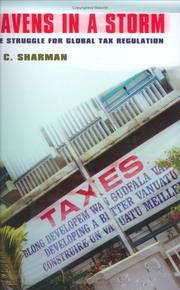
J. C. Sharman · 2006

How small jurisdictions fought off the OECD's harmful tax competition drive.
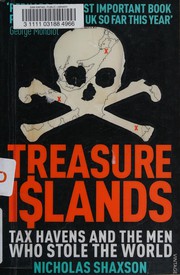
Nicholas Shaxson · 2011

How offshore finance works, with Britain and the City of London at its centre.
Bryan Caplan · 2019

Recommended by: Kevin Kelly

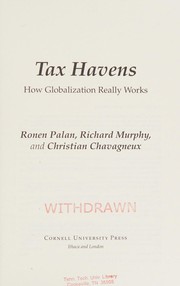
Ronen Palan, Richard Murphy, Christian Chavagneux · 2010

The academic account of what havens do and how they compete.
Where it sits in the reference 3

Geographies
Geographies
Economics

Topics

EconomicsPolitics and GovernmentGlobalisation, development and offshore money