Updates

  1. Person pages list letters, writing, profiles and links as sortable tables with filters, and show each person's companies as links; Fund letters show each letter's description in its own column.
  2. Experts show a checked job title and a short description of each person; 30 more people have photographs.
  3. Every company, fund, university and publication the experts work for has a page listing the people there.
  4. Fund letters show each letter's thesis and filter by it; 225 person pages list the essays, columns and newsletter issues the person wrote.
  5. Person pages list every essay and newsletter issue a person wrote, and their own books as a table in List view.
  6. Recommends shows the five largest kinds of book and the rest under More; browse pictures load sooner.
  7. Podcasts and talks link the original episode, filter by Audio and video or Press, and list each publisher once.
  8. Pages are wider, Recommends has List and Grid, and a filter clicked again turns off.
  9. Book cards sit in a ruled grid with Open Library and Goodreads links and each book's one-line note.
  10. Funds is now Investors; each investor's styles are buttons that filter the table.
  11. Podcasts and talks on a person's page filter by year and publisher and show as a list or a grid of pictures.
  12. Quotes show only people's own words: 472 summaries written by list sites are gone.
  13. Country pages open from Browse again, and every link on the shelf lands on a page.
  14. Subject and person pages show their sections as tabs, and each book appears once on a person's page.
  15. Book cards show the quote, who said it and the source; grids show five cards to a row.
  16. On a phone, a menu holds the sections, search, Updates, Feedback and dark mode.
  17. Feedback takes a screenshot of the page with no browser prompt, opens a screenshot full size when you click it, and clears itself once sent.
  18. Book cards are centred, search names the topic each book sits in, and any text cut short shows whole on hover.
  19. Search groups its results by kind: people, companies, geographies, subjects, topics, books, funds, fund letters and papers.
  20. The Books table lists who recommended each book by name, and the browser tab names the section you are in.
  21. Feedback can take a screenshot of the page, or one you paste or choose, and opens in the corner beside Updates.
  22. Each rail button reopens its section where you left it, and Browse, Table and People show on every book and subject page.
  23. Filters grey out choices that hold nothing instead of hiding them, and Books › People filters by authors or recommenders.
  24. Feedback takes a subject line and up to three screenshots.
  25. Biographies are grouped by the person they are about: 41 new pages, from Abraham Lincoln to Lee Kuan Yew.
  26. Sport splits into 23 sports, and Religion into one topic per faith.
  27. Book lists show as cards: the cover, one recommendation quote and every recommender by name.
  28. Seventeen subjects that had two or three pages under different names now have one page each.
  29. Every page lists its Experts as authors and recommenders, with a link to them on the Experts tab.
  30. Economics, Financial history, Financial panics and Accounting are subjects of their own, with one page per financial crisis.
  31. Book, person and subject pages open inside the app, so the tabs stay in view.
  32. 996 more book covers, and photographs or logos for 227 more people and companies.
  33. Books › Browse shows every subject as cards, and the rail holds Fund letters, Papers, Experts, Books and Funds.
  34. Every topic over 150 books splits into narrower topics, each with a page of its own.

Send feedback

What is it?
Screenshots, up to 3 (optional)
or paste one with Ctrl+V

We use your email only to reply to you.

The Holy Grail of Macroeconomics

The Holy Grail of Macroeconomics

Richard C. Koo
2008
T1 296 pages · about 4h 56m to read Open Librarygoodreads

Koo's balance-sheet recession thesis, drawn from Japan's lost decades.

Summary

Koo, chief economist at Nomura Research Institute, developed the concept of a balance sheet recession from Japan's experience after 1990 and argues it explains why conventional monetary policy failed there and would fail elsewhere in similar conditions.

His mechanism is specific. When an asset price bubble collapses, the assets purchased with debt lose value while the debt remains, leaving firms and households technically insolvent on a mark-to-market basis but still generating cash flow. Their rational response is to direct all available cash to debt repayment rather than to investment, and to continue doing so until balance sheets are repaired. Because this happens simultaneously across the entire private sector, aggregate demand collapses. Monetary policy cannot help, because the problem is not the price of credit but that nobody wants to borrow at any price. Koo documents that Japanese corporate borrowing was negative for years despite zero interest rates.

His policy conclusion is that only sustained government deficit spending can offset the private sector's simultaneous deleveraging, and that Japan's repeated attempts to reduce the deficit prematurely, particularly in 1997, caused the relapses that made the period appear to be a failure of stimulus rather than a failure to sustain it.

The framework was substantially applied by others after 2008. Critics argue Koo underweights structural problems in Japan, understates the costs of accumulated public debt, and treats his own diagnosis as more complete than it is.

Key takeaways 7

  1. After an asset bubble collapses, firms with intact cash flow but impaired balance sheets rationally direct all cash to debt repayment rather than investment.
  2. When the entire private sector deleverages simultaneously, aggregate demand collapses regardless of the price of credit.
  3. Monetary policy cannot help in a balance sheet recession, because the problem is that nobody wants to borrow at any interest rate.
  4. Japanese corporate borrowing was negative for years despite zero interest rates, which is the evidence the mechanism rests on.
  5. Only sustained government deficit spending can offset simultaneous private sector deleveraging, since it is the only remaining borrower.
  6. Japan's premature attempts to reduce the deficit, particularly in 1997, caused relapses that made the period look like a failure of stimulus rather than of sustaining it.
  7. A balance sheet recession requires a different policy response from an ordinary recession, and applying the ordinary response prolongs it.

Who should read it

Macro investors who need the balance sheet recession framework and the Japanese evidence behind it.

Who recommended it 1 · 1 direct

Similar books 6

Chosen by shared topics, the entries that hold them, and the people who recommended both.

Murray N. Rothbard · 1963

The Austrian account of 1929 and the policy response that followed

Gillian Tett · 2003

Japan's banking collapse told through Long-Term Credit Bank's failure and sale.

Recommended by: Mohnish Pabrai
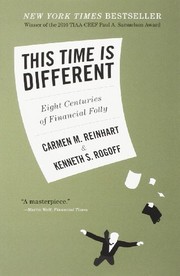
Carmen M. Reinhart, Kenneth S. Rogoff · 2009

Eight centuries of defaults and banking crises show the same patterns recurring.

Ray Dalio · 2018

A template for how big debt crises unfold, with detailed case studies.

Lars Tvede · 1997

The history of business cycle theory and how credit cycles drive asset prices.

Where it sits in the reference 2

Geographies
Economics

Topics

EconomicsFinancial History