
The Invisible Bankers
How American insurers make money and how little they return to policyholders.
Consumer-side account of how insurers make money.
Summary
Tobias, a financial writer, wrote a critical examination of the American insurance industry, arguing that it collects enormous sums, returns a smaller share of them to policyholders than the public assumes, and is structured to prevent price competition.
His central complaint concerns the share of premiums returned as claims. He documents that in several lines, particularly those sold to individuals through agents, a large fraction of premium goes to commission, marketing and administration rather than to claims. He is hardest on whole life insurance, arguing that combining a savings product with a death benefit conceals the return on the savings component, that first-year commissions consume most of the initial premium, and that a buyer would do better purchasing term insurance and investing the difference. He also attacks credit life insurance sold with loans, title insurance, and small-value policies sold door to door in poor neighbourhoods.
The structural argument is that the industry avoided federal regulation through the McCarran-Ferguson Act, which delegated insurance regulation to the states and granted a limited antitrust exemption, and that state regulators are close to the industry they oversee. He argues that rate regulation frequently protects incumbents rather than consumers.
Tobias also discusses the industry's genuine functions and does not argue that insurance is unnecessary, only that much of what is sold is poor value and that the distribution system rather than the underwriting drives the cost.
The book is from 1982 and much has changed: direct and online distribution has reduced commissions in personal lines, term insurance is far cheaper and more widely bought, and disclosure requirements have improved. The structural points about state regulation and about the economics of agent-sold products remain accurate.
Key takeaways 7
- A large share of premium in agent-sold personal insurance lines goes to commission and administration rather than to claims.
- Whole life insurance combines savings with a death benefit in a way that conceals the return on the savings component.
- First-year commissions consume most of the initial premium on a whole life policy, which is why early surrender values are near zero.
- Buying term insurance and investing the difference produces a better outcome for most buyers than a combined product.
- Credit life and similar products sold alongside loans carry loss ratios that would not survive price comparison.
- The McCarran-Ferguson Act delegated insurance regulation to the states and granted a limited antitrust exemption.
- State rate regulation frequently protects incumbents from price competition rather than protecting consumers from overcharging.
Who should read it
Readers evaluating insurance products, and operators in the sector who want a critique of distribution economics, with the caveat that the market has changed since 1982.
Similar books 6
Chosen by shared topics, the entries that hold them, and the people who recommended both.
A history of Lloyd's of London, from Edward Lloyd's coffee house to world market.
How AIG became the world's largest insurer, and its builder's account of his ouster.
Recommended by: Mohnish Pabrai
The crisis that nearly destroyed Lloyd's of London and ruined many of its Names.
How people learned to measure risk, from early probability to portfolio theory.
“(Risk is the subject of Peter Bernstein’s wonderful new book, Against the Gods: The Remarkable Story of Risk.)” — Bill Miller
Source: 1996 Q3 Market Commentary
Recommended by: Bill Miller, Charles de Vaulx, Howard Marks and 9 others
Berkshire as an operating company: its subsidiaries' culture and whether it lasts.
Recommended by: Mohnish Pabrai
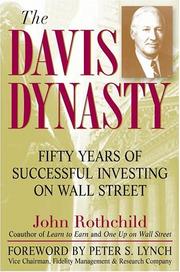
Three generations of Davises, who built a fortune from insurance stocks.
Recommended by: Mohnish Pabrai, Peter Bernstein and 2 others
Where it sits in the reference 2
Topics 3
As an Amazon Associate I earn from qualifying purchases.