
The Land Boomers
The Melbourne land boom and the bank collapses that followed it.
The Melbourne property mania and bank collapses of the 1890s.
Summary
Michael Cannon wrote this history of the Melbourne land boom of the 1880s and the collapse that followed in the early 1890s, which produced one of the most severe financial crises in Australian history and a depression that lasted a decade.
The boom was driven by gold-derived wealth, by British capital inflows seeking higher returns, and by a building society and land bank sector that lent aggressively against subdivided suburban land. Cannon documents the specific mechanisms: land subdivided far beyond any plausible demand, valuations supported by transactions between related parties, institutions lending against their own directors' developments, and financial reporting that concealed the position.
The collapse in 1891 and 1892 destroyed most of the land banks and building societies and several trading banks. Cannon's distinctive contribution is his research into the aftermath: he documents how prominent Melbourne figures used secret compositions with creditors, arrangements approved in private hearings, to escape their debts while retaining their assets and their public positions, and he names them. The book was controversial in Australia for this reason. It is narrative history based on archival and newspaper research rather than economic analysis, and it remains the standard account of the episode.
Key takeaways 7
- The Melbourne land boom subdivided suburban land far beyond any plausible demand, supported by transactions between related parties.
- British capital inflows seeking yield funded the boom, and their withdrawal precipitated the collapse.
- Land banks and building societies lent against developments controlled by their own directors.
- Financial reporting concealed the institutions' positions until the collapse made them undeniable.
- Prominent participants used secret compositions with creditors, approved in private, to escape debts while retaining assets and social position.
- The resulting depression lasted a decade, which was far longer than the boom that preceded it.
- Cannon's research into the private compositions is the book's distinctive contribution and was contested in Australia.
Who should read it
Readers of financial history interested in property credit cycles and in what happens to the people responsible after a collapse.
Similar books 6
Chosen by shared topics, the entries that hold them, and the people who recommended both.
The Florida land boom of the 1920s and how its collapse fed the Depression.
“The telling of America's first modern bubble: the Florida real estate boom of the 1920s.” — Morgan Housel
Source: A Few Good Books · Collaborative Fund
Recommended by: Morgan Housel
The 1907 panic day by day, from a failed copper corner to J.P. Morgan's rescue.
Recommended by: Mohnish Pabrai and 1 other
Why the exchange closed when the First World War began, and how the dollar rose.

Migration and openness as the source of Australia's long-run growth.
How Australia's deregulation led to three decades without a recession.
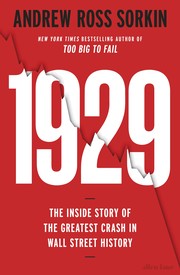
The 1929 Wall Street crash: the greed and folly behind America's greatest collapse.
“The Lessons of 1929 The best investing book I’ve read in years, one that pulled me along from chapter to chapter, is 1929: Inside the Greatest Crash in Wall Street History – and How It Shattered a Nation, by Andrew Ross Sorkin.” — Howard Marks
Source: What’s Going on in Private Credit?
Recommended by: Bill Gates, Howard Marks