Financial History
Holds histories of money, banking, bubbles, crashes, hyperinflations and Wall Street.
Start here
- Extraordinary Popular Delusions and the Madness of CrowdsCharles Mackay, 1841
- The Great Crash 1929John Kenneth Galbraith, 1955
- A History of Interest RatesSidney Homer, Richard Sylla, 1963
- When Money DiesAdam Fergusson, 1975
- The House of Morgan: An American Banking Dynasty and the Rise of Modern FinanceRon Chernow, 1990
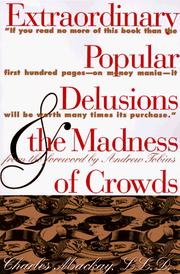
Crowd manias from the Mississippi scheme and South Sea Bubble to witch trials.
“We find whole communities suddenly fix their minds upon one object, and go mad in its pursuit,” wrote Charles Mackay in Extraordinary Popular Delusions and the Madness of Crowds (1841), which contains descriptions of early speculative manias.” — Jeremy Grantham
Source: Valuing AI: Extreme Bubble, New Golden Era - or Both?, page 6
Recommended by: Barton Biggs, Bernard Baruch and 6 others
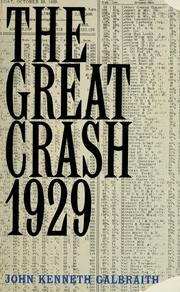
The late-1920s boom in margin loans and investment trusts, and the 1929 crash.
“One I haven’t mentioned since my memo The Long View in 2009 is the “bezzle,” a concept Galbraith introduced in his book The Great Crash 1929.” — Howard Marks
Source: Cockroaches in the Coal Mine
Recommended by: Howard Marks, Jeremy Grantham and 2 others
Interest rates from Babylonian lending through Rome and Europe to modern bonds.
“Courtesy of Homer and Sylla’s A History of Interest Rates, I’ve plotted the market price of the 5% prestiti in the 14th and 15th centuries: Even taking these stumbles into account, investors in medieval and Renaissance Europe earned healthy returns on their capital.” — William J. Bernstein
Source: Efficient Frontier, issue 901 (2001)
Recommended by: Mohnish Pabrai, William J. Bernstein
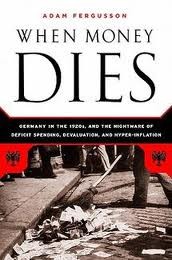
What Germany's 1921 to 1923 hyperinflation did to ordinary people's lives.
Recommended by: Balaji S. Srinivasan
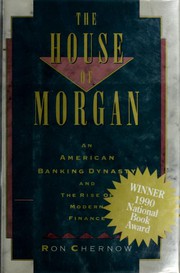
The Morgan banks from 1830s London to J.P. Morgan and Morgan Stanley in the 1980s.
Recommended by: Mohnish Pabrai, Paul Graham, Li Lu and 1 other
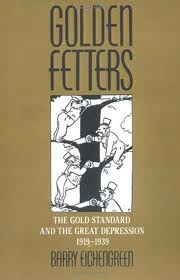
How the gold standard spread the Depression, and why leaving it early meant recovery.
“Eichengreen, Barry. Golden Fetters: The Gold Standard and the Great Depression, 1919–1939. New York: Oxford University Press, 1996” — Ray Dalio
Source: The Changing World Order — citations and bibliography, page 29
Recommended by: Ray Dalio

Two centuries of a Jewish banking family from Hamburg to London and New York.
Recommended by: Mohnish Pabrai, Li Lu
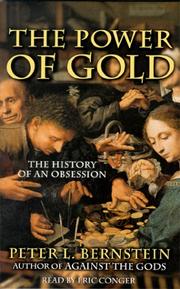
Gold from ancient Egypt and Lydian coins to the end of Bretton Woods.
“And right next to him I’d put Peter Bernstein (Against the Gods, The Power of Gold) and James Grant (Money of the Mind), both enormously gifted writers and friends of mine.” — John C. Bogle
Source: The Joy of Writing — Books, Ideas, Advocacy, and Idealism, page 3
Recommended by: John C. Bogle
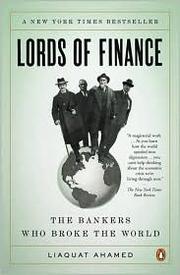
How four central bankers and the gold standard turned a slump into the Depression.
“I'm going to use "classic" again but rightfully so.” — Christopher Bloomstran
Source: Semper Augustus 2020 Letter to Clients, 'To Read or Not to Read', p. 57
Recommended by: Christopher Bloomstran, Mohnish Pabrai
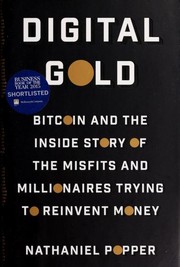
The rise of Bitcoin and the people trying to build a new money for the internet.
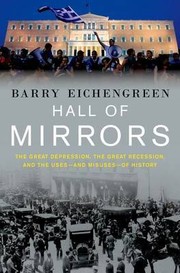
How 1930s lessons guided policy in 2008, averting a depression but adding errors.
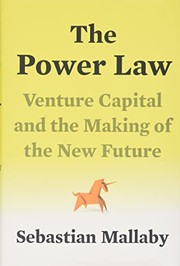
Venture capital from Arthur Rock to SoftBank, and why a few big bets pay for all.
Recommended by: Andrew Wilkinson, Anthony Pompliano and 4 others
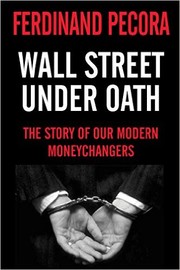
The 1933 Senate hearings exposing bankers' practices that led to securities laws.
“The combination of banking and investment banking under the same roof received a good part of the blame for the Great Crash (see one of my favorite books, Wall Street Under Oath by Ferdinand Pecora, 1939).” — Howard Marks
Source: The Long View, page 12
Recommended by: Howard Marks
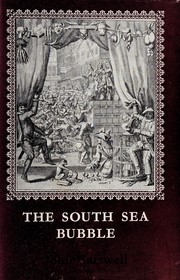
How the South Sea Company's scheme worked, inflated and collapsed.
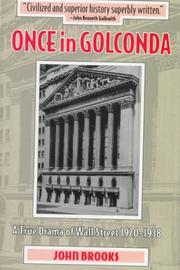
Wall Street from 1920 to 1938: the boom, the crash, the Depression and reform.
Recommended by: Mohnish Pabrai, Brendan Moynihan
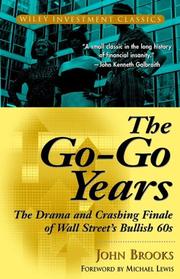
Wall Street in the 1960s: performance funds, conglomerates and the paperwork crisis.
“Both books are outstanding histories of Rockefeller and Standard Oil and then of the booming 1960s.” — Christopher Bloomstran
Source: Semper Augustus 2022 Letter to Clients, 'Books and Stuff', p. 75
Recommended by: Christopher Bloomstran, Mohnish Pabrai

Germany's 1914 to 1923 inflation, with a more sympathetic view of its policy.

Monthly data tested against explanations of Germany's 1919 to 1923 inflation.

The full political, social and economic history of Germany's 1914 to 1924 inflation.

How Swiss bankers kept Jewish deposits and helped Nazis hide looted money.
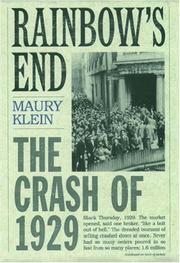
A narrative of the great stock market crash and the economy around it.
The 1907 panic day by day, from a failed copper corner to J.P. Morgan's rescue.
Recommended by: Mohnish Pabrai and 1 other

The Dutch tulip episode of 1636 and 1637 from archives, and how its legend arose.
Why the exchange closed when the First World War began, and how the dollar rose.
The history of finance by instrument: credit, bonds, stocks, insurance and property.
Recommended by: Mohnish Pabrai, Marc Andreessen, Max Levchin and 3 others

An Ohio lawyer's diary of the Depression years as he lived through them.
Recommended by: Mohnish Pabrai, Morgan Housel and 1 other

The 1944 Bretton Woods conference as a contest between Keynes and Harry Dexter White.

Why bankers kept lending to Philip II of Spain despite four payment suspensions.
“Drelichman, Mauricio and Hans-Joachim Voth. Lending to the Borrower from Hell: Debt, Taxes, and Default in the Age of Philip II. Princeton: Princeton University Press, 2014” — Ray Dalio
Source: The Changing World Order — citations and bibliography, page 44
Recommended by: Ray Dalio
How trading in Dutch East India Company shares grew into the first stock market.
The reporters who received the Mossack Fonseca leak on how they worked through it.

How a Fed credit boom led to the Depression, and how policy prolonged it.
“It's a timeless and timely classic.” — Christopher Bloomstran
Source: Semper Augustus 2020 Letter to Clients, 'To Read or Not to Read', p. 57
Recommended by: Christopher Bloomstran, Mohnish Pabrai

The Melbourne land boom and the bank collapses that followed it.

The failure of Austria's largest bank that spread the Depression across Europe.
The four-volume history of the City of London from the early nineteenth century.

Swiss banks, Holocaust victims' accounts and the campaign to recover them.
John Law, the Mississippi bubble and the birth of paper money in France.
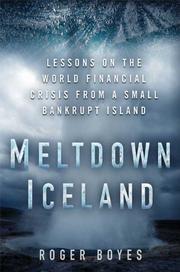
How Iceland went bankrupt, reported by a Times journalist within a year.
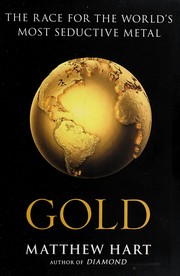
Gold's history from early kingdoms to the mining boom after the 2008 crisis.
Germany's hyperinflation, from war financing to the Rentenmark stabilisation.
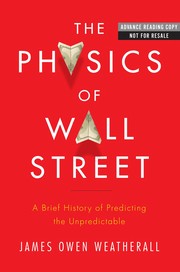
How physicists and mathematicians brought their models into finance.
“But such oversimplification can—and did—create a flawed conclusion.3 2 I am indebted to James Owen Wetherall, physicist, philosopher, and mathematician at the University of California for telling Bachelier’s story in his book, “The Physics of Wall Street, A Brief History of Predicting the Unpredictable” (Houghton Mifflin Harcourt, 2015).” — John C. Bogle
Source: David and Goliath: Who Wins the Quantitative Battle?, page 8
Recommended by: John C. Bogle, Eric Weinstein
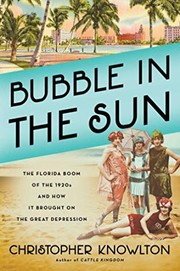
The Florida land boom of the 1920s and how its collapse fed the Depression.
“The telling of America's first modern bubble: the Florida real estate boom of the 1920s.” — Morgan Housel
Source: A Few Good Books · Collaborative Fund
Recommended by: Morgan Housel
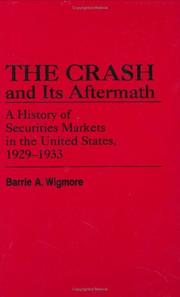
A reference history of US securities markets from the 1929 crash to 1933.
Recommended by: Mohnish Pabrai
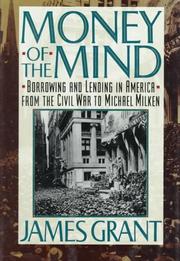
How American lending standards loosen in long cycles as the memory of losses fades.
“And right next to him I’d put Peter Bernstein (Against the Gods, The Power of Gold) and James Grant (Money of the Mind), both enormously gifted writers and friends of mine.” — John C. Bogle
Source: The Joy of Writing — Books, Ideas, Advocacy, and Idealism, page 3
Recommended by: John C. Bogle, Mohnish Pabrai, Seth Klarman and 1 other
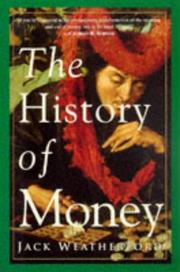
The history and nature of money, and people's relationship with it.
Recommended by: Alfred Lin, Patrick O'Shaughnessy
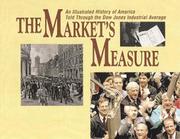
An illustrated history of America told through the Dow Jones Industrial Average.
Recommended by: Mohnish Pabrai
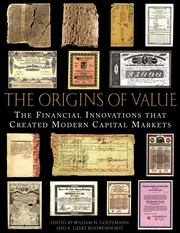
Financial innovations, from Mesopotamian interest and Chinese paper money onward.
Recommended by: Mohnish Pabrai
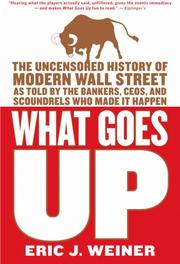
An oral history of modern Wall Street, told by the people who worked there.
Recommended by: Mohnish Pabrai
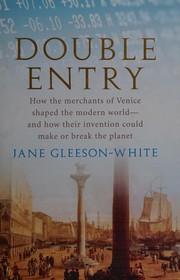
How double-entry bookkeeping, from Venice, shaped modern finance.
Recommended by: Mohnish Pabrai
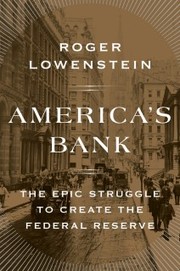
How the Federal Reserve was argued into existence, from the 1907 panic to 1913.
Recommended by: Seth Klarman
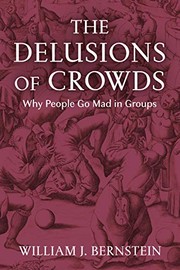
Five centuries of financial and religious manias, and why people go mad in groups.
“Narratives, says William Bernstein, author of The Delusions of Crowds: Why People Go Mad in Groups (2021), are “the pathogens that spread the bubble disease throughout a society.” — Jeremy Grantham
Source: Valuing AI: Extreme Bubble, New Golden Era - or Both?, page 4
Recommended by: Jeremy Grantham, Michael Mauboussin
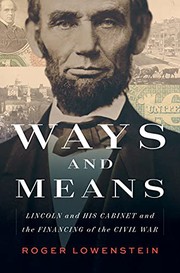
How Lincoln's Union financed the Civil War and transformed the American state.
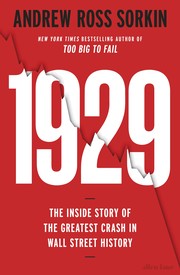
The 1929 Wall Street crash: the greed and folly behind America's greatest collapse.
“The Lessons of 1929 The best investing book I’ve read in years, one that pulled me along from chapter to chapter, is 1929: Inside the Greatest Crash in Wall Street History – and How It Shattered a Nation, by Andrew Ross Sorkin.” — Howard Marks
Source: What’s Going on in Private Credit?
Recommended by: Bill Gates, Howard Marks
 Barry Eichengreenwrote 2 books here
 Roger Lowensteinwrote 2 books here
 Ron Chernowwrote 2 books here
 James Grantwrote 1 book here
 John Kenneth Galbraithwrote 1 book here
 Sebastian Mallabywrote 1 book here
 Andrew Ross Sorkinwrote 1 book here
 Niall Fergusonwrote 1 book here
Show all 13

 Mohnish Pabrairecommends 17 books here
 John C. Boglerecommends 4 books here
 Howard Marksrecommends 3 books here
 Jeremy Granthamrecommends 3 books here
 Marc Andreessenrecommends 2 books here
 Paul Grahamrecommends 2 books here
 Ray Daliorecommends 2 books here
 Morgan Houselrecommends 2 books here
 Seth Klarmanrecommends 2 books here
Show all 34
 Michael Mauboussinrecommends 1 book here
 Warren Buffettrecommends 1 book here
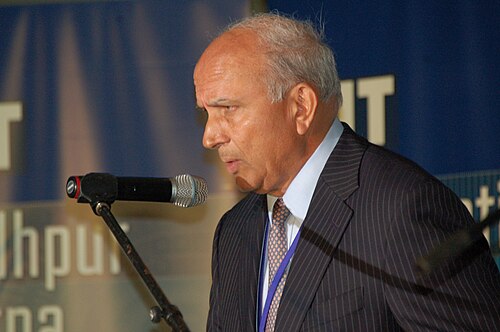 Prem Watsarecommends 1 book here
 Alfred Linrecommends 1 book here
 Anthony Pomplianorecommends 1 book here
 Balaji S. Srinivasanrecommends 1 book here
 Bernard Baruchrecommends 1 book here
 Bill Gatesrecommends 1 book here
 Eric Weinsteinrecommends 1 book here
 Josh Wolferecommends 1 book here
 Max Levchinrecommends 1 book here
 Patrick Collisonrecommends 1 book here
 Raoul Palrecommends 1 book here
 Ryan Petersenrecommends 1 book here
 Vinod Khoslarecommends 1 book here