The History of Money
The history and nature of money, and people's relationship with it.
Who recommended it 2 · 2 direct
Similar books 6
Chosen by shared topics, the entries that hold them, and the people who recommended both.
Interest rates from Babylonian lending through Rome and Europe to modern bonds.
“Courtesy of Homer and Sylla’s A History of Interest Rates, I’ve plotted the market price of the 5% prestiti in the 14th and 15th centuries: Even taking these stumbles into account, investors in medieval and Renaissance Europe earned healthy returns on their capital.” — William J. Bernstein
Source: Efficient Frontier, issue 901 (2001)
Recommended by: Mohnish Pabrai, William J. Bernstein
How the Federal Reserve was argued into existence, from the 1907 panic to 1913.
Recommended by: Seth Klarman
How the gold standard spread the Depression, and why leaving it early meant recovery.
“Eichengreen, Barry. Golden Fetters: The Gold Standard and the Great Depression, 1919–1939. New York: Oxford University Press, 1996” — Ray Dalio
Source: The Changing World Order — citations and bibliography, page 29
Recommended by: Ray Dalio

Monthly data tested against explanations of Germany's 1919 to 1923 inflation.

Why bankers kept lending to Philip II of Spain despite four payment suspensions.
“Drelichman, Mauricio and Hans-Joachim Voth. Lending to the Borrower from Hell: Debt, Taxes, and Default in the Age of Philip II. Princeton: Princeton University Press, 2014” — Ray Dalio
Source: The Changing World Order — citations and bibliography, page 44
Recommended by: Ray Dalio
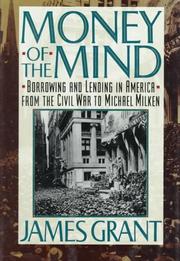
How American lending standards loosen in long cycles as the memory of losses fades.
“And right next to him I’d put Peter Bernstein (Against the Gods, The Power of Gold) and James Grant (Money of the Mind), both enormously gifted writers and friends of mine.” — John C. Bogle
Source: The Joy of Writing — Books, Ideas, Advocacy, and Idealism, page 3
Recommended by: John C. Bogle, Mohnish Pabrai, Seth Klarman and 1 other