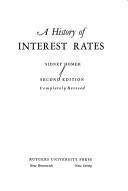
A History of Interest Rates
Interest rates from Babylonian lending through Rome and Europe to modern bonds.
Four thousand years of rates; the reference work.
Summary
Homer assembled interest rate series stretching from Sumerian and Babylonian lending through Greece, Rome, medieval Europe, the Italian city-states, the Dutch Republic, Britain and the United States, and Sylla extended and revised the work through later editions to cover the twentieth century and the international bond markets. The book presents the data in tables and charts with commentary on the political and monetary conditions of each period.
The central empirical observation is that interest rates in a society follow a long arc: high and volatile in early or disordered periods, declining as legal enforcement, credit records and stable government develop, and rising again during war, inflation and political breakdown. Homer treats the level and trend of long-term rates as a summary indicator of a society's political and financial condition, and the long series lets him show that the 1981 peak in United States rates was the highest in the recorded history of any developed creditor nation.
The book is a reference work, not an argument, and it is used that way. Investors consult it for base rates on what interest rate regimes have historically looked like, for evidence on how long rate cycles run, and for context on whether any current level is unusual. Its limits follow from the sources: pre-modern data comes from scattered contracts and legal records, the coverage outside Western Europe and the United States is thin, and the interpretive commentary reflects the mid-century view of monetary policy. The later editions carry the series forward but the analytic framework is Homer's original.
Key takeaways 7
- Long-term interest rates in advanced creditor nations have followed multi-decade trends rather than mean-reverting quickly, with cycles running twenty to forty years.
- The level of a country's long-term rate summarises the market's judgement of its political stability and monetary discipline more than any other single price.
- Interest rates decline over centuries as legal enforcement of contracts, credit information and government stability improve.
- The interest rate peak reached in the United States in 1981 was the highest recorded for any leading creditor nation in four thousand years of data.
- Wars and their financing produce the sharpest and most reliable upward breaks in rate history.
- Usury restrictions consistently failed to lower the cost of credit and instead pushed lending into concealed and more expensive forms.
- The gap between short and long rates has historically inverted before economic contractions in market economies with developed bond markets.
Who should read it
Macro investors and fixed income allocators who need long-run historical base rates before judging whether current interest rate conditions are unusual.
About Sidney Homer
Founded the bond market research department at Salomon Brothers and wrote the standard history of interest rates; died in 1983.
A History of Interest Rates assembles rate series from Babylonian loans through the twentieth century and is the only long-run record of what money has cost across monetary regimes, which is why every argument about whether current rates are high or low ends up citing it. Inside the Yield Book, with Martin Leibowitz, introduced total-return analysis of bonds and the arithmetic of duration and reinvestment that fixed income desks still use.
Who recommended it 2 · 2 direct
“Courtesy of Homer and Sylla’s A History of Interest Rates, I’ve plotted the market price of the 5% prestiti in the 14th and 15th centuries: Even taking these stumbles into account, investors in medieval and Renaissance Europe earned healthy returns on their capital.”
Similar books 6
Chosen by shared topics, the entries that hold them, and the people who recommended both.
How American lending standards loosen in long cycles as the memory of losses fades.
“And right next to him I’d put Peter Bernstein (Against the Gods, The Power of Gold) and James Grant (Money of the Mind), both enormously gifted writers and friends of mine.” — John C. Bogle
Source: The Joy of Writing — Books, Ideas, Advocacy, and Idealism, page 3
Recommended by: John C. Bogle, Mohnish Pabrai, Seth Klarman and 1 other
How the London money market worked, and why a central bank lends freely in a panic.
“The good times too of high price almost always engender much fraud,” wrote Walter Bagehot in Lombard Street: A Description of the Money Market (1877).” — Jeremy Grantham
Source: Valuing AI: Extreme Bubble, New Golden Era - or Both?, page 13
Recommended by: Jeremy Grantham
Financial innovations, from Mesopotamian interest and Chinese paper money onward.
Recommended by: Mohnish Pabrai
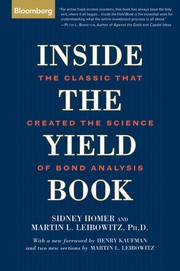
Bond maths made usable: price and yield, interest on interest, and bond swaps.
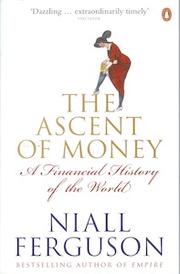
The history of finance by instrument: credit, bonds, stocks, insurance and property.
Recommended by: Mohnish Pabrai, Marc Andreessen, Max Levchin and 3 others
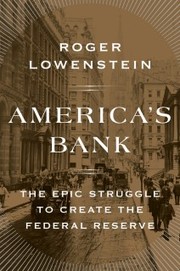
How the Federal Reserve was argued into existence, from the 1907 panic to 1913.
Recommended by: Seth Klarman