Updates

  1. Every US-listed company has a page with its SEC filings. Company pages list their experts and their management, past and present. Fund managers sit under Investors. Each show has a page of its episodes, and an episode page names its guests and hosts. Biographies lists groups, then people. Breadcrumbs show where a page sits.
  2. Media lists every podcast episode, video, interview and talk, over 10,000, by person, company, publisher and event; each filter searches its own choices. Books opens on its table, then Browse, then Authors and Recommenders. A filter's count no longer covers its arrow.
  3. A book that no company, country or subject page lists shows its topics under Where it sits in the reference. On a phone, a page's tabs scroll sideways only. Descriptions read the same on every page. See them in the Experts tab lists every expert the page names.
  4. Every podcast episode, video and interview has its own page with a video or audio player and a link to the source. Investor pages show each company's sector and market cap; firms such as Berkshire Hathaway have one page that holds their letters and their company tabs. Letters tabs filter by company and search the theses. Companies filter by Public, Private and Defunct and link each company's website.
  5. Every tab, view and search has its own address, such as /books/table/asset or /letters/companies, so Back works and a link opens the same place. Page addresses no longer end in .html. Fund letters, Investors, Companies and Papers load about a fifth of the data they did.
  6. Fund letters has a Companies tab: every company the letters name, with its market cap, sector, country, and how many letters and investors name it. Investor pages link each investor's website. Lists in table cells end with “… and N more” at every width.
  7. 1,120 more book summaries; descriptions for 373 papers; pages for 137 more companies, each with the fund letters that discuss it; 215 official photographs; search has its own page.
  8. 411 more books have a summary; person pages list 930 more of the books they wrote; 147 people show their official photograph.
  9. Every investor has a page with its letters and the companies they discuss; company pages list the investors whose letters name them.
  10. A Companies section at the top of the rail lists every company the books, experts and fund letters name.
  11. Person pages list letters, writing, profiles and links as sortable tables with filters, and show each person's companies as links; Fund letters show each letter's description in its own column.
  12. Experts show a checked job title and a short description of each person; 30 more people have photographs.
  13. Every company, fund, university and publication the experts work for has a page listing the people there.
  14. Fund letters show each letter's thesis and filter by it; 225 person pages list the essays, columns and newsletter issues the person wrote.
  15. Person pages list every essay and newsletter issue a person wrote, and their own books as a table in List view.
  16. Recommends shows the five largest kinds of book and the rest under More; browse pictures load sooner.
  17. Podcasts and talks link the original episode, filter by Audio and video or Press, and list each publisher once.
  18. Pages are wider, Recommends has List and Grid, and a filter clicked again turns off.
  19. Book cards sit in a ruled grid with Open Library and Goodreads links and each book's one-line note.
  20. Funds is now Investors; each investor's styles are buttons that filter the table.
  21. Podcasts and talks on a person's page filter by year and publisher and show as a list or a grid of pictures.
  22. Quotes show only people's own words: 472 summaries written by list sites are gone.
  23. Country pages open from Browse again, and every link on the shelf lands on a page.
  24. Subject and person pages show their sections as tabs, and each book appears once on a person's page.
  25. Book cards show the quote, who said it and the source; grids show five cards to a row.
  26. On a phone, a menu holds the sections, search, Updates, Feedback and dark mode.
  27. Feedback takes a screenshot of the page with no browser prompt, opens a screenshot full size when you click it, and clears itself once sent.
  28. Book cards are centred, search names the topic each book sits in, and any text cut short shows whole on hover.
  29. Search groups its results by kind: people, companies, geographies, subjects, topics, books, funds, fund letters and papers.
  30. The Books table lists who recommended each book by name, and the browser tab names the section you are in.
  31. Feedback can take a screenshot of the page, or one you paste or choose, and opens in the corner beside Updates.
  32. Each rail button reopens its section where you left it, and Browse, Table and People show on every book and subject page.
  33. Filters grey out choices that hold nothing instead of hiding them, and Books › People filters by authors or recommenders.
  34. Feedback takes a subject line and up to three screenshots.
  35. Biographies are grouped by the person they are about: 41 new pages, from Abraham Lincoln to Lee Kuan Yew.
  36. Sport splits into 23 sports, and Religion into one topic per faith.
  37. Book lists show as cards: the cover, one recommendation quote and every recommender by name.
  38. Seventeen subjects that had two or three pages under different names now have one page each.
  39. Every page lists its Experts as authors and recommenders, with a link to them on the Experts tab.
  40. Economics, Financial history, Financial panics and Accounting are subjects of their own, with one page per financial crisis.
  41. Book, person and subject pages open inside the app, so the tabs stay in view.
  42. 996 more book covers, and photographs or logos for 227 more people and companies.
  43. Books › Browse shows every subject as cards, and the rail holds Fund letters, Papers, Experts, Books and Funds.
  44. Every topic over 150 books splits into narrower topics, each with a page of its own.

Send feedback

What is it?
Screenshots, up to 3 (optional)
or paste one with Ctrl+V

We use your email only to reply to you.

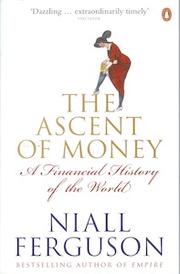
The Ascent of Money

The Ascent of Money

The history of finance by instrument: credit, bonds, stocks, insurance and property.

Niall Ferguson
2008
T2 445 pages · about 7h 25m to read Open Librarygoodreads

Niall Ferguson's history of financial innovation — from Medici banking to mortgage-backed securities. Adds a dimension the other books underweight: capital markets, insurance, and credit are not peripheral to economic development but central to it. Readable but should be checked against critics of Ferguson's selective history.

Summary

Ferguson writes a history of finance organised by instrument rather than by chronology, covering money and credit, bonds, equities, insurance, real estate and international capital flows, with each chapter tracing an instrument from its origin to the present.

The credit chapter covers Mesopotamian lending, medieval Italian banking and the Medici, and the development of fractional reserve banking. The bond chapter covers the Italian city states, the financing of European wars, the Rothschilds, and the argument that bond markets discipline governments. The equity chapter covers the Dutch East India Company, the Mississippi Company and John Law, and the modern joint stock corporation. The insurance chapter covers the Scottish widows fund, actuarial science, the welfare state as socialised insurance, and Chile's pension reform. The real estate chapter covers the Anglo-American property-owning ideology and the subprime crisis. The final chapter covers what Ferguson calls Chimerica, the mutual dependence between Chinese saving and American consumption.

His central argument is that financial innovation has been a cause of prosperity rather than a parasite on it, and that most public hostility to finance rests on misunderstanding what the instruments do.

The book was written just as the 2008 crisis broke, which affects its confidence in places. Ferguson is a conservative historian with political commitments that shape the treatment, and his defence of financial innovation gives limited weight to the crises he himself documents. The coverage is broad rather than deep and specialists find each chapter thin. It works as a survey of how each instrument came to exist and what problem it was invented to solve.

Key takeaways 8

  1. Credit and lending predate coinage, and the earliest financial records are debt contracts rather than records of exchange.
  2. Bond markets discipline governments by pricing the risk of default, which historically constrained rulers more effectively than any political mechanism.
  3. The joint stock company allowed capital to be raised from strangers by limiting liability and making ownership transferable.
  4. Insurance converts unpredictable individual catastrophe into a predictable collective cost, and the welfare state applies the same mechanism through the government.
  5. The property-owning ideology in English-speaking countries was a deliberate political project rather than a natural preference.
  6. Financial crises recur because the instruments that spread risk also conceal where it has accumulated.
  7. Chinese saving funding American consumption created a mutual dependence that Ferguson identified as unstable before the imbalance was widely discussed.
  8. Ferguson defends financial innovation as a cause of prosperity while giving limited weight to the crises documented in his own chapters.

Who should read it

Readers who want a survey of how each major financial instrument originated and what problem it solved, treating the political framing as one position.

About Niall Ferguson

Historian and senior fellow at the Hoover Institution, Stanford; previously taught at Oxford, Harvard and NYU Stern.

The Ascent of Money traces credit, bond markets, joint-stock equity, insurance and property finance from their origins, giving investors the institutional history behind instruments they price every day. The House of Rothschild and High Financier examine how two banking houses actually made money and managed sovereign and political risk over long periods.

Who recommended it 5 · 1 direct

Max Levchinreported
Raoul Palreported

Similar books 6

Chosen by shared topics, the entries that hold them, and the people who recommended both.

Barry Eichengreen · 1992

How the gold standard spread the Depression, and why leaving it early meant recovery.

Steven B. Webb · 1989

Monthly data tested against explanations of Germany's 1919 to 1923 inflation.

Mauricio Drelichman, Hans-Joachim Voth · 2014

Why bankers kept lending to Philip II of Spain despite four payment suspensions.

Frederick Taylor · 2013

Modern retelling with more on the stabilisation and the Rentenmark.
Adam Fergusson · 1975

What Germany's 1921 to 1923 hyperinflation did to ordinary people's lives.

Recommended by: Balaji S. Srinivasan
Sidney Homer, Richard Sylla · 1963

Interest rates from Babylonian lending through Rome and Europe to modern bonds.

Recommended by: Mohnish Pabrai

Where it sits in the reference 2

Academics
Financial history

Topics 4

Financial HistoryEconomicsGeneral HistoryFinancial History