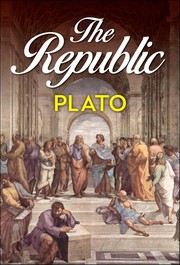
The Republic
What justice is, answered by building an ideal city in dialogue.
Summary
Plato's dialogue, written around 375 BCE, begins with the question of what justice is and whether the just life is better than the unjust one, and answers it by constructing an ideal city in speech on the argument that justice will be easier to see at that scale.
The city divides into three classes, producers, guardians and rulers, corresponding to three parts of the soul, appetite, spirit and reason, and justice consists in each part performing its own function without interfering with the others. The rulers are philosopher-kings, selected through an extended educational programme and holding no private property, on the argument that people who want power should not have it and that private interest corrupts public judgment.
The central books contain the three images: the sun, which explains the form of the good; the divided line, which sets out degrees of knowledge from images through belief to reasoning and understanding; and the cave, in which prisoners take shadows for reality and the person who escapes and returns is not believed. Book eight describes the degeneration of regimes from aristocracy through timocracy, oligarchy, democracy and tyranny, with the mechanism of each transition specified. His account of democracy producing tyranny through the excess of freedom is the most cited passage in political theory.
The proposals are genuinely disturbing, including censorship of poetry, the abolition of the family among guardians, eugenic breeding and the noble lie. Popper attacked the work as the origin of totalitarian thinking. Readers should note that Socratic dialogue may present positions to be examined rather than endorsed, which remains disputed. Translations differ considerably.
Key takeaways 8
- Justice in a person consists of each part of the soul performing its own function, with reason governing spirit and appetite.
- People who desire power are for that reason unsuited to hold it, which is why Plato's rulers are compelled rather than ambitious.
- Rulers should hold no private property, on the argument that private interest corrupts public judgment permanently.
- Most people mistake appearances for reality, and someone who has seen otherwise will not be believed when they return to explain it.
- Regimes degenerate in a specific sequence, and Plato gives the mechanism by which each form produces the next.
- Democracy tends toward tyranny through an excess of freedom that leaves no authority capable of restraining a demagogue.
- A ruling class requires an origin story that binds it, which Plato calls the noble lie and defends as necessary.
- The proposals include censorship, abolition of family among rulers and controlled breeding, which readers must weigh against the arguments.
Who should read it
Readers who want the foundational text on justice, knowledge and political degeneration, prepared for proposals that are genuinely objectionable.
Who recommended it 8 · 2 direct
“My theme goes back to the words of two ancient Greek philosophers: a few fragments of the writings of Archilocus, set down around 670 BC; and a portion of Plato’s enduring classic, The Republic, written in about 370 BC.”
Similar books 6
Chosen by shared topics, the entries that hold them, and the people who recommended both.
An early argument for the social contract and strong, absolute government.
Recommended by: Li Lu, Peter Thiel
The principles of justice that free people would accept in a position of equality.
Recommended by: Ann Miura-Ko, Peter Thiel
Ten essays introducing political philosophy and its history.
Recommended by: Patrick Collison

The case for a minimal state limited to protection, and against anything larger.
Recommended by: Marc Andreessen, Peter Thiel
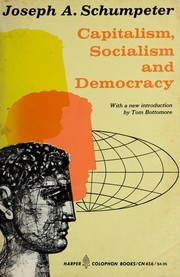
Capitalism runs on creative destruction, and its success may lead it to socialism.
“Joseph A Schumpeter, Capitalism, Socialism and Democracy (New York: Harper & Row, 1942)” — Michael Mauboussin
Source: Why Corporate Longevity Matters: What Index Turnover Tells Us about Corporate Results, page 14
Recommended by: Jim Collins, Michael Mauboussin, Li Lu
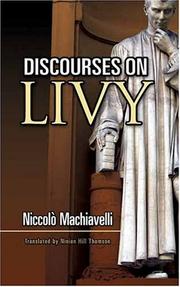
Politics drawn from the history of the Roman Republic in 142 discourses.
Recommended by: Peter Thiel