Updates

  1. Person pages list letters, writing, profiles and links as sortable tables with filters, and show each person's companies as links; Fund letters show each letter's description in its own column.
  2. Experts show a checked job title and a short description of each person; 30 more people have photographs.
  3. Every company, fund, university and publication the experts work for has a page listing the people there.
  4. Fund letters show each letter's thesis and filter by it; 225 person pages list the essays, columns and newsletter issues the person wrote.
  5. Person pages list every essay and newsletter issue a person wrote, and their own books as a table in List view.
  6. Recommends shows the five largest kinds of book and the rest under More; browse pictures load sooner.
  7. Podcasts and talks link the original episode, filter by Audio and video or Press, and list each publisher once.
  8. Pages are wider, Recommends has List and Grid, and a filter clicked again turns off.
  9. Book cards sit in a ruled grid with Open Library and Goodreads links and each book's one-line note.
  10. Funds is now Investors; each investor's styles are buttons that filter the table.
  11. Podcasts and talks on a person's page filter by year and publisher and show as a list or a grid of pictures.
  12. Quotes show only people's own words: 472 summaries written by list sites are gone.
  13. Country pages open from Browse again, and every link on the shelf lands on a page.
  14. Subject and person pages show their sections as tabs, and each book appears once on a person's page.
  15. Book cards show the quote, who said it and the source; grids show five cards to a row.
  16. On a phone, a menu holds the sections, search, Updates, Feedback and dark mode.
  17. Feedback takes a screenshot of the page with no browser prompt, opens a screenshot full size when you click it, and clears itself once sent.
  18. Book cards are centred, search names the topic each book sits in, and any text cut short shows whole on hover.
  19. Search groups its results by kind: people, companies, geographies, subjects, topics, books, funds, fund letters and papers.
  20. The Books table lists who recommended each book by name, and the browser tab names the section you are in.
  21. Feedback can take a screenshot of the page, or one you paste or choose, and opens in the corner beside Updates.
  22. Each rail button reopens its section where you left it, and Browse, Table and People show on every book and subject page.
  23. Filters grey out choices that hold nothing instead of hiding them, and Books › People filters by authors or recommenders.
  24. Feedback takes a subject line and up to three screenshots.
  25. Biographies are grouped by the person they are about: 41 new pages, from Abraham Lincoln to Lee Kuan Yew.
  26. Sport splits into 23 sports, and Religion into one topic per faith.
  27. Book lists show as cards: the cover, one recommendation quote and every recommender by name.
  28. Seventeen subjects that had two or three pages under different names now have one page each.
  29. Every page lists its Experts as authors and recommenders, with a link to them on the Experts tab.
  30. Economics, Financial history, Financial panics and Accounting are subjects of their own, with one page per financial crisis.
  31. Book, person and subject pages open inside the app, so the tabs stay in view.
  32. 996 more book covers, and photographs or logos for 227 more people and companies.
  33. Books › Browse shows every subject as cards, and the rail holds Fund letters, Papers, Experts, Books and Funds.
  34. Every topic over 150 books splits into narrower topics, each with a page of its own.

Send feedback

What is it?
Screenshots, up to 3 (optional)
or paste one with Ctrl+V

We use your email only to reply to you.

The Zulu Principle

The Zulu Principle

Jim Slater
1992
T3 224 pages · about 3h 44m to read Open Librarygoodreads

Pick a narrow patch of smaller companies and know it better than anyone.

Summary

Slater, a British financier who had run the conglomerate Slater Walker before its collapse, wrote this as a practical guide to selecting growth shares. The title comes from his observation that a person who reads one article about Zulus knows more about them than almost everyone around them, and that concentrated study of a narrow area produces a disproportionate advantage.

The method is a screen for growth companies at reasonable prices. Slater popularised the price-earnings growth factor, obtained by dividing the price to earnings ratio by the forecast earnings growth rate, and argued that a company with a ratio below one offers growth that the price does not reflect. He combined this with additional criteria: a record of at least four years of increasing earnings per share, positive cash flow exceeding earnings, low debt, strong relative share price strength, a competitive advantage he could identify, something new in the business, and directors buying shares.

He argued that private investors should concentrate in a small number of holdings in a narrow area they study intensively, because that is where an individual can outcompete institutions, and that they should avoid trying to be broadly informed.

The approach was influential in Britain and the price-earnings growth factor entered general use.

The main problem is that the growth measure depends on forecast earnings growth, which is exactly the number that is least reliable, and the ratio can be manipulated by choosing a favourable forecast horizon. Slater's own history at Slater Walker, which grew through acquisition and collapsed in the mid-1970s secondary banking crisis, is relevant context that the book does not dwell on. The screen has been widely applied since and its performance depends heavily on the earnings forecast quality.

Key takeaways 7

  1. Concentrated study of a narrow area gives a private investor an advantage that broad general knowledge cannot.
  2. Dividing the price to earnings ratio by the forecast earnings growth rate gives a measure that identifies growth the price does not reflect.
  3. A company must show several consecutive years of earnings growth before its growth record counts as evidence.
  4. Cash flow should exceed reported earnings, and a persistent shortfall indicates the earnings are not real.
  5. Directors buying shares in their own company is a signal worth acting on, while directors selling is much weaker information.
  6. Private investors should hold a concentrated portfolio in areas they study intensively rather than diversifying across what they do not know.
  7. The growth measure depends on forecast earnings growth, which is the least reliable input in any valuation.

Who should read it

Individual investors selecting growth shares who want an explicit screen, with the caveat that its central input is a forecast.

Similar books 6

Chosen by shared topics, the entries that hold them, and the people who recommended both.
Jim Slater · 1996

The follow-up, aimed squarely at smaller growth companies.
Peter Lynch, John Rothchild · 1989

The amateur's edge argument from the Magellan record.

“One book that probably made the biggest impact on my career in those early formidable years back in the day was Peter Lynch's 'One Up on Wall Street.'” — David Rolfe

Source: Rolfe on the book that most shaped his early career

Recommended by: David Rolfe, Francisco Garcia Parames and 9 others
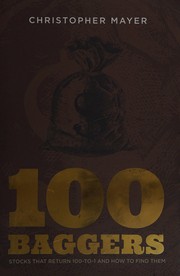
Christopher Mayer · 2015

Subtitled Stocks That Return 100-to-1 and How to Find Them; expanded edition 2025.

Recommended by: Mohnish Pabrai
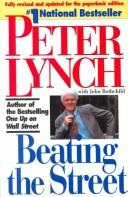
Peter Lynch, John Rothchild · 1993

Lynch's stock-by-stock walkthrough of how he picked them.

“Peter Lynch's books have some great insights [and] would be great for anyone to read.” — Julian Robertson

Source: Robertson on Peter Lynch's books

Recommended by: Julian Robertson, Mohnish Pabrai and 3 others

Ed Wachenheim · 2016

Wiley edition confirmed elsewhere.

Guy Thomas · 2011

Twelve UK private investors, most of them working in small and micro caps.

Where it sits in the reference 2

Assets
Investment styles

Topics

Investing