Updates

  1. Person pages list letters, writing, profiles and links as sortable tables with filters, and show each person's companies as links; Fund letters show each letter's description in its own column.
  2. Experts show a checked job title and a short description of each person; 30 more people have photographs.
  3. Every company, fund, university and publication the experts work for has a page listing the people there.
  4. Fund letters show each letter's thesis and filter by it; 225 person pages list the essays, columns and newsletter issues the person wrote.
  5. Person pages list every essay and newsletter issue a person wrote, and their own books as a table in List view.
  6. Recommends shows the five largest kinds of book and the rest under More; browse pictures load sooner.
  7. Podcasts and talks link the original episode, filter by Audio and video or Press, and list each publisher once.
  8. Pages are wider, Recommends has List and Grid, and a filter clicked again turns off.
  9. Book cards sit in a ruled grid with Open Library and Goodreads links and each book's one-line note.
  10. Funds is now Investors; each investor's styles are buttons that filter the table.
  11. Podcasts and talks on a person's page filter by year and publisher and show as a list or a grid of pictures.
  12. Quotes show only people's own words: 472 summaries written by list sites are gone.
  13. Country pages open from Browse again, and every link on the shelf lands on a page.
  14. Subject and person pages show their sections as tabs, and each book appears once on a person's page.
  15. Book cards show the quote, who said it and the source; grids show five cards to a row.
  16. On a phone, a menu holds the sections, search, Updates, Feedback and dark mode.
  17. Feedback takes a screenshot of the page with no browser prompt, opens a screenshot full size when you click it, and clears itself once sent.
  18. Book cards are centred, search names the topic each book sits in, and any text cut short shows whole on hover.
  19. Search groups its results by kind: people, companies, geographies, subjects, topics, books, funds, fund letters and papers.
  20. The Books table lists who recommended each book by name, and the browser tab names the section you are in.
  21. Feedback can take a screenshot of the page, or one you paste or choose, and opens in the corner beside Updates.
  22. Each rail button reopens its section where you left it, and Browse, Table and People show on every book and subject page.
  23. Filters grey out choices that hold nothing instead of hiding them, and Books › People filters by authors or recommenders.
  24. Feedback takes a subject line and up to three screenshots.
  25. Biographies are grouped by the person they are about: 41 new pages, from Abraham Lincoln to Lee Kuan Yew.
  26. Sport splits into 23 sports, and Religion into one topic per faith.
  27. Book lists show as cards: the cover, one recommendation quote and every recommender by name.
  28. Seventeen subjects that had two or three pages under different names now have one page each.
  29. Every page lists its Experts as authors and recommenders, with a link to them on the Experts tab.
  30. Economics, Financial history, Financial panics and Accounting are subjects of their own, with one page per financial crisis.
  31. Book, person and subject pages open inside the app, so the tabs stay in view.
  32. 996 more book covers, and photographs or logos for 227 more people and companies.
  33. Books › Browse shows every subject as cards, and the rail holds Fund letters, Papers, Experts, Books and Funds.
  34. Every topic over 150 books splits into narrower topics, each with a page of its own.

Send feedback

What is it?
Screenshots, up to 3 (optional)
or paste one with Ctrl+V

We use your email only to reply to you.

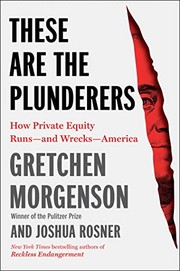
These Are the Plunderers

These Are the Plunderers

Gretchen Morgenson, Joshua Rosner
2023
T2 400 pages · about 6h 40m to read Open Librarygoodreads

Case studies of extraction from acquired companies.

Summary

Gretchen Morgenson, a financial journalist, and Joshua Rosner, an analyst, wrote this critique of the private equity industry and its effects on the companies and workers it acquires.

Their argument is that the industry's returns come substantially from transfers rather than from operational improvement: from tax advantages including the deductibility of interest and the treatment of carried interest, from fees charged to portfolio companies and to limited partners, from dividend recapitalisations that extract cash by adding debt, from sale-leaseback transactions that convert owned property into rent obligations, and from reductions in employment and compensation. They document specific cases across retail, health care including nursing homes and emergency staffing, and other sectors, and they trace the outcomes for employees and for the businesses.

They also cover the industry's returns to investors, arguing that when measured properly against public market equivalents and adjusted for leverage, the outperformance that justifies the fees is largely absent. And they cover the political and lobbying activity that has preserved the tax treatment. The book is advocacy journalism and selects its cases, and the industry's defenders argue that the failures are unrepresentative and that the returns evidence is contested. Ludovic Phalippou's academic work supports parts of the returns argument. Readers should treat it as one side of a live dispute with well-documented individual cases.

Key takeaways 7

  1. The authors argue that private equity returns come substantially from tax treatment, fees and financial transfers rather than from operational improvement.
  2. Dividend recapitalisations extract cash from portfolio companies by adding debt, which transfers value before any exit occurs.
  3. Sale-leaseback transactions convert owned property into rent obligations, which improves the sponsor's return and weakens the business.
  4. Fees charged to portfolio companies are additional to the fees charged to limited partners on the same assets.
  5. Morgenson and Rosner argue that measured against public market equivalents and adjusted for leverage, outperformance is largely absent.
  6. Health care acquisitions including nursing homes and emergency staffing produced documented deterioration in service.
  7. The book is advocacy with selected cases, and the industry disputes both the representativeness and the returns evidence.

Who should read it

Allocators and policy readers who want the critical case against private equity's returns and social effects, read against the industry's response.

Similar books 6

Chosen by shared topics, the entries that hold them, and the people who recommended both.

Antoin E. Murphy · 2004

Cross-holdings, the state and who actually controls French companies.
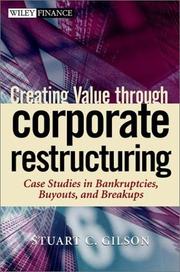
Stuart C. Gilson · 2001

Harvard case studies in bankruptcy and workout situations.

Dakin Campbell · 2021

On direct listings and the alternatives to the traditional IPO, SPACs included.

David Carey, John E. Morris · 2010

Blackstone from its 1985 founding through its 2007 public offering and the crisis.

Recommended by: Mohnish Pabrai
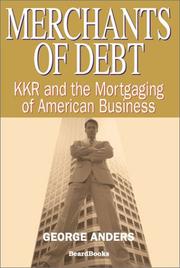
George Anders · 1992

KKR from 1976 through the RJR Nabisco buyout, and what debt did to its companies.

Where it sits in the reference 1

Business models

Topics

Finance and MarketsSociology and CultureWealth, poverty and inequality