Till Time's Last Sand
The authorised history of the Bank of England from its founding, from its archives.
The Bank of England from 1694, by its best narrative historian.
Summary
Kynaston wrote the authorised history of the Bank of England covering 1694 to 2013, based on the Bank's archives. It is a single volume of considerable length.
The narrative covers the Bank's creation to fund war against France, its early role as the government's banker and as a commercial bank, the suspension of convertibility during the Napoleonic wars and the resumption in 1821, the crises of 1825, 1847, 1857 and 1866, and the development of the lender of last resort function which Bagehot codified after the Overend Gurney failure. It then covers the Bank's role in the classical gold standard, the First World War financing, Montagu Norman's long governorship and the 1925 return to gold at prewar parity, the 1931 suspension, nationalisation in 1946, the postwar period of exchange controls and credit direction, the 1967 devaluation, the secondary banking crisis of 1973 and 1974, the 1976 sterling crisis and the International Monetary Fund programme, the monetarist experiment, the exchange rate mechanism entry and the 1992 exit, the grant of operational independence in 1997, and the financial crisis.
Kynaston is a narrative historian working from archives, and the strength is the reconstruction of how decisions were actually made: what the Court of Directors discussed, what the Governor believed, and how the Bank's relationships with the Treasury and the City worked in practice.
The book is authorised, so it is fair rather than critical, and Kynaston does not offer economic analysis of the policy decisions. Readers wanting assessments of whether particular decisions were correct will need other sources. Its length and detail make it a reference rather than a continuous read.
Key takeaways 7
- The Bank of England was created in 1694 to fund war against France, and its public functions accumulated afterward rather than being designed.
- The Bank operated as both a commercial bank and the government's banker for most of its history, which produced recurring conflicts.
- The lender of last resort function developed through the crises of the nineteenth century and was codified by Bagehot after the fact.
- The 1925 return to the gold standard at prewar parity required deflation that damaged British industry for a decade.
- Nationalisation in 1946 changed ownership without immediately changing how the Bank operated or how it related to the Treasury.
- Operational independence granted in 1997 formalised a relationship that had shifted informally over the preceding decades.
- Archival reconstruction shows decisions made on incomplete information and institutional habit rather than on the reasoning attributed afterward.
Who should read it
Readers researching British monetary and financial history who need an archival reference on how the central bank actually operated.
About David Kynaston
British financial historian; wrote the four-volume history of the City of London and the official history of the Bank of England.
Till Time's Last Sand records three centuries of Bank of England decisions from the institution's own archives, including the reasoning behind rate moves and rescues that later monetary policy was built on. The City of London documents how London's markets, firms and clearing arrangements actually operated between 1815 and 2000, at a level of detail no other account reaches.
Similar books 6
Chosen by shared topics, the entries that hold them, and the people who recommended both.

The four-volume history of the City of London from the early nineteenth century.
The modern history of HSBC, from its first steps outside Asia onward.
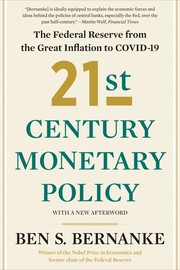
How American monetary policy changed from the 1950s through quantitative easing.

European finance from the Middle Ages on: money, banking, markets and public debt.

Interest rates from Babylonian lending through Rome and Europe to modern bonds.
“Courtesy of Homer and Sylla’s A History of Interest Rates, I’ve plotted the market price of the 5% prestiti in the 14th and 15th centuries: Even taking these stumbles into account, investors in medieval and Renaissance Europe earned healthy returns on their capital.” — William J. Bernstein
Source: Efficient Frontier, issue 901 (2001)
Recommended by: Mohnish Pabrai, William J. Bernstein
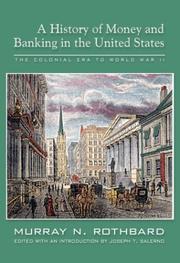
US money from colonial paper to the Fed, read as bank-and-state booms and busts.