Updates

  1. Person pages list letters, writing, profiles and links as sortable tables with filters, and show each person's companies as links; Fund letters show each letter's description in its own column.
  2. Experts show a checked job title and a short description of each person; 30 more people have photographs.
  3. Every company, fund, university and publication the experts work for has a page listing the people there.
  4. Fund letters show each letter's thesis and filter by it; 225 person pages list the essays, columns and newsletter issues the person wrote.
  5. Person pages list every essay and newsletter issue a person wrote, and their own books as a table in List view.
  6. Recommends shows the five largest kinds of book and the rest under More; browse pictures load sooner.
  7. Podcasts and talks link the original episode, filter by Audio and video or Press, and list each publisher once.
  8. Pages are wider, Recommends has List and Grid, and a filter clicked again turns off.
  9. Book cards sit in a ruled grid with Open Library and Goodreads links and each book's one-line note.
  10. Funds is now Investors; each investor's styles are buttons that filter the table.
  11. Podcasts and talks on a person's page filter by year and publisher and show as a list or a grid of pictures.
  12. Quotes show only people's own words: 472 summaries written by list sites are gone.
  13. Country pages open from Browse again, and every link on the shelf lands on a page.
  14. Subject and person pages show their sections as tabs, and each book appears once on a person's page.
  15. Book cards show the quote, who said it and the source; grids show five cards to a row.
  16. On a phone, a menu holds the sections, search, Updates, Feedback and dark mode.
  17. Feedback takes a screenshot of the page with no browser prompt, opens a screenshot full size when you click it, and clears itself once sent.
  18. Book cards are centred, search names the topic each book sits in, and any text cut short shows whole on hover.
  19. Search groups its results by kind: people, companies, geographies, subjects, topics, books, funds, fund letters and papers.
  20. The Books table lists who recommended each book by name, and the browser tab names the section you are in.
  21. Feedback can take a screenshot of the page, or one you paste or choose, and opens in the corner beside Updates.
  22. Each rail button reopens its section where you left it, and Browse, Table and People show on every book and subject page.
  23. Filters grey out choices that hold nothing instead of hiding them, and Books › People filters by authors or recommenders.
  24. Feedback takes a subject line and up to three screenshots.
  25. Biographies are grouped by the person they are about: 41 new pages, from Abraham Lincoln to Lee Kuan Yew.
  26. Sport splits into 23 sports, and Religion into one topic per faith.
  27. Book lists show as cards: the cover, one recommendation quote and every recommender by name.
  28. Seventeen subjects that had two or three pages under different names now have one page each.
  29. Every page lists its Experts as authors and recommenders, with a link to them on the Experts tab.
  30. Economics, Financial history, Financial panics and Accounting are subjects of their own, with one page per financial crisis.
  31. Book, person and subject pages open inside the app, so the tabs stay in view.
  32. 996 more book covers, and photographs or logos for 227 more people and companies.
  33. Books › Browse shows every subject as cards, and the rail holds Fund letters, Papers, Experts, Books and Funds.
  34. Every topic over 150 books splits into narrower topics, each with a page of its own.

Send feedback

What is it?
Screenshots, up to 3 (optional)
or paste one with Ctrl+V

We use your email only to reply to you.

Venezuela Before Chávez: Anatomy of an Econo

Venezuela Before Chávez: Anatomy of an Economic Collapse

Ricardo Hausmann, Francisco Rodríguez
2014
T3 478 pages · about 7h 58m to read Open Librarygoodreads

Academic but decisive: the decline began decades before Chávez, and shows why.

Summary

Ricardo Hausmann and Francisco Rodriguez edited this volume of economic research on Venezuela's decline, which began long before Hugo Chavez took office. Venezuela was among the wealthiest countries in Latin America in 1970 and had experienced one of the worst peacetime declines in per capita income of any country by 1998.

The contributors examine competing explanations. The oil price fall after 1980 accounts for part of it, but not all, since other oil exporters did better. Total factor productivity collapsed, which the contributors treat as the central fact requiring explanation. The chapters examine the exchange rate regime and the effects of oil revenue on the non-oil tradable sector, the labour market and its regulation, the banking crisis of 1994, the political institutions and the party system that allocated oil rents, the education system, and the specific effects of oil dependence on the composition of production.

Their general finding is that Venezuela's institutions were built to distribute oil revenue and could not manage a declining one, and that the political system's inability to allocate losses produced the crisis that brought Chavez to power. The volume is empirical and technical and does not cover the Chavez period, which is the point: the collapse it analyses preceded him. It is the essential background for anyone assessing Venezuela and a general case study in what resource dependence does to institutions.

Key takeaways 7

  1. Venezuela's economic collapse began in the 1980s and was well advanced before Chavez took office.
  2. Total factor productivity collapsed, which is the central fact and is not explained by the oil price fall alone.
  3. Venezuelan institutions were built to distribute oil revenue and could not manage a declining one.
  4. Oil revenue suppressed the non-oil tradable sector through exchange rate effects, which left no alternative when oil income fell.
  5. The political system could allocate gains and could not allocate losses, which produced the crisis that ended it.
  6. Other oil exporters performed better over the same period, which rules out the oil price as a sufficient explanation.
  7. The volume analyses a collapse that preceded Chavez, which reframes the standard account of Venezuelan decline.

Who should read it

Investors and analysts of resource-dependent economies who want a rigorous account of an institutional collapse that preceded its usual scapegoat.

Similar books 6

Chosen by shared topics, the entries that hold them, and the people who recommended both.
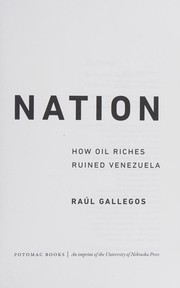
Raúl Gallegos · 2016

The mechanics of subsidised fuel, multiple exchange rates and arbitrage as a national industry.
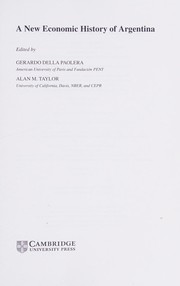
Gerardo della Paolera, Alan M. Taylor · 2003

Essays on why a rich, well-endowed Argentina stagnated for so long.
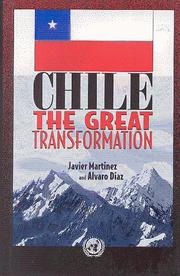
Javier Martínez, Alvaro Díaz · 1996

How the productive structure and business class were remade after 1973.
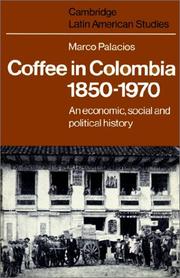
Marco Palacios · 1980

Economic history of the crop, the growers' federation and the export institutions built around it.

Sebastian Edwards · 1995

Latin America's reforms from the 1980s debt crisis to the mid-1990s, assessed.
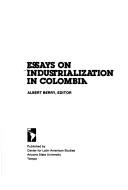
R. Albert Berry · 1983

Dated but the only serious English work on Colombian manufacturing.

Where it sits in the reference 2

Geographies
Economics

Topics

EconomicsGeneral HistoryAsia, Africa, Latin America and the Middle East