Updates

  1. Person pages list letters, writing, profiles and links as sortable tables with filters, and show each person's companies as links; Fund letters show each letter's description in its own column.
  2. Experts show a checked job title and a short description of each person; 30 more people have photographs.
  3. Every company, fund, university and publication the experts work for has a page listing the people there.
  4. Fund letters show each letter's thesis and filter by it; 225 person pages list the essays, columns and newsletter issues the person wrote.
  5. Person pages list every essay and newsletter issue a person wrote, and their own books as a table in List view.
  6. Recommends shows the five largest kinds of book and the rest under More; browse pictures load sooner.
  7. Podcasts and talks link the original episode, filter by Audio and video or Press, and list each publisher once.
  8. Pages are wider, Recommends has List and Grid, and a filter clicked again turns off.
  9. Book cards sit in a ruled grid with Open Library and Goodreads links and each book's one-line note.
  10. Funds is now Investors; each investor's styles are buttons that filter the table.
  11. Podcasts and talks on a person's page filter by year and publisher and show as a list or a grid of pictures.
  12. Quotes show only people's own words: 472 summaries written by list sites are gone.
  13. Country pages open from Browse again, and every link on the shelf lands on a page.
  14. Subject and person pages show their sections as tabs, and each book appears once on a person's page.
  15. Book cards show the quote, who said it and the source; grids show five cards to a row.
  16. On a phone, a menu holds the sections, search, Updates, Feedback and dark mode.
  17. Feedback takes a screenshot of the page with no browser prompt, opens a screenshot full size when you click it, and clears itself once sent.
  18. Book cards are centred, search names the topic each book sits in, and any text cut short shows whole on hover.
  19. Search groups its results by kind: people, companies, geographies, subjects, topics, books, funds, fund letters and papers.
  20. The Books table lists who recommended each book by name, and the browser tab names the section you are in.
  21. Feedback can take a screenshot of the page, or one you paste or choose, and opens in the corner beside Updates.
  22. Each rail button reopens its section where you left it, and Browse, Table and People show on every book and subject page.
  23. Filters grey out choices that hold nothing instead of hiding them, and Books › People filters by authors or recommenders.
  24. Feedback takes a subject line and up to three screenshots.
  25. Biographies are grouped by the person they are about: 41 new pages, from Abraham Lincoln to Lee Kuan Yew.
  26. Sport splits into 23 sports, and Religion into one topic per faith.
  27. Book lists show as cards: the cover, one recommendation quote and every recommender by name.
  28. Seventeen subjects that had two or three pages under different names now have one page each.
  29. Every page lists its Experts as authors and recommenders, with a link to them on the Experts tab.
  30. Economics, Financial history, Financial panics and Accounting are subjects of their own, with one page per financial crisis.
  31. Book, person and subject pages open inside the app, so the tabs stay in view.
  32. 996 more book covers, and photographs or logos for 227 more people and companies.
  33. Books › Browse shows every subject as cards, and the rail holds Fund letters, Papers, Experts, Books and Funds.
  34. Every topic over 150 books splits into narrower topics, each with a page of its own.

Send feedback

What is it?
Screenshots, up to 3 (optional)
or paste one with Ctrl+V

We use your email only to reply to you.

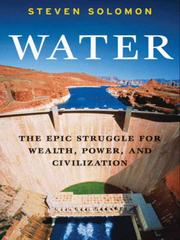
Water

Water

Steven Solomon
2010
T2 Open Librarygoodreads

Global history of water as the constraint on wealth and power.

Summary

Steven Solomon writes a global history of water and its relationship to political and economic power, from the earliest irrigation civilisations to the present.

The historical argument is that command of water has determined which societies prospered at each technological stage. Irrigation supported the first states in Mesopotamia, Egypt, the Indus valley and China, and the administrative requirements of managing it shaped their political forms. Maritime access determined which powers dominated trade, from the Mediterranean through the Atlantic to the age of steam. Canals and inland navigation shaped industrial development, and Solomon treats Britain's canal network and later the Erie Canal and the American river system as decisive. Hydroelectric power and large dams shaped twentieth-century industrialisation, particularly in the United States and the Soviet Union.

The final section concerns the present, where Solomon argues that water scarcity is becoming a binding constraint on economic growth and a source of political conflict in specific regions: the Middle East, the Indus basin, northern China, the American Southwest and parts of Africa. He treats agricultural water use, which is the great majority of consumption, as the point where policy must act. The book is long, sweeping and journalistic rather than scholarly, and its causal claims about water determining historical outcomes are stated more strongly than the evidence supports. The regional analysis of current scarcity is the more useful part.

Key takeaways 7

  1. Command of water determined which societies prospered at each technological stage, from irrigation through maritime trade to hydroelectric power.
  2. The administrative requirements of managing irrigation shaped the political forms of the earliest states.
  3. Canal and inland navigation networks determined industrial development in Britain and the United States.
  4. Agricultural use accounts for the great majority of water consumption, which makes it the point where policy must act.
  5. Solomon identifies the Middle East, the Indus basin, northern China and the American Southwest as regions where scarcity is becoming binding.
  6. Water cannot be transported economically over long distances, which makes scarcity a local rather than a global problem.
  7. The causal claims about water determining historical outcomes are stated more strongly than the evidence supports.

Who should read it

Readers wanting a long historical view of water and power, with the regional analysis of current scarcity as the more reliable content.

Who recommended it 1 · 1 direct

Similar books 6

Chosen by shared topics, the entries that hold them, and the people who recommended both.

Marc Reisner · 1986

How rival federal agencies dammed the American West's rivers for water projects.

Charles Fishman · 2011

The economics of cheap water and what happens when it stops being cheap.
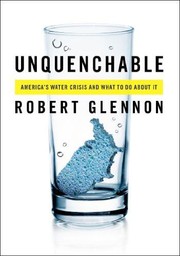
Robert Glennon · 2009

Glennon's case for pricing and trading water rights.

Donald Worster · 1985

Water control as the basis of power in the arid American West.

Maude Barlow, Tony Clarke · 1999

The case against water privatisation and the companies buying up water supplies.

Robert McNally · 2017

Argues price stability always required a swing producer or cartel.

Where it sits in the reference 3

Assets
Secular themes
Economics

Topics

General HistoryEnvironment and EnergyWorld and Big HistoryWater, food and land