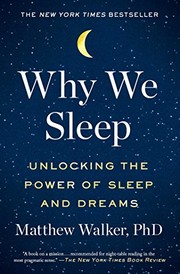
Why We Sleep
How lack of sleep damages nearly every system in the body, and what sleep does.
Summary
Walker, a sleep researcher at Berkeley, argues that insufficient sleep damages nearly every biological system and that the modern reduction in sleep duration constitutes a public health problem comparable to smoking. He covers the architecture of sleep, the different functions of REM and non-REM sleep, circadian regulation, the effects of caffeine and alcohol, and the consequences of deprivation for memory, immune function, metabolism, cardiovascular health, mental health and accident rates.
The memory material is the best supported. Non-REM sleep appears to transfer material from short-term hippocampal storage to longer-term cortical storage, and REM sleep appears to integrate new material with existing knowledge, which Walker connects to problem solving and creative association. He reports experiments showing learning capacity reduced by around forty percent after a night without sleep.
The practical content covers sleep hygiene, the argument against sleeping pills, the case against early school start times, the effect of blue light on melatonin, and the distinction between chronotypes as genetically determined rather than a matter of discipline.
The book has been criticised seriously. Alexey Guzey published a detailed analysis in 2019 identifying factual errors, a misrepresented graph, an omitted data point, and claims stated with more certainty than the underlying research supports, including the claim that short sleep causes cancer and the statement that no organism benefits from less sleep. Walker acknowledged some errors. The general direction of the evidence, that chronic short sleep is harmful, is well supported. The specific figures and the strongest causal claims should not be cited without checking the primary source.
Key takeaways 8
- Non-REM sleep transfers learned material into longer-term storage and REM sleep integrates it with existing knowledge, so both stages serve distinct memory functions.
- Learning capacity is measurably reduced after a night without sleep, with deficits reported around forty percent in Walker's experiments.
- Sleeping less than about seven hours consistently is associated with increased risk across metabolic, immune and cardiovascular measures.
- Alcohol and most sleeping pills produce sedation rather than sleep and suppress REM, so they degrade the functions sleep performs.
- Caffeine has a half-life of around five to six hours, which means an afternoon dose measurably affects that night's sleep architecture.
- Chronotype is largely genetically determined, so imposing early schedules on late chronotypes reduces their performance rather than their laziness.
- Sleep loss cannot be repaid, and weekend recovery does not restore the deficits accumulated during the week.
- Several specific claims and figures in this book have been shown to overstate or misreport the underlying research, so citations should be checked against primary sources.
Who should read it
Operators treating sleep as an adjustable input to performance, who should take the direction of the argument seriously and verify specific figures.
Who recommended it 10 · 5 direct
“The second is Why We Sleep: The New Science of Sleep and Dreams by Matthew Walker.”
“Several friends, who know I both love to sleep and am intrigued with how sleep works, recommended that I read Why We Sleep: Unlocking the Power of Sleep and Dreams.”
“There's a wonderful book by Matthew Walker called Why We Sleep. Before reading it, I thought I knew the overall story, and I had the basic idea, but that book is not only fascinating, being grounded in science, but also compelling.”
“He wrote a book, Why We Sleep, and is about as credible as you can be within the world of sleep science and -”
Similar books 6
Chosen by shared topics, the entries that hold them, and the people who recommended both.
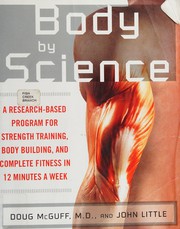
A research-based programme of short, intense weekly strength training.
“You can look at a book called Body by Science for all of the details and why that is the case.” — Tim Ferriss
Source: The Tim Ferriss Show Transcripts: Random Show - Fasting, Biohacking, and Tony Robbins (#333)
Recommended by: Mohnish Pabrai, Tim Ferriss and 1 other
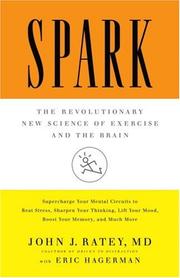
How aerobic exercise remodels the brain and helps against stress and depression.
Recommended by: Tim Ferriss
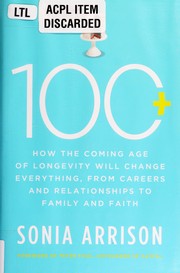
Radical life extension and what longer lifespans would do to markets.
Recommended by: Mohnish Pabrai, Peter Thiel
How the human immune system works, and its part in health and longevity.
“Explains for the lay reader the intricate biology of our immune system.” — Vinod Khosla
Source: 2019 Book Recommendations — Vinod Khosla, Medium
Recommended by: Bill Gates, Vinod Khosla, Keith Rabois
How science, history and culture feed the obsession with weight and thinness.
Recommended by: Mohnish Pabrai
How humans lost the ability to breathe well, and what it does to health.
Recommended by: Nat Eliason, Austen Allred