Beyond Entrepreneurship
Open Library unreachable this run; title not machine-verified.
Summary
Collins and Lazier wrote this before Built to Last and Good to Great, aimed at leaders of small and medium companies making the transition from a founder-driven startup to an enduring organisation. Collins has said it contains material he considers among his best work, and the 2020 revised edition adds new chapters.
The framework covers seven elements. Leadership style, where they argue there is no single correct style but that effectiveness requires authenticity, decisiveness, focus and personal contact with the work. Vision, which they break into three components: core values and beliefs that do not change, a purpose that the organisation exists to serve, and a mission, meaning a specific ambitious goal with a finish line. This is the origin of the big hairy audacious goal concept that Built to Last later made widely known. Strategy, which they treat as the method of achieving the mission and which must be reassessed as conditions change while the vision does not. Innovation, where they set out six elements including receptivity to ideas from anywhere and the tolerance of failed experiments. And tactical excellence, meaning the disciplined execution of the ordinary work.
The book is practical and aimed squarely at operators. Its evidence base is Collins' research and consulting rather than the systematic company comparisons of his later work, which is both a weakness and a reason some readers find it less overreaching. The vision framework is stated more usefully here than in the more famous later books.
Key takeaways 7
- Vision has three distinct components: unchanging core values, an enduring purpose, and a specific mission with a finish line, and confusing them produces statements that guide nothing.
- A mission should be a clear ambitious goal that people can tell whether they have reached, not an aspiration that continues indefinitely.
- Core values are the small number of principles a company would hold even if holding them became a competitive disadvantage.
- Strategy must be reassessed as conditions change while vision remains constant, and organisations routinely confuse which is which.
- There is no single correct leadership style, and effectiveness comes from authenticity combined with decisiveness and direct contact with the work.
- Innovation requires receptivity to ideas regardless of their source and explicit tolerance of experiments that fail.
- Tactical excellence in ordinary daily work determines whether any strategy is realised, and it cannot be delegated to a process.
Who should read it
Founders and leaders of small and mid-size companies making the transition from startup to durable organisation.
About Jim Collins
Management researcher; Stanford Graduate School of Business faculty 1988-1995, since then an independent researcher running a management laboratory in Boulder, Colorado
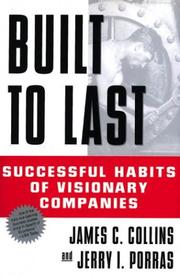
Built to Last and Good to Great are the primary research sources the enduring-company literature builds on and argues with.
Where it sits in the reference 2
Who recommended it 1
Similar books 6
Chosen by shared topics, the entries that hold them, and the people who recommended both.