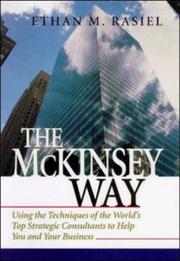
The McKinsey Way
The delivery method behind the fee.
Summary
Rasiel, a former McKinsey associate, wrote a short practical description of how the firm's consultants approach problems, aimed at readers who want the methods without the engagement.
The analytical content is the useful part. The framework is the hypothesis-driven approach: form a hypothesis about the answer at the start, based on whatever is known, then design analysis to test it rather than gathering data and hoping a conclusion emerges. Problems are structured using issue trees that are MECE, meaning mutually exclusive and collectively exhaustive, so that every part of the problem is covered once and only once. The eighty-twenty rule directs effort to the analyses that will move the answer. He also describes the practice of finding the key drivers, of not boiling the ocean, and of the elevator test, meaning being able to state the recommendation in thirty seconds.
The communication material covers pyramid-structured presentations in which the conclusion comes first and support follows, prewiring, meaning briefing every stakeholder individually before a meeting so that no one is surprised in the room, and one message per chart.
The rest of the book covers working practices including team management, client relationships, research techniques, interviewing and surviving the lifestyle. That material is dated and of limited interest.
The book is short and has no depth, and it describes techniques rather than explaining when they fail. The hypothesis-driven method in particular carries a real risk of confirmation, which Rasiel notes briefly and does not address. Used as a checklist for structuring a problem, it is genuinely useful.
Key takeaways 7
- Form a hypothesis about the answer before gathering data, then design the analysis to test it rather than waiting for a conclusion to emerge.
- Problem structures should be mutually exclusive and collectively exhaustive, so every element is covered once and nothing is double counted.
- A small number of analyses determine the answer, so effort should be concentrated on identifying which ones before doing any of them.
- A recommendation that cannot be stated in thirty seconds has not been thought through sufficiently.
- Presentations should lead with the conclusion and follow with support, since the audience needs the answer before the reasoning.
- Every stakeholder should be briefed individually before a meeting, so that the meeting confirms a decision rather than discovers a disagreement.
- Hypothesis-driven analysis risks confirming the initial hypothesis, which requires deliberately specifying what evidence would refute it.
Who should read it
Operators and analysts who want a short practical method for structuring problems and communicating conclusions.
Where it sits in the reference 4
Similar books 6
Chosen by shared topics, the entries that hold them, and the people who recommended both.