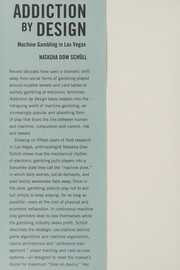
Addiction by Design
How slot machines are designed to keep gamblers playing longer.
Slot machine design as engineered time-on-device.
Summary
Schüll describes how slot and video gambling machines in Las Vegas are designed to keep people playing. The machines speed up wagering and deliver a steady stream of resolved bets that seem to depend on the player's choices but are random; some let players stop the reels at a moment of their choosing, though the outcome is fixed when the reels start. Because the machines are networked, casinos can adjust playing conditions in response to each player's behaviour, which makes gamblers unwitting test subjects.
The book's central term, the machine zone, comes from a gambler named Mollie, who told Schüll she played not to win but to stay in a state where nothing else matters, like being in the eye of a storm. Schüll argues that familiarity with screens made video gambling seem approachable in a way table games, with their social protocols and jargon, never were. The account rests on her interviews with gamblers in Las Vegas, and it treats the gambler's experience as a product the machines are built to manufacture.
Key takeaways 4
- Slot machines are engineered to maximise the speed of betting and the time a player spends on the device.
- Features that give players a sense of control, such as stopping the reels, do not change random outcomes.
- Networked machines let casinos tune play to each gambler's behaviour.
- Heavy machine gamblers play to stay absorbed in the machine zone rather than to win money.
Who should read it
Product designers, investors in gaming and consumer technology, and regulators who want a field study of how engagement is engineered.
Who recommended it 2 · 1 direct
Similar books 6
Chosen by shared topics, the entries that hold them, and the people who recommended both.
How Las Vegas grew from the Rat Pack era into a family holiday city.
A doctor on why affluent Americans are overworked, stressed and never satisfied.
Recommended by: Simon Sinek
How the Chicago mob ran Las Vegas casinos, told through bookie Frank Rosenthal.

Why people flee from freedom into totalitarianism: a psychoanalyst's account.
Recommended by: Nat Eliason
How positional spending on status goods drives American consumption.