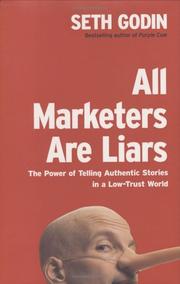
All Marketers are Liars
Great marketers tell a story buyers want to believe, not a list of features.
Summary
Godin argues that all marketers tell stories, and that when they tell them well, customers believe them, and the belief makes the story true. People believe that wine tastes better in a $20 glass than in a $1 glass, that an $80,000 Porsche far outclasses a $36,000 Volkswagen that is almost the same car, and that $125 trainers feel and look better than a $25 pair. Great marketers, in his view, talk about neither features nor benefits; they tell a story the customer wants to believe, whether or not it is factual.
In a world where people face endless choices and have no time to make them, every organisation is a marketer and all marketing is storytelling. Marketing succeeds when the story fits the customer's existing worldview, so that the customer accepts it at once and passes it on to friends; Godin cites the Dyson vacuum cleaner, Fiji water and the iPod. He warns that an inauthentic story crosses the line from fib to fraud, the lesson learned by telemarketers, cigarette companies and dishonest politicians.
Key takeaways 4
- Customers buy the story around a product more than its features or benefits.
- A story works when it fits a worldview the customer already holds.
- Believing a story can change how a product actually feels to the customer.
- A story that is not authentic turns marketing into fraud.
Who should read it
Investors and founders who want to understand why customers pay premium prices for brands that tell a convincing story.
About Seth Godin
American marketing writer, founder of Yoyodyne and Squidoo, who has published a daily marketing blog for two decades.
Permission Marketing argued for earning attention through opt-in years before that became the default of email and content marketing, and Purple Cow made remarkability the product's job rather than the advertising budget's. The Dip supplies a decision rule for when to quit a market and when the difficulty itself is the barrier worth pushing through.
Who recommended it 1 · 1 direct
“I have to give credit to Seth Godin because I remember during CritBuns I read his book "All Marketers are Liars.”
Similar books 6
Chosen by shared topics, the entries that hold them, and the people who recommended both.
Advertising has stopped working; build products remarkable enough to talk about.
“Purple Cow by Seth Godin. It is such a good book.” — Cindy Eckert
Recommended by: Cindy Eckert, David Cancel, Noah Kagan and 3 others
The internet makes it cheap to gather people around a shared interest; lead them.
“Inspiring look at what it takes to organize and mobilize groups of people.” — Derek Sivers
Source: Derek Sivers book notes (primary, rated list) · Rating: 8/10
Recommended by: Derek Sivers, Catriona Wallace
Valuable work now needs people who do what can't be written into a job description.
“For someone who has a job at a company, I would call this essential reading with my highest recommendation. Since I haven't had a job since 1992, I couldn't apply many of his great points to my life. Still I loved his reminder of the value of the brilliant workers instead of systemized workers. The opposite of E-Myth (another book reviewed here).” — Derek Sivers
Source: Derek Sivers book notes (primary, rated list) · Rating: 5/10
Recommended by: Derek Sivers, Tom Bilyeu, Ann Handley and 3 others
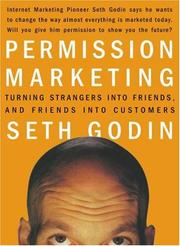
Why marketers should earn consumers' consent instead of interrupting them with ads.
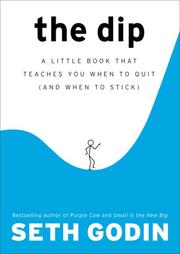
When to push through a hard stretch and when to quit a dead end.
“Tiny quick read with a punchy point: Anything worth doing has a painfully-hard middle period, which is where most people quit. But knowing this in advance, ask yourself seriously if you really have the dedication to stick it through that hard time. If not, then don’t begin! Quit in advance! But if so, then expect that dark dip, and don’t quit when you’re in it. Read the whole book if this applies to you. There’s not a wasted page.” — Derek Sivers
Source: Derek Sivers book notes (primary, rated list) · Rating: 8/10
Recommended by: Brian Armstrong, Derek Sivers, Nat Eliason and 2 others
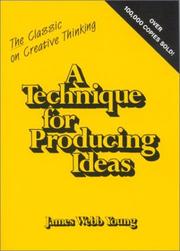
A short method for producing creative ideas.
Recommended by: Patrick O'Shaughnessy