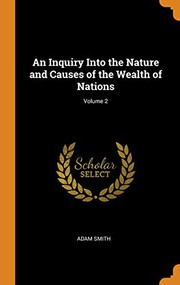
An Inquiry into the Nature and Causes of the Wealth of Nations: Volume 2
Books Four and Five: the case against mercantilism, and the role of the state.
Summary
The second volume contains Books Four and Five, covering Smith's attack on mercantilism and his analysis of the role and revenue of the state.
Book Four is the polemical core of the work. Smith argues that the mercantile system, which treats gold accumulation and trade surpluses as the object of policy, mistakes money for wealth and serves the interests of merchants rather than of the public. He attacks tariffs, bounties, colonial trade monopolies and the chartered trading companies, arguing each raises prices for consumers to benefit a specific producer interest. His analysis of the East India Company is severe, and his treatment of the American colonies argues the monopoly of their trade cost Britain more than it earned. He allows exceptions, including defence-related industries and retaliation, which are more numerous than his reputation as a free trade advocate suggests.
Book Five covers public expenditure and revenue. Smith identifies defence, justice and certain public works and institutions as legitimate state functions, and he includes public education on the argument that the division of labour degrades the minds of those performing repetitive work and that the state should counteract this. His four maxims of taxation, being equality, certainty, convenience and economy in collection, remain the standard statement of what a tax system should achieve.
The volume also contains extended digressions on banking, on the corn trade and on universities, the last of which is unsparing about institutions where teachers are paid regardless of whether students learn.
Key takeaways 7
- The mercantile system mistakes money for wealth, and a nation's wealth consists in what it produces and consumes rather than in the gold it accumulates.
- Tariffs and trade restrictions raise prices for all consumers to benefit specific producers, and the producers are the constituency that lobbies for them.
- Colonial trade monopolies cost the imperial power more than they earn, because the monopoly raises costs across the whole economy to benefit a narrow interest.
- Chartered trading companies govern their territories badly because their interest as merchants conflicts directly with their duty as rulers.
- Legitimate state functions include defence, justice and public works and institutions that individuals cannot profitably provide.
- The state should fund education because the division of labour degrades the minds of those performing repetitive tasks, which is a cost of the system Smith advocates.
- Taxes should be proportionate to ability to pay, certain rather than arbitrary, convenient to pay and cheap to collect.
Who should read it
Readers who want Smith's actual arguments on trade policy, colonial monopoly and the proper functions of the state rather than the version usually attributed to him.
About Adam Smith
Scottish moral philosopher at the University of Glasgow who founded modern economics with The Wealth of Nations in 1776.
The Wealth of Nations set out how division of labour, self-interest and competitive prices coordinate production without central direction, and it supplies the vocabulary economics still argues in: specialisation, capital accumulation, natural and market price. The Theory of Moral Sentiments supplies the other half, placing exchange inside a system of sympathy and judgement.
Who recommended it 1 · 1 direct
Similar books 6
Chosen by shared topics, the entries that hold them, and the people who recommended both.
Books One to Three: division of labour, money, prices, wages, profit and capital.
“Adam Smith, An Inquiry into the Nature and Causes of the Wealth of Nations (London: W. Strahan and T. Cadell, 1776)” — Michael Mauboussin
Source: Increasing Returns: Identifying Forms of Increasing Returns and What Drives Them, page 15
Recommended by: Michael Mauboussin, Mohnish Pabrai and 1 other
How moral judgement grows from sympathy and an imagined impartial spectator.
“Years before he wrote The Wealth of Nations, extolling the virtues of the invisible hand of competition and the essential nature of personal advantage and self-love in making the world’s economic system work, Adam Smith wrote The Theory of Moral Sentiments.” — John C. Bogle
Source: Business as a Calling, page 4
Recommended by: John C. Bogle, Mohnish Pabrai
How the division of labour and free markets make a nation rich.
“In The Wealth of Nations (published in 1776) Smith noted that land prices had risen in recent decades, as interest rates declined.” — Howard Marks
Source: Easy Money
Recommended by: Howard Marks, John C. Bogle and 11 others
Essays on the Versailles treaty, the gold standard and Britain's currency.
Recommended by: Mohnish Pabrai, Warren Buffett
Capitalism runs on creative destruction, and its success may lead it to socialism.
“Joseph A Schumpeter, Capitalism, Socialism and Democracy (New York: Harper & Row, 1942)” — Michael Mauboussin
Source: Why Corporate Longevity Matters: What Index Turnover Tells Us about Corporate Results, page 14
Recommended by: Jim Collins, Michael Mauboussin, Li Lu

The first full Austrian school treatise on economics, built from individual action.
Recommended by: Charles Koch
Where it sits in the reference 2
Topics 3
As an Amazon Associate I earn from qualifying purchases.