Atlas of AI
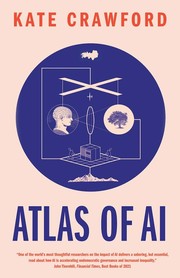
Traces AI to its physical costs: lithium mines, data-centre labour, military money.
Crawford traces AI systems back to their physical infrastructure — lithium mines, data center labor, military contracts, energy grids. Corrects the tendency to treat AI as purely informational. The book does not try to balance these costs against benefits, which is its limitation as well as its point.
Similar books 6
Chosen by shared topics, the entries that hold them, and the people who recommended both.
The theory that the neocortex works through thousands of models of the world.
Recommended by: Bill Gates
Why computers must recognise and express emotion to be intelligent.
“And so I was looking for a thesis topic and my fiance at the time went on Amazon and he said, "Oh, there's this really interesting book by this MIT professor called Rosalind Picard called Affective Computing.” — Rana el Kaliouby
Recommended by: Rana el Kaliouby
Why China may match the US in AI now that applying it matters more than research.
“Kai-Fu Lee, AI Superpowers: China, Silicon Valley, and the New World Order (Boston: Houghton Mifflin Harcourt Publishing, 2018), 22-26” — Michael Mauboussin
Source: One Job: Expectations and the Role of Intangible Investments, page 21
Recommended by: Balaji S. Srinivasan, Michael Mauboussin and 3 others
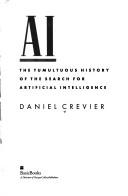
AI research from Dartmouth in 1956 to the funding cuts, told by the field's leaders.
The AI boom after ChatGPT, reported from inside Silicon Valley's funding rounds.
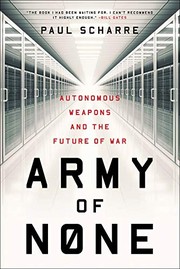
How autonomous weapons are changing war, and what that means.
Recommended by: Bill Gates