Updates

  1. Person pages list letters, writing, profiles and links as sortable tables with filters, and show each person's companies as links; Fund letters show each letter's description in its own column.
  2. Experts show a checked job title and a short description of each person; 30 more people have photographs.
  3. Every company, fund, university and publication the experts work for has a page listing the people there.
  4. Fund letters show each letter's thesis and filter by it; 225 person pages list the essays, columns and newsletter issues the person wrote.
  5. Person pages list every essay and newsletter issue a person wrote, and their own books as a table in List view.
  6. Recommends shows the five largest kinds of book and the rest under More; browse pictures load sooner.
  7. Podcasts and talks link the original episode, filter by Audio and video or Press, and list each publisher once.
  8. Pages are wider, Recommends has List and Grid, and a filter clicked again turns off.
  9. Book cards sit in a ruled grid with Open Library and Goodreads links and each book's one-line note.
  10. Funds is now Investors; each investor's styles are buttons that filter the table.
  11. Podcasts and talks on a person's page filter by year and publisher and show as a list or a grid of pictures.
  12. Quotes show only people's own words: 472 summaries written by list sites are gone.
  13. Country pages open from Browse again, and every link on the shelf lands on a page.
  14. Subject and person pages show their sections as tabs, and each book appears once on a person's page.
  15. Book cards show the quote, who said it and the source; grids show five cards to a row.
  16. On a phone, a menu holds the sections, search, Updates, Feedback and dark mode.
  17. Feedback takes a screenshot of the page with no browser prompt, opens a screenshot full size when you click it, and clears itself once sent.
  18. Book cards are centred, search names the topic each book sits in, and any text cut short shows whole on hover.
  19. Search groups its results by kind: people, companies, geographies, subjects, topics, books, funds, fund letters and papers.
  20. The Books table lists who recommended each book by name, and the browser tab names the section you are in.
  21. Feedback can take a screenshot of the page, or one you paste or choose, and opens in the corner beside Updates.
  22. Each rail button reopens its section where you left it, and Browse, Table and People show on every book and subject page.
  23. Filters grey out choices that hold nothing instead of hiding them, and Books › People filters by authors or recommenders.
  24. Feedback takes a subject line and up to three screenshots.
  25. Biographies are grouped by the person they are about: 41 new pages, from Abraham Lincoln to Lee Kuan Yew.
  26. Sport splits into 23 sports, and Religion into one topic per faith.
  27. Book lists show as cards: the cover, one recommendation quote and every recommender by name.
  28. Seventeen subjects that had two or three pages under different names now have one page each.
  29. Every page lists its Experts as authors and recommenders, with a link to them on the Experts tab.
  30. Economics, Financial history, Financial panics and Accounting are subjects of their own, with one page per financial crisis.
  31. Book, person and subject pages open inside the app, so the tabs stay in view.
  32. 996 more book covers, and photographs or logos for 227 more people and companies.
  33. Books › Browse shows every subject as cards, and the rail holds Fund letters, Papers, Experts, Books and Funds.
  34. Every topic over 150 books splits into narrower topics, each with a page of its own.

Send feedback

What is it?
Screenshots, up to 3 (optional)
or paste one with Ctrl+V

We use your email only to reply to you.

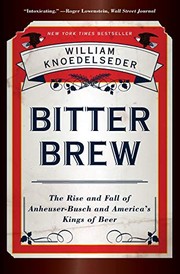
Bitter Brew

Bitter Brew

William Knoedelseder
2012
T3 416 pages · about 6h 56m to read Open Librarygoodreads

The Busch family and the three-tier wholesaler system.

Summary

Knoedelseder wrote a history of Anheuser-Busch and the Busch family, covering five generations from the nineteenth-century founding to the 2008 sale to InBev.

The business history traces the company's growth: Adolphus Busch's use of pasteurisation and refrigerated rail to create the first national beer brand; survival through Prohibition by producing yeast, malt syrup and other products; the postwar expansion; August Busch III's transformation of the company into a marketing and distribution machine that reached roughly half the American market; the distributor network and the exclusivity arrangements that made it defensible; and the enormous advertising spending, particularly the Super Bowl campaigns.

The family history is the book's real subject. Knoedelseder documents the succession conflicts across generations, particularly August Busch III's removal of his own father from the chief executive position, and his later relationship with his son August Busch IV, whose personal difficulties and lack of authority within the company Knoedelseder covers in detail.

The ending is the acquisition. InBev's bid in 2008 found a company whose growth had stalled, whose share price had underperformed, whose board included family members and outsiders who were not aligned, and whose chief executive did not have the standing to organise a defence. The board accepted an increased offer.

The book is narrative and gossipy, with substantial attention to family behaviour that does not bear on the business. Its business content is real: the account of how the distributor network was built and defended, and of how a family-controlled company lost control through the erosion of its own share ownership and the failure of succession, is the useful part.

Key takeaways 7

  1. Adolphus Busch created the first national beer brand using pasteurisation and refrigerated rail transport rather than a superior product.
  2. The exclusive distributor network was the company's most defensible asset and constrained competitors' access to market.
  3. August Busch III removed his own father as chief executive, which set the pattern for the family's succession conflicts.
  4. Family share ownership eroded across generations until the family could not block a takeover.
  5. A chief executive without standing inside his own company cannot organise a takeover defence regardless of the board's preferences.
  6. The company's growth had stalled before the bid, which is what made the offer attractive to shareholders.
  7. Enormous advertising spending sustained brand position in a category where product differentiation is minimal.

Who should read it

Operators and investors in family-controlled businesses who want a case study of how succession failure and ownership dilution end in loss of control.

Similar books 6

Chosen by shared topics, the entries that hold them, and the people who recommended both.
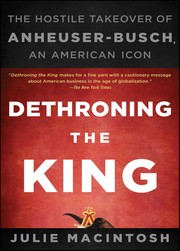
Julie MacIntosh · 2010

Anheuser-Busch: how protected distribution rights shaped the takeover.

Frances Stroh · 2016

Family memoir of a brewer undone partly by its distribution position.
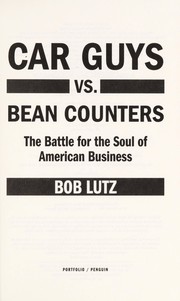
Bob Lutz · 2011

Insider account: Lutz on product culture versus finance control.

Recommended by: Mohnish Pabrai
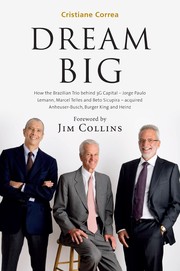
Cristiane Correa · 2013

3G Capital's meritocracy-and-zero-based-budgeting playbook, from AmBev to Heinz.

Recommended by: Warren Buffett

Les Schwab · 1986

Tire-shop founder's memoir on profit sharing and dealer economics

“If you want to read one book, read the autobiography of Les Schwab... He ran tire shops in the Midwest and made a fortune” — Charlie Munger

Source: Notes from the 2004 Berkshire Hathaway Annual Meeting, by Whitney Tilson, p. 35

Recommended by: Charlie Munger

Alfred P. Sloan Jr., Alfred D. Chandler Jr. · 1963

The decentralised structure and financial controls that ran General Motors.

Where it sits in the reference 2

Companies
Business models

Topics

Company Histories