Updates

  1. Person pages list letters, writing, profiles and links as sortable tables with filters, and show each person's companies as links; Fund letters show each letter's description in its own column.
  2. Experts show a checked job title and a short description of each person; 30 more people have photographs.
  3. Every company, fund, university and publication the experts work for has a page listing the people there.
  4. Fund letters show each letter's thesis and filter by it; 225 person pages list the essays, columns and newsletter issues the person wrote.
  5. Person pages list every essay and newsletter issue a person wrote, and their own books as a table in List view.
  6. Recommends shows the five largest kinds of book and the rest under More; browse pictures load sooner.
  7. Podcasts and talks link the original episode, filter by Audio and video or Press, and list each publisher once.
  8. Pages are wider, Recommends has List and Grid, and a filter clicked again turns off.
  9. Book cards sit in a ruled grid with Open Library and Goodreads links and each book's one-line note.
  10. Funds is now Investors; each investor's styles are buttons that filter the table.
  11. Podcasts and talks on a person's page filter by year and publisher and show as a list or a grid of pictures.
  12. Quotes show only people's own words: 472 summaries written by list sites are gone.
  13. Country pages open from Browse again, and every link on the shelf lands on a page.
  14. Subject and person pages show their sections as tabs, and each book appears once on a person's page.
  15. Book cards show the quote, who said it and the source; grids show five cards to a row.
  16. On a phone, a menu holds the sections, search, Updates, Feedback and dark mode.
  17. Feedback takes a screenshot of the page with no browser prompt, opens a screenshot full size when you click it, and clears itself once sent.
  18. Book cards are centred, search names the topic each book sits in, and any text cut short shows whole on hover.
  19. Search groups its results by kind: people, companies, geographies, subjects, topics, books, funds, fund letters and papers.
  20. The Books table lists who recommended each book by name, and the browser tab names the section you are in.
  21. Feedback can take a screenshot of the page, or one you paste or choose, and opens in the corner beside Updates.
  22. Each rail button reopens its section where you left it, and Browse, Table and People show on every book and subject page.
  23. Filters grey out choices that hold nothing instead of hiding them, and Books › People filters by authors or recommenders.
  24. Feedback takes a subject line and up to three screenshots.
  25. Biographies are grouped by the person they are about: 41 new pages, from Abraham Lincoln to Lee Kuan Yew.
  26. Sport splits into 23 sports, and Religion into one topic per faith.
  27. Book lists show as cards: the cover, one recommendation quote and every recommender by name.
  28. Seventeen subjects that had two or three pages under different names now have one page each.
  29. Every page lists its Experts as authors and recommenders, with a link to them on the Experts tab.
  30. Economics, Financial history, Financial panics and Accounting are subjects of their own, with one page per financial crisis.
  31. Book, person and subject pages open inside the app, so the tabs stay in view.
  32. 996 more book covers, and photographs or logos for 227 more people and companies.
  33. Books › Browse shows every subject as cards, and the rail holds Fund letters, Papers, Experts, Books and Funds.
  34. Every topic over 150 books splits into narrower topics, each with a page of its own.

Send feedback

What is it?
Screenshots, up to 3 (optional)
or paste one with Ctrl+V

We use your email only to reply to you.

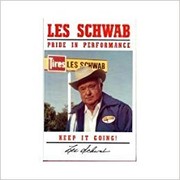
Les Schwab: Pride in Performance

Les Schwab: Pride in Performance

Les Schwab
1986
T4 Open Librarygoodreads

Tire-shop founder's memoir on profit sharing and dealer economics

Summary

Les Schwab founded a tyre retailing business in Oregon in 1952 and built it to hundreds of stores across the western United States. This memoir is his own account of how he did it.

The operating model is the substance. Schwab's central decision was profit sharing at the store level: store managers received a share of their store's profit, which in many cases produced incomes far above what a retail manager would ordinarily earn, and employees participated as well. He argues throughout that this is why the business worked, because managers behaved as owners and made decisions accordingly, and because the compensation attracted and retained people who would not otherwise have stayed in tyre retail.

The service practices that made the brand are covered in detail: staff running to the customer's car, free flat repairs whether or not the tyre was bought there, free rotation and inspection, and honouring warranties without argument. Schwab is explicit that these were commercial decisions about generating return business rather than gestures.

He also covers his refusal to franchise, keeping every store company-owned, and his promotion of managers exclusively from within, generally from people who started changing tyres.

The book is self-published in origin and is a memoir rather than an analysis. The reference has not verified its specific figures. It circulates among founders because the profit-sharing model is stated plainly by the person who ran it and because the connection between compensation structure and service quality is made explicit.

Key takeaways 7

  1. Store-level profit sharing produced manager incomes far above retail norms and made managers behave as owners rather than as employees.
  2. Compensation structure rather than supervision is what determines whether frontline managers make decisions in the business's interest.
  3. Free flat repairs and services performed for non-customers were commercial decisions about generating return business rather than goodwill gestures.
  4. Refusing to franchise kept every store under direct control, which is what made the compensation and service model enforceable.
  5. Promoting managers exclusively from within, generally from people who started changing tyres, produced managers who understood the work they supervised.
  6. Visible service behaviour, including staff running to the customer's car, was specified and enforced because customers notice effort rather than policy.
  7. The reference has not verified the specific figures in this self-published memoir.

Who should read it

Founders and multi-unit operators interested in store-level profit sharing and its connection to service quality, from the owner who built it.

Who recommended it 1

“If you want to read one book, read the autobiography of Les Schwab... He ran tire shops in the Midwest and made a fortune”

Similar books 6

Chosen by shared topics, the entries that hold them, and the people who recommended both.

Sam Walton, John Huey · 1992

How Walmart grew from one Arkansas store by cutting costs and prices.

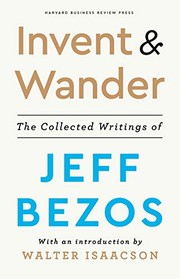
Jeff Bezos, Walter Isaacson · 2020

Amazon's shareholder letters from 1997 to 2019, with speeches and interviews.

Phil Knight · 2016

How a running-shoe importer became Nike, surviving one cash crisis after another.

“…books I've recommended, highlighted to death, or forced on friends.” — Andrew Wilkinson

Source: Andrew Wilkinson's Bookshelf, neverenough.com

Recommended by: Andrew Wilkinson, Bill Gates, Mohnish Pabrai and 25 others
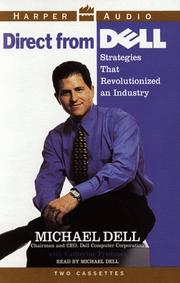
Michael Dell, Catherine Fredman · 1999

Insider account of build-to-order, negative working capital and cutting the channel.

Recommended by: Mohnish Pabrai, Andrew Grove

Where it sits in the reference 2

Business models
Investment styles

Topics

Biography and MemoirCompany HistoriesEntrepreneurship and StartupsFounders and EntrepreneursFounder MemoirsRetail and consumer founders